

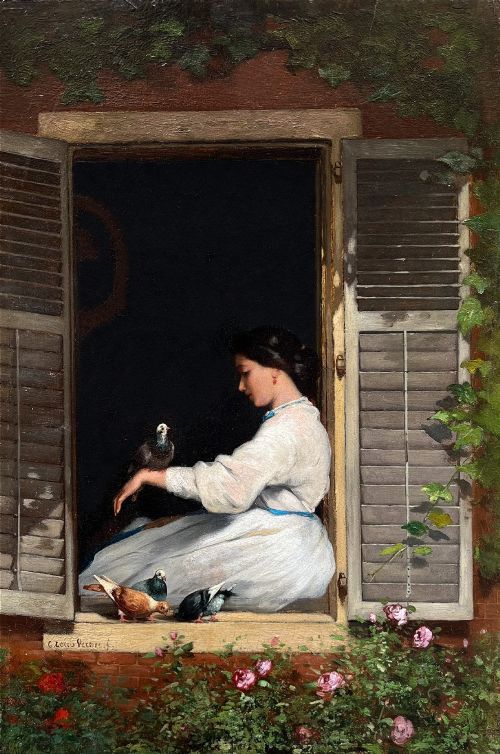


19th Century Belgian Artwork
These pieces of 19th century belgian artwork bring pastoral charm and domestic realism to a wall through oil paint on canvas.

19th Century Belgian Artwork
When you search for 19th century belgian artwork, you encounter oil paintings on canvas depicting animals, farmyards, landscapes, seascapes, and genre scenes. The selection on this page relies heavily on agricultural subjects, featuring sheep, goats, poultry, and pastoral settings alongside marine art and still life compositions.
The most common examples on this page are oil paintings on canvas, frequently housed in gesso and giltwood frames. Animal paintings by artists in the circle of Eugène Verboeckhoven dominate the visual record alongside coastal views and village scenes.
Materials and construction
The foundational support for these works is canvas stretched across wood frames, upon which artists applied oil paint to build texture and depth. Many of these paintings retain their original frames, which incorporate gesso and gold leaf to create gilt finishes.
Makers utilised traditional oil painting techniques, ranging from the smooth handling found in academic animal studies to the atmospheric light effects characteristic of luminism.
Materials documented across the selection include oil paint, canvas, wood, gesso, gold leaf, and giltwood.
Judging the work
The distinction between standard decorative pieces and superior works lies in the handling of light, anatomical precision in animal painting, and the integrity of the original canvas. Masterful brushwork in landscapes and realistic animal textures elevate an oil painting above follower pieces.
Frame preservation also plays a role in overall presentation. Examples that retain original giltwood and gesso surrounds with minimal restoration offer a more complete historic package.
Eugène Verboeckhoven·Louis Charles Verwee·Frans Gailliard·Franz van Severdonck·Frederick Tully Lott·Hendricus Joseph Dillens·Pierre Emmanuel Dielmans·Henri Schouten·Paul Jean Clays·Gustav Goemans·J L VAN Leemputten·Louis Marie Dominique Robbe
The 19th Century Belgian Artwork Glossary
- Giltwood
- Wood carved and covered with a thin layer of gold leaf or metallic powder. This finish appears frequently on the frames housing these oil paintings.
- Gesso
- A plaster-like mixture applied to wooden frames as a base for gilding. It provides a smooth surface for decorative mouldings.
- Genre Painting
- Art that depicts aspects of everyday life by portraying ordinary people engaged in common activities. Examples on this page include country marriages and market scenes.
- Luminism
- An American and European landscape style emphasising effects of light and aerial perspective. It is represented here through works focusing on light and form.
19th Century Belgian Artwork: Frequently Asked Questions
What subjects appear in 19th century belgian artwork?
The subjects focus primarily on animals, farmyards, and rural landscapes, often featuring sheep, poultry, and cattle. Other common themes include coastal marine views, market scenes, and flower arrangements.
Paintings range from intimate depictions of livestock to large seascapes and domestic interiors.
How do I care for an oil painting on canvas?
Keep the artwork away from direct sunlight and dramatic shifts in temperature or humidity to protect both the canvas and the oil paint. Dust the surface gently with a soft, dry brush without applying pressure.
Avoid using liquid cleaners on the paint or the gesso frame.
What is the difference between an artist and a follower?
An original work was painted by the named master himself, bearing his hand and artistic decisions. A follower worked in the style or tradition of that master, often producing comparable subject matter during the same period.
Attributions to followers typically reflect stylistic similarities rather than direct authorship.