

19th Century Bedside
A 19th century bedside table brings practical storage and period character to a bedroom, ranging from compact mahogany cupboards to marble-topped French cabinets.
19th Century Bedside
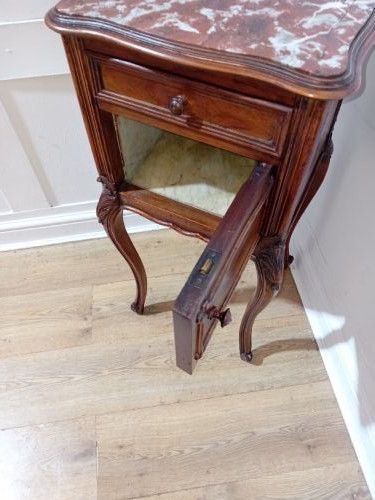
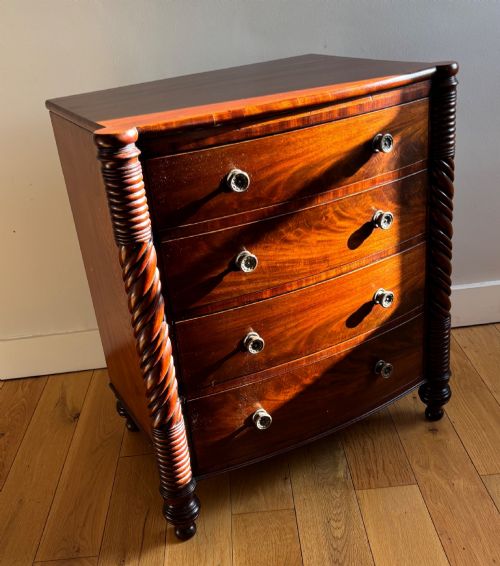
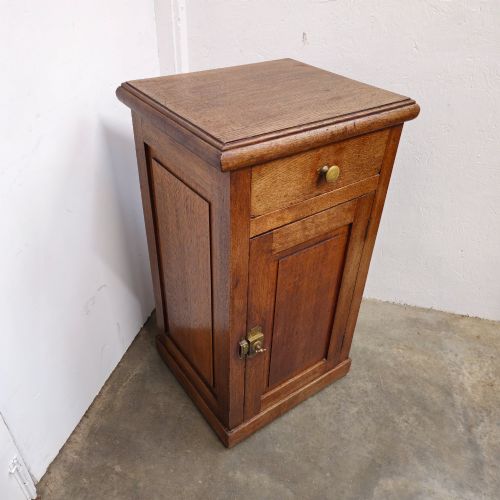
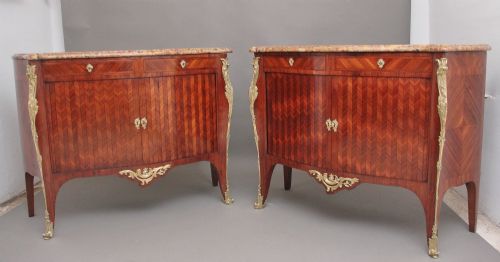
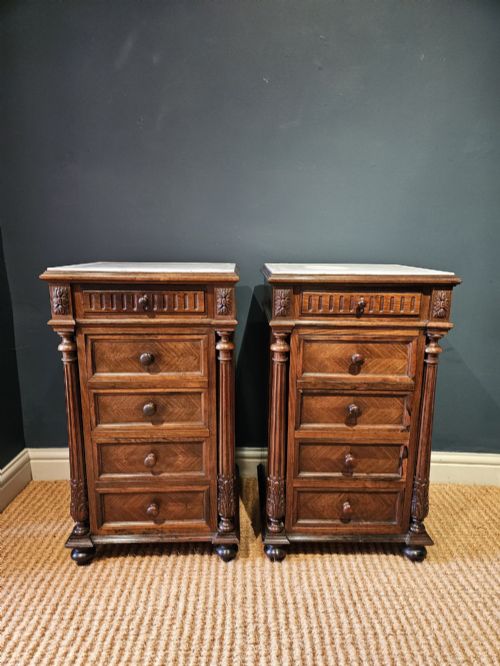
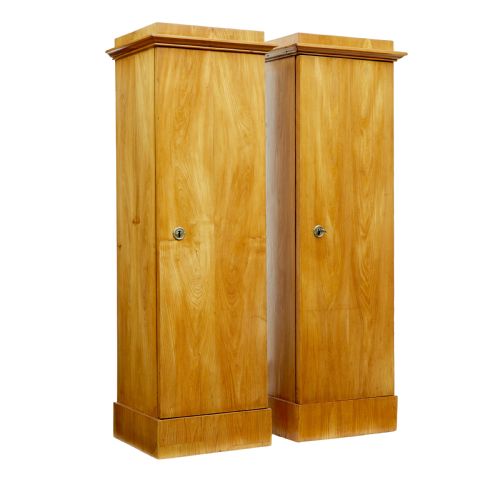
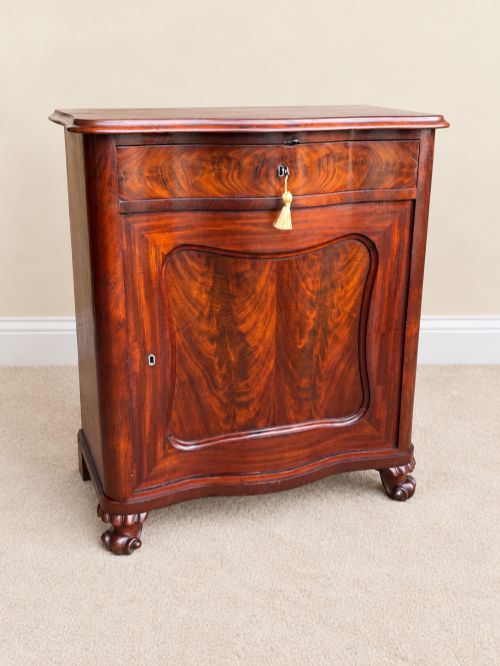
A 19th century bedside selection encompasses practical nightstands, small chests of drawers, and pot cupboards designed to sit beside a bed. The most frequent finds on this page are mahogany and walnut bedside cabinets from the Victorian period, alongside French designs featuring marble tops.
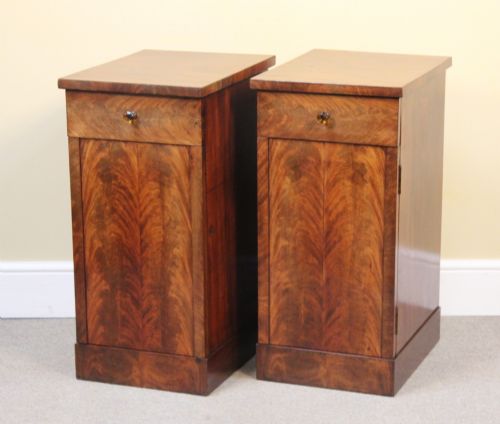
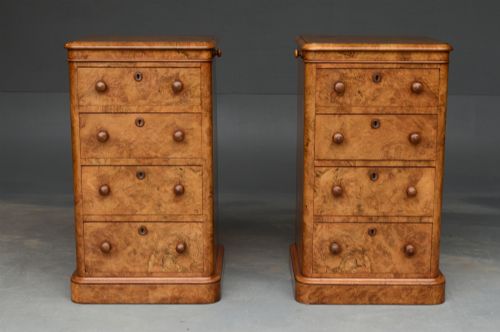
Beyond traditional timber cupboards, the selection includes occasional tables, night commodes, and matching pairs of bedside chests with drawers or doors. These pieces reflect the varied domestic habits of the 19th century, serving both utilitarian storage needs and decorative roles in the bedroom.
The origins span English workshops in the Georgian and Victorian traditions as well as continental French provinces, encompassing styles from Gothic Revival to Louis XV and XVI revivals. Buyers encounter everything from utilitarian pine pot cupboards to finely inlaid walnut and mahogany cabinets.
How they were made
Cabinet makers utilised dense hardwoods such as mahogany, walnut, and oak, often constructing carcases with dovetailed joints for structural strength. Timber selection dictated the grain patterns, with burr walnut and figured mahogany favoured for visible surfaces.
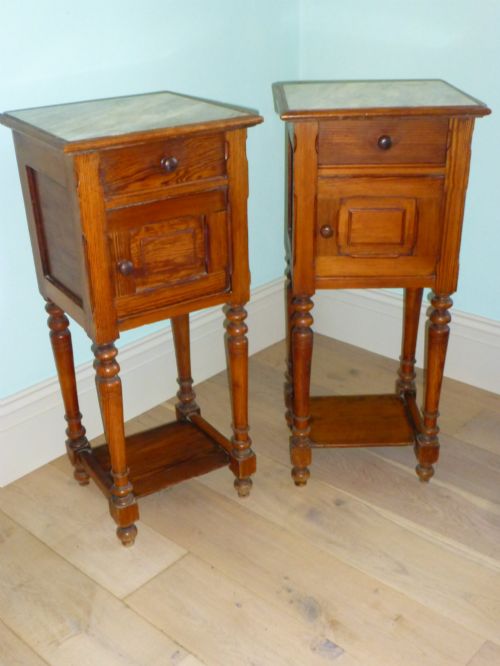
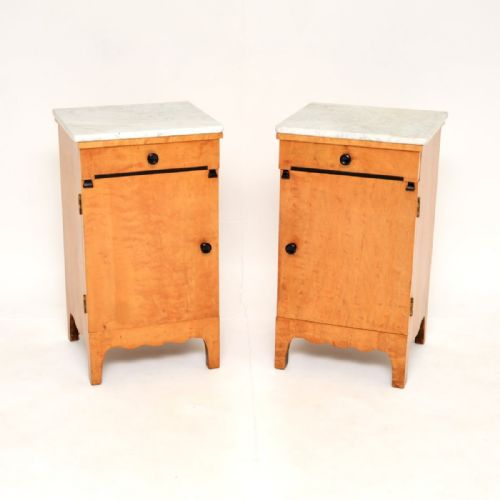
Surface decoration involved marquetry, hand-painted Chinoiserie motifs, or simple polished timber finishes that highlighted the natural grain. Marble inserts frequently topped French cabinets to provide a durable, water-resistant surface next to the bed.
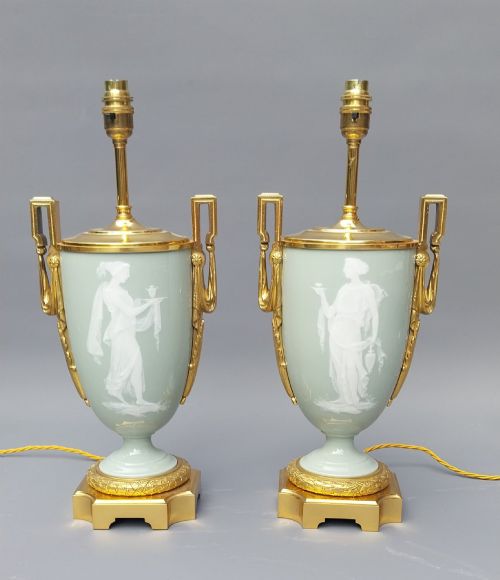
Metal components like brass handles, hinges, and mounts complemented the timber work, while ceramic and porcelain elements appeared on related lighting pieces such as Pâte-sur-Pâte lamps.
19th Century Bedside Retail Price Guide 2026
Typical asking prices for 19th century bedside among the pieces listed under this phrase on Sellingantiques today, from the lower quarter to the upper quarter. They describe what is for sale here now, not the wider market.
Periods represented span the Georgian era, the Victorian reign, and the turn of the 20th century.
What varies in quality
Construction methods dictate the integrity of each piece, distinguishing utilitarian pine cupboards from high-status mahogany and burr walnut chests with precise dovetailing and solid timber backs. The calibre of secondary timbers used inside drawers and carcases signals the workshop standard.
The refinement of decorative details separates standard production items from exceptional commissions, particularly in marquetry inlay, carved bracket feet, and the crispness of applied mouldings. Stamped maker marks from established workshops elevate a piece through documented provenance.
Material selection for tops and mounts plays a major role, where thick slabs of marble or fine gilt bronze and brass mounts distinguish finer French and English cabinets from simpler vernacular pieces.
Gillows·E Rousseau
The 19th Century Bedside Glossary
- Pot cupboard
- A small enclosed bedside cabinet originally designed to house a chamber pot. These typically feature a single door concealing a shelf or compartment.
- Night commode
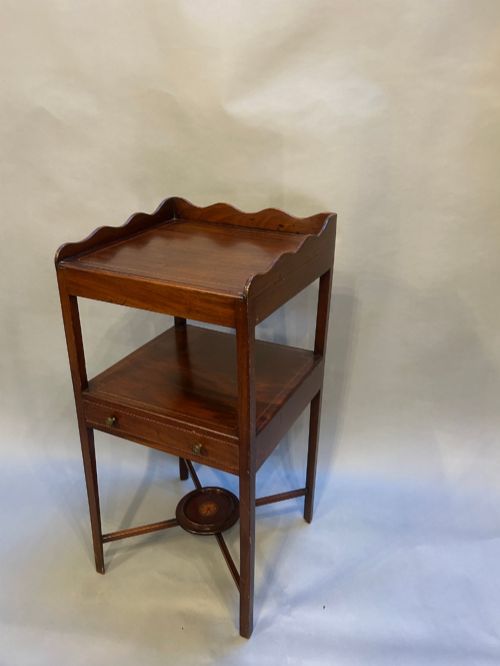
- A small enclosed bedside piece sharing similarities with the pot cupboard, often incorporating marquetry or tray tops. These served personal storage needs in the bedroom.
- Marquetry
- Decorative veneer work arranged in geometric or pictorial patterns across the surface of a cabinet. Craftsmen applied contrasting timbers to create detailed visual designs.
- Pâte-sur-Pâte
- A ceramic decorating technique where liquid clay is built up in successive layers on a contrasting background to create a low relief cameo effect. This method appears on fine 19th century lamps.
- Bracket feet
- A simple architectural foot shape supporting the corners of a chest or cabinet, often taking a shaped or ogee profile on Victorian and Georgian pieces.
19th Century Bedside: Frequently Asked Questions
What is a 19th century bedside cabinet used for?
These cabinets provided enclosed storage beside the bed for personal items, nightwear, and chamber pots before modern plumbing.
Today they function as practical nightstands with surface space for a lamp and books, concealing small items behind a door or within drawers.
How do I distinguish a Victorian bedside chest from a Georgian one?
Georgian pieces often display simpler architectural lines, lighter proportions, and use early mahogany framing with subtle bracket feet.
Victorian examples frequently present heavier timber dimensions, darker finishes, burr walnut veneers, or more ornate turned supports and hardware.
Are marble top bedside cabinets French or English?
Cabinets featuring inset marble tops are most commonly of French origin, reflecting continental preferences for durable, washable bedside surfaces.
English cabinet makers predominantly used solid timber tops, though occasional cross-banded or tray top variations appear across both traditions.
How do I care for a antique mahogany bedside table?
Keep timber surfaces away from direct sunlight and excessive heat sources to prevent the polish from fading or the wood from splitting.
Apply natural beeswax periodically to nourish the grain and gently buff with a soft, dry cloth to maintain the finish.