
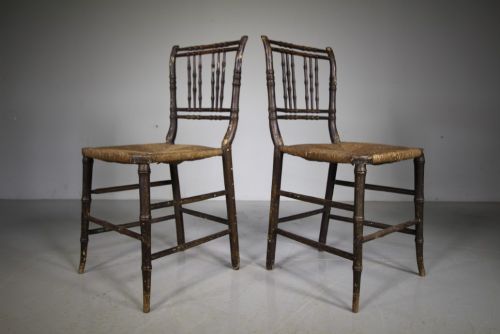


19th Century Bamboo Chair
These 19th century bamboo chair examples bring an exotic, lightweight charm to a room, combining natural materials with clever European imitation.
19th Century Bamboo Chair
When searching for a 19th century bamboo chair, collectors encounter a diverse array of seating ranging from genuine cane construction to ingenious European simulations. The pieces on this page span several distinct periods, notably the Regency era and the late nineteenth century, capturing a persistent fascination with Eastern aesthetics.
Side chairs and armchairs dominate the selections, alongside rarer forms such as child high chairs and folding campaign seats. Buyers most frequently meet versions finished in paint, ebonised surfaces, or giltwood, reflecting the versatile tastes of nineteenth-century makers.
Stylistic influences vary widely across the inventory, touching upon Chinoiserie, French Napoleon III, Louis Philippe, and Victorian faux bamboo. Each piece demonstrates how makers adapted exotic motifs to suit domestic interiors, whether through actual bamboo stems or turned wood painted to deceive the eye.
Materials and construction methods
Makers utilised natural bamboo alongside beech and pine to build these chairs, often shaping solid wood to mimic the jointed nodes of real bamboo. Surface finishes played a crucial role in the manufacturing process, employing paint, ebonising, and gilding to enhance the decorative effect.
Seating areas frequently incorporated woven cane or rush, demanding considerable skill from craftsmen to ensure durability alongside delicate appearances. Frameworks relied on traditional joinery techniques adapted to unusual cylindrical materials, creating surprisingly resilient structures.
Listings feature periods from the Regency era through to the late nineteenth century, utilising paint, cane, rush, and beech alongside genuine bamboo.
Judging the quality
The sophistication of the simulated jointing separates superior examples from simpler ones, with master turners capturing the subtle irregularities of natural cane rather than repeating a mechanical pattern. Original surface treatments, such as early paint or giltwood layers, carry greater artistic merit than later or unsympathetic overpainting.
Structural integrity depends on the tightness of the original joinery and the preservation of woven elements like cane or rush work. Refined proportions and the inclusion of decorative elements like Chinoiserie details elevate individual pieces above standard utility seating.
The 19th Century Bamboo Chair Glossary
- Faux bamboo
- Wood, typically beech or pine, turned and painted to imitate the natural jointed stalks of bamboo. This technique allowed European makers to satisfy exotic tastes using local timbers.
- Chinoiserie
- A European artistic style reflecting Chinese motifs and decorative techniques, prevalent in furniture design during the Regency period. It heavily influences the painted decoration found on many bamboo-effect chairs.
- Ebonised
- Wood finished with a dark stain or black paint to resemble expensive ebony. This treatment was particularly popular on nineteenth-century simulated bamboo frames to create a striking silhouette.
- Canework
- Woven material made from stripped rattan used for seats and backs. It provides a flexible, lightweight surface that complements the airy aesthetic of bamboo furniture.
- Fancy chair
- A lightweight, decorative seat popular in the Regency era, often brightly painted and featuring bamboo-effect turnings. These pieces served as movable accent seating in fashionable drawing rooms.
19th Century Bamboo Chair: Frequently Asked Questions
Are faux bamboo chairs actually made of bamboo?
Many nineteenth-century examples are constructed from hardwoods like beech or pine that have been turned on a lathe to imitate the jointed texture of real bamboo.
Craftsmen painted or ebonised these wooden frames to complete the illusion, creating durable seating that combined exotic style with robust European materials.
How do I identify a Regency period bamboo chair?
Regency pieces often feature crisp painted decoration, simulated bamboo turnings, and classic early nineteenth-century proportions.
Look for refined details such as Chinoiserie motifs or yellow and black paint finishes that characterise the earliest examples in this tradition.
Where were these chairs used in a historic home?
These lightweight seats functioned primarily as occasional chairs in drawing rooms, parlours, and ladies' boudoirs, where they could be easily moved around.
More specialised forms like child high chairs and folding campaign seats served practical domestic and travel purposes.
How should I care for antique cane seats?
Maintain cane work by keeping it away from direct heat sources and dry environments that can cause the natural fibres to become brittle.
Occasional gentle cleaning with a damp cloth helps preserve the flexibility and strength of the woven material.