




19th Century Ash Furniture
These robust pieces of 19th century ash furniture bring honest craftsmanship and tactile timber into a room.
19th Century Ash Furniture
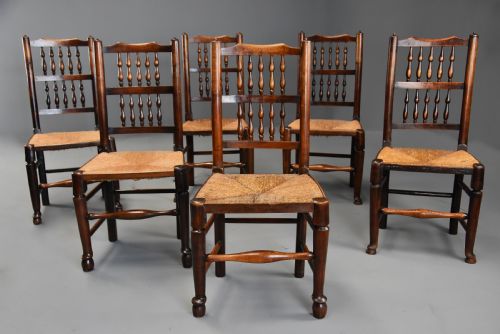
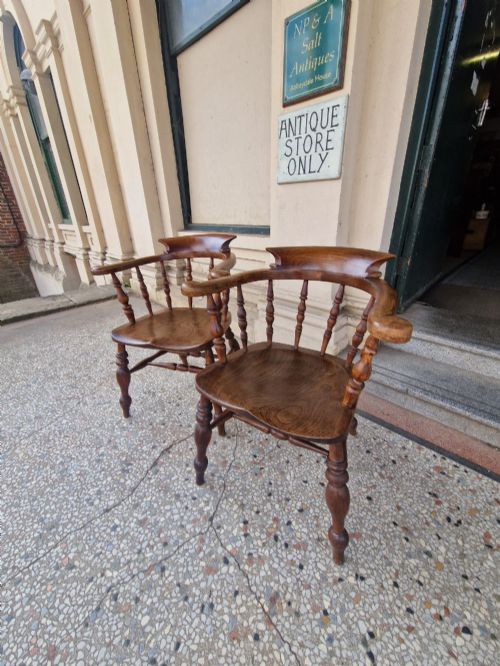
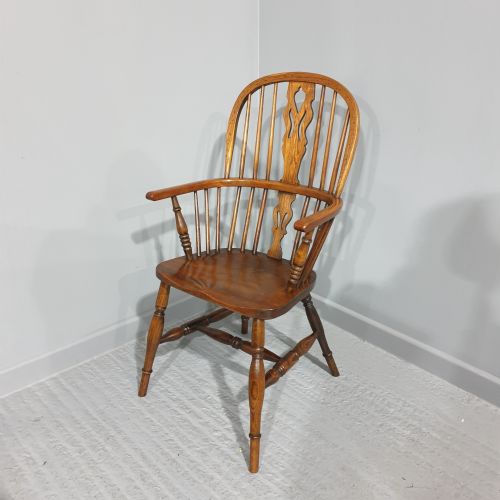
When you search for 19th century ash furniture, you encounter robust seating and storage created in vernacular workshops. The selection here leans heavily towards seating, notably spindle back, comb-back, and Windsor armchairs alongside side chairs and high chairs.
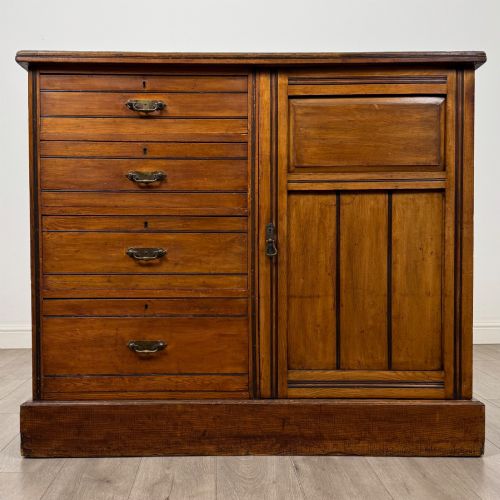
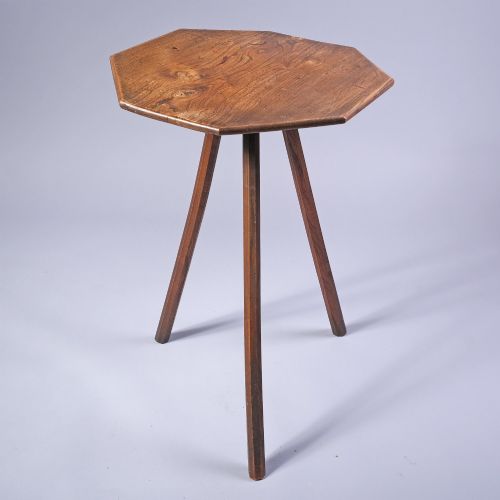
Beyond chairs, the offerings encompass chests of drawers, storage cabinets, commodes, dressing tables, and side tables. These items reflect regional English, Irish, Scottish, and Welsh traditions spanning the Georgian and Victorian periods.
Makers and makers' marks appear occasionally, linking pieces to specific firms such as G. Bartholomew & Co. The overarching character remains grounded in utility, country vernacular style, and regional construction methods.
How they were made
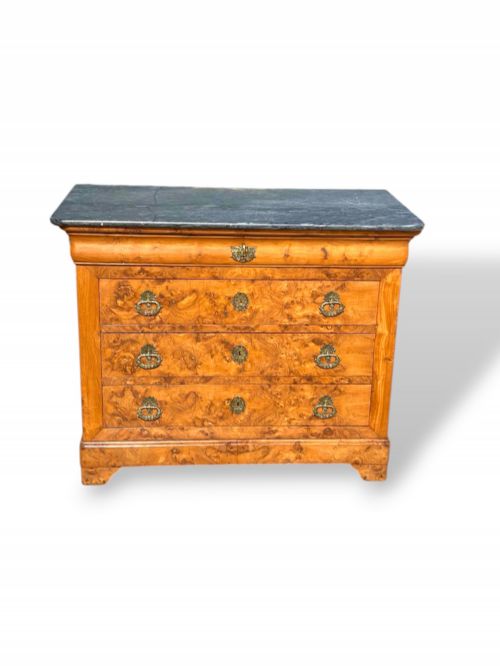
Makers utilised native hardwoods, pairing ash with elm and sycamore to balance flexibility and strength in chair frames and table legs. Burr ash veneer also appears on case pieces, offering a decorative surface texture.
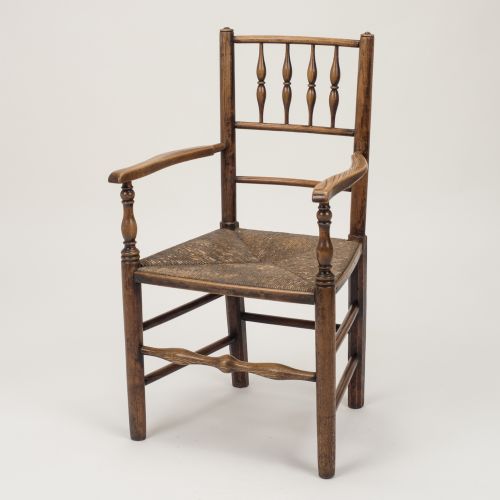
Traditional joinery methods such as steam-bending and turning created spindle backs and comb-backs. Seats frequently incorporated rush or plaited straw, known as súgán, woven directly into the timber frame.
Metal components like brass hardware appear on chests and cabinets, while surfaces often received simple finishes that highlighted the natural grain and developed patinas over decades of use.
Listings feature periods spanning from the Georgian era through the Victorian period, including specific dates around 1800, 1840, 1850, 1860, 1880, and 1900.
What varies in quality
Quality rests in the integrity of the timber selection and the retention of original surfaces, such as patinated ash combined with elm. Pieces that maintain their structural stability without excessive replacement parts stand higher in the range.
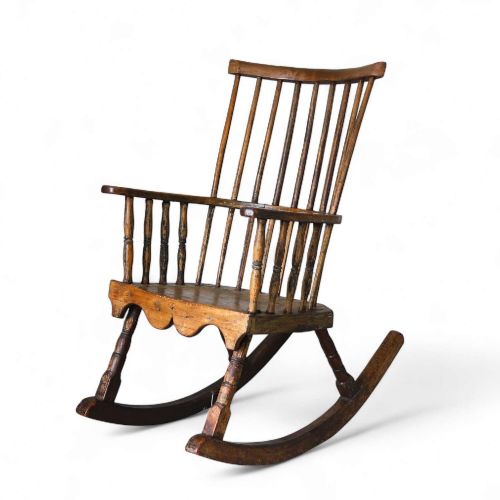
Regional distinction and complexity of form dictate division, from naive child's high chairs to finely turned pairs of captains chairs or comb-back rocking chairs. Refined veneer work on commodes and Wellington chests further separates utilitarian items from more ambitious cabinet work.
G. Bartholomew & Co
The 19th Century Ash Furniture Glossary
- Vernacular
- Everyday objects made by local craftsmen for regional use rather than high-style metropolitan markets. These items prioritise function and locally available materials.
- Windsor chair
- A chair built with a solid wooden seat into which the legs and back spindles are separately inserted. They often combine ash and elm for different structural components.
- Comb-back
- A Windsor chair variation where the top rail resembles the spine of a comb, often with small spindles rising through it. This style is frequently found on mid-nineteenth-century rocking chairs.
- Súgán
- An Irish term for a twisted straw rope used to form plaited seating surfaces. It provides a flexible and resilient seat in traditional chairs.
- Wellington chest
- A tall, narrow chest of drawers secured by a hinged locking side bar. They typically feature multiple shallow drawers.
- Spindle back
- A chair back constructed from a series of turned vertical wooden rods. These rods provide lightweight support while maintaining structural rigidity.
19th Century Ash Furniture: Frequently Asked Questions
What is a comb-back rocking chair?
A comb-back rocking chair is a seating form featuring a distinct upper rail that resembles a comb structure. These chairs combine steam-bent ash and sycamore components.
They emerged from vernacular traditions around the mid-nineteenth century and offer a flexible, supportive seat.
How do I identify ash and elm furniture?
Ash and elm are native hardwoods frequently paired in nineteenth-century country seating. Ash provides strong, straight-grained members for spindles and legs, while elm offers interlocking grain suitable for solid carved seats.
Inspect the grain patterns and the contrast between the lighter ash framing and the richly figured elm seat.
Where were these country pieces made?
These pieces originated in regional workshops across England, Ireland, Scotland, and Wales. Local craftsmen utilised accessible timbers to supply rural homesteads and farmhouses.
Regional variations appear in the turning of spindles and the construction of the underframe.
What is a súgán chair?
A súgán chair is an Irish country seat featuring a woven straw seating surface. The plaited straw provides a supportive and springy base.
These chairs represent traditional rural craftsmanship and rely on locally gathered materials.