


19th Century Arm Chair
A 19th century arm chair brings substantial timber frames and deep seating into a room, offering sturdy support for reading or working.
19th Century Arm Chair
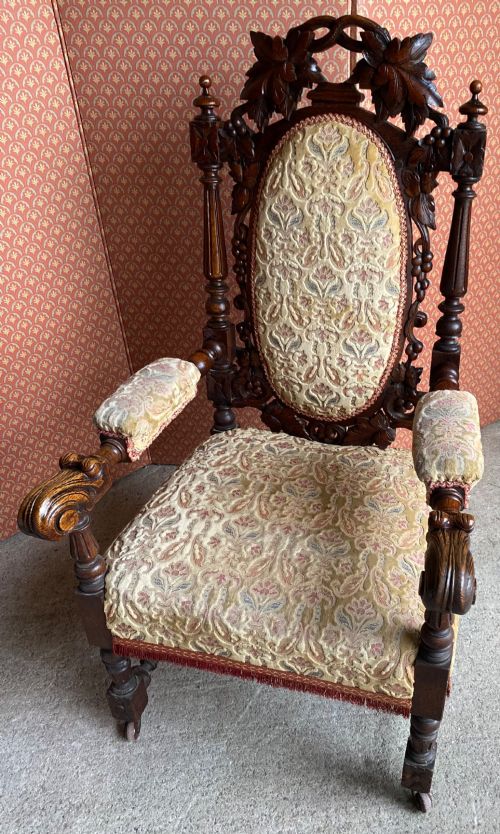
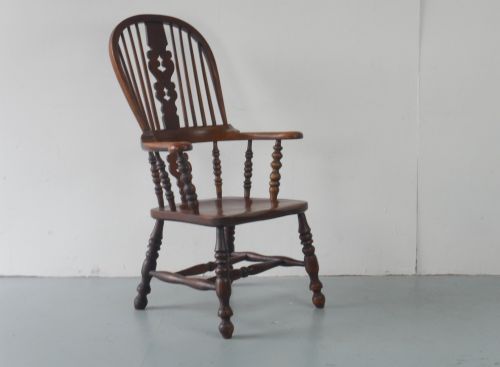
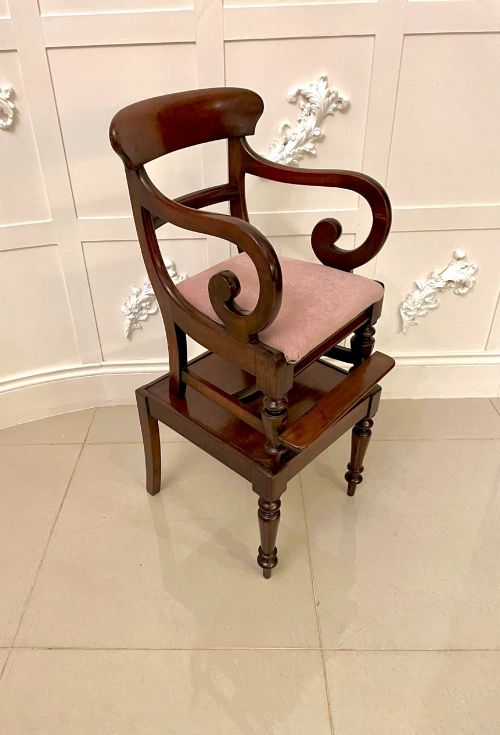
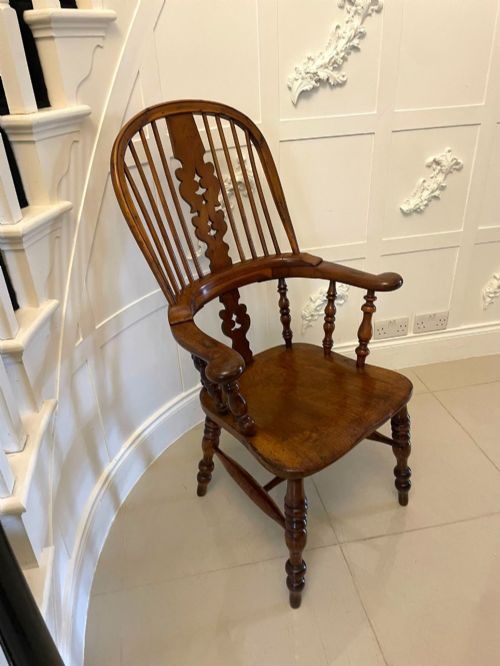
When you search for a 19th century arm chair, you encounter a wide variety of seating forms spanning the Regency, William IV, and Victorian eras. These range from heavy library and desk chairs to Windsor seating and open armchairs suited for country houses and formal salons alike.
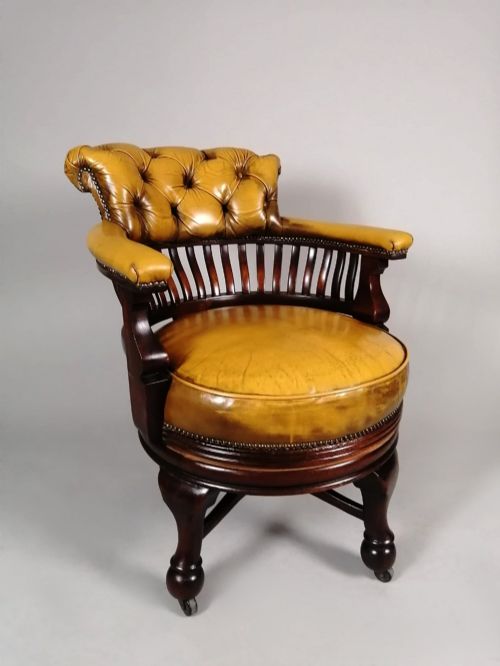
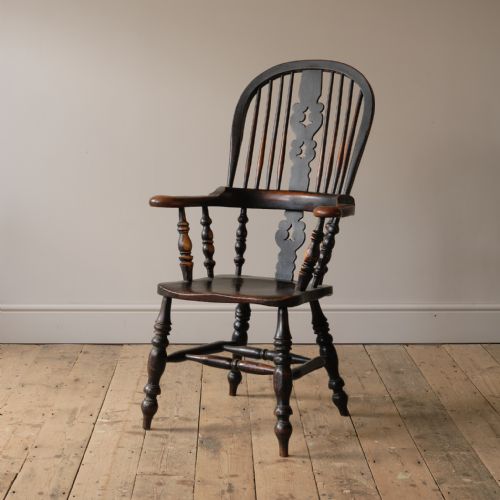
The most common examples on this page are mahogany and walnut library chairs upholstered in leather or velvet, alongside ash, elm, and yew wood country windsors. You also find specialised pieces such as revolving desk chairs, tub chairs, and carvers originating from English, French, Italian, and colonial workshops.
How they were made
Cabinet makers utilised dense hardwoods such as mahogany, walnut, rosewood, oak, and yew, often pairing solid timber frames with turned or reeded legs. Country variations frequently combined ash and elm or laburnum for spindles and bentwood arms.
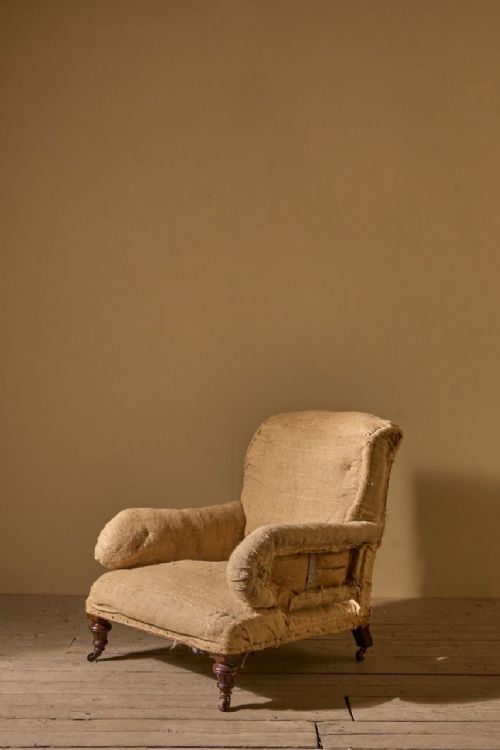
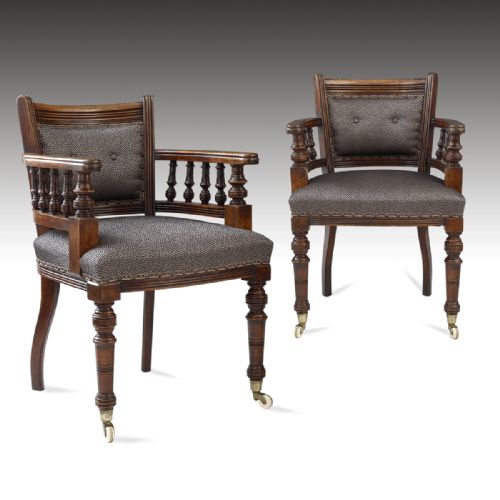
Upholstered seating relied on traditional stuffing techniques finished with leather, textile, or hessian covers, secured with brass detailing or needlework. Frames displayed carved details, giltwood finishes, or simple turned bobbin framing depending on the prevailing style.
Listings feature woods including mahogany, walnut, rosewood, oak, yew, ash, elm, and laburnum across multiple 19th century periods.
What varies in quality
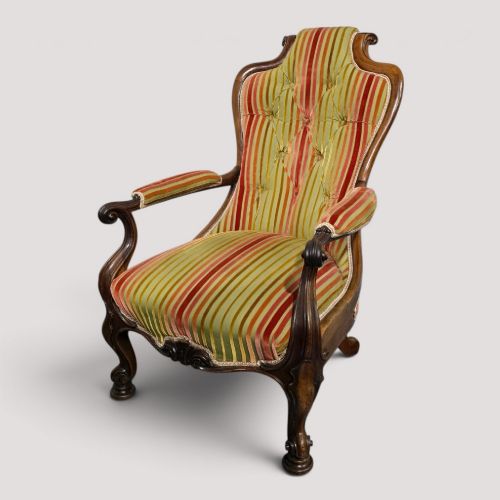
The grade of timber and the depth of carving separate standard utility seating from exhibition pieces produced by prominent makers. Figured mahogany, rich walnut grains, and finely carved giltwood elements distinguish the upper tier of the range.
Structural integrity depends on the original joinery within the arms and legs, alongside the retention of period leather or fabric upholstery. Pieces retaining original revolving mechanisms or specific regional country house provenance hold distinct advantages.
Morris & Co·Gillows·Howard & Sons
The 19th Century Arm Chair Glossary
- Carver
- An armchair designed to match a set of dining chairs, usually featuring scrolled or open arms.
- Library chair
- A heavy, comfortable armchair intended for study use, frequently upholstered in leather.
- Windsor chair
- A wooden seating form with a solid saddle seat into which pierced legs and spindle backs are wedged.
- Tub armchair
- A comfortable chair featuring a continuous curved back and arm rail enclosing the sitter.
- Giltwood
- Timber coated with a thin layer of gold leaf, commonly utilised on decorative revival frames.
- Reeded
- A decorative moulding consisting of parallel convex strips resembling inverted fluting.
19th Century Arm Chair: Frequently Asked Questions
What is a 19th century desk chair?
A 19th century desk chair is a sturdy seat designed for working at a table, often featuring a revolving base or leather upholstered panels.
These pieces were built from mahogany or walnut to withstand daily use in studies and offices.
How do I identify a Regency armchair?
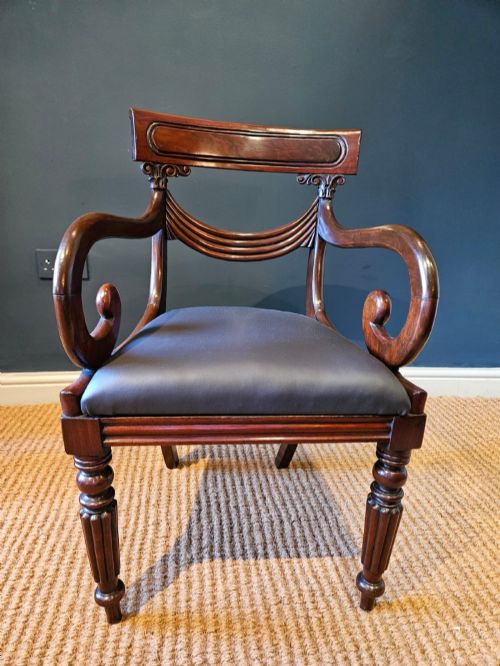
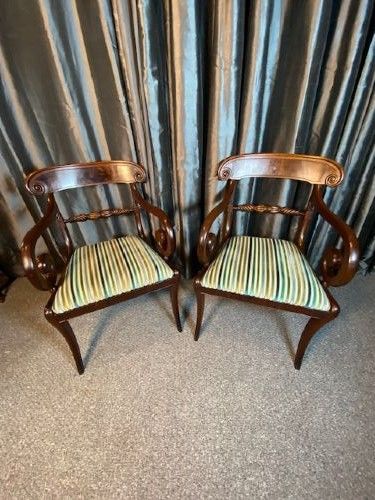
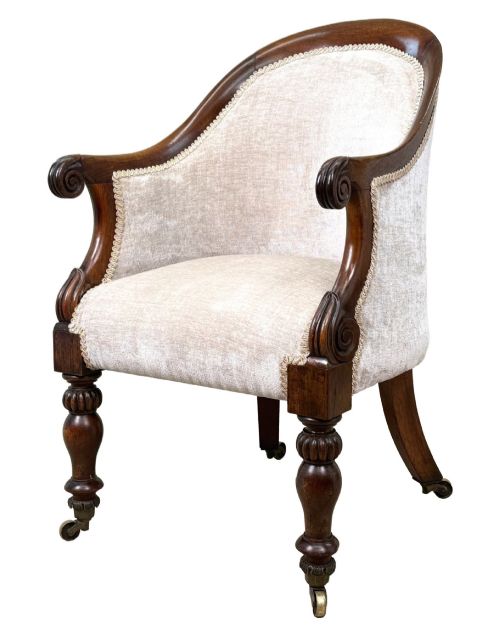
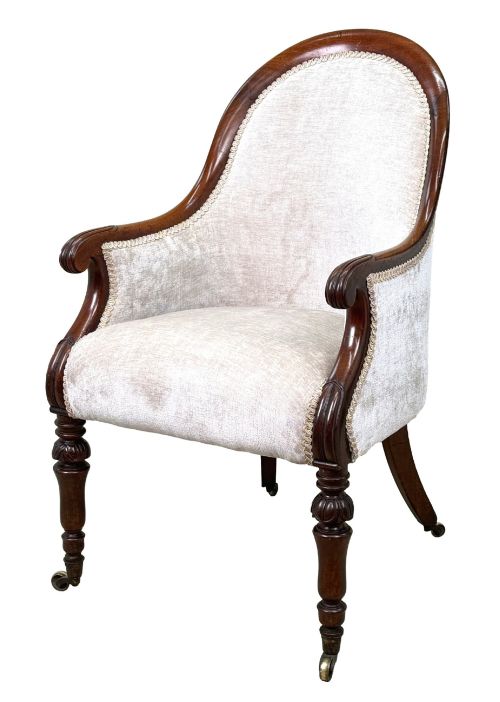
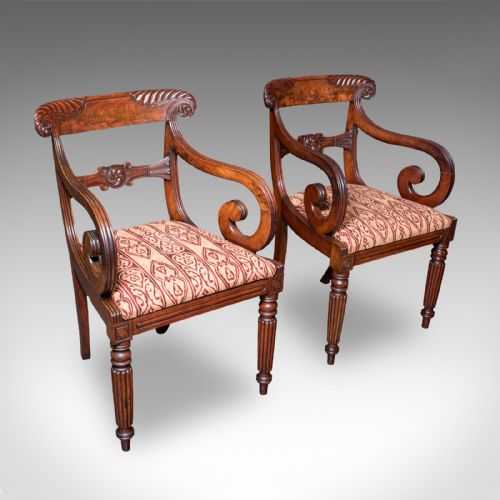
Regency armchairs typically display classical revival influences with reeded legs, mahogany frames, and scroll arm designs.
They reflect the architectural tastes of the early 19th century, prioritising clean lines and dark timbers.
Where were Windsor chairs used?
Windsor chairs served as practical seating in country houses, farmhouses, and vernacular domestic spaces throughout the 19th century.
Their combination of ash, elm, and yew provided robust construction for everyday environments.
What materials cover library armchairs?
Library armchairs are traditionally upholstered in leather, velvet, or heavy textiles secured with brass tacks.
These durable surfaces were chosen to endure long hours of reading and scholarly work.