

19th Century Animal Artwork
19th century animal artwork captures dogs, horses, livestock and farmyard scenes in oil, watercolour and prints from the Regency to the early twentieth century.
19th Century Animal Artwork
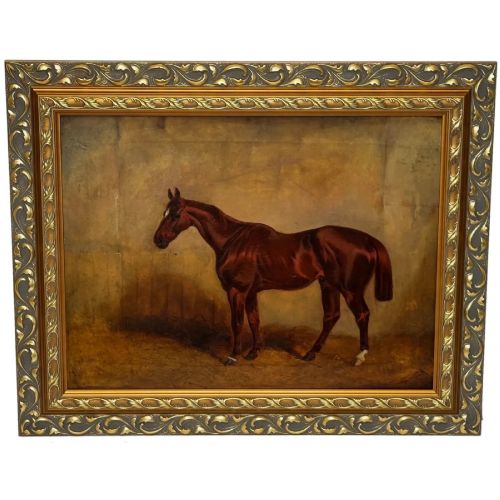
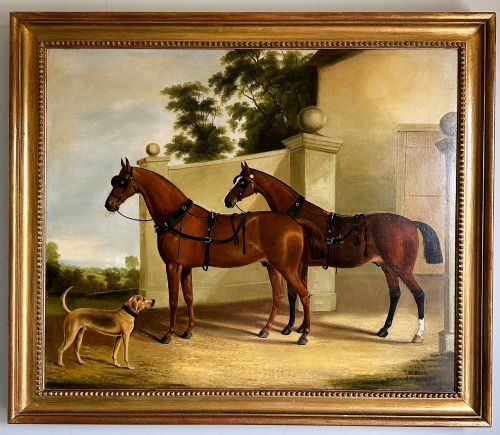
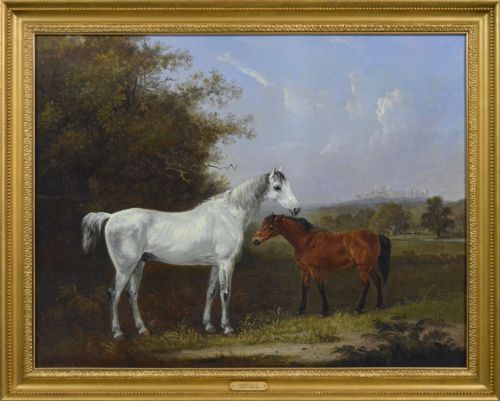
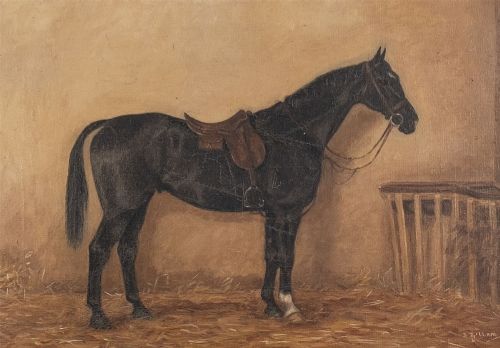
When you search for 19th century animal artwork, you encounter oil paintings, watercolours, etchings and chromolithographs focused on domestic and sporting subjects. The selection spans straightforward horse and dog portraits alongside pastoral landscapes populated by sheep and cattle.
You meet Victorian sporting art, naive folk art, and works influenced by the French school and British realism. These pieces range from intimate sketches to large, framed canvases designed for country houses.
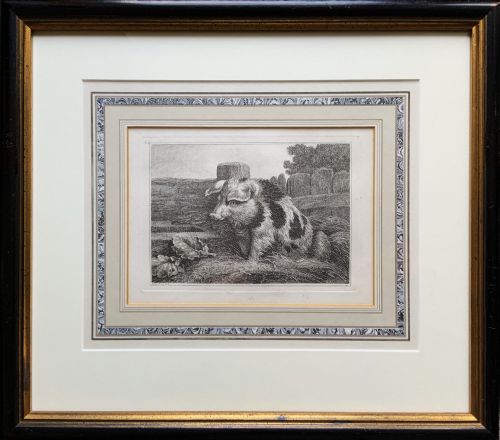
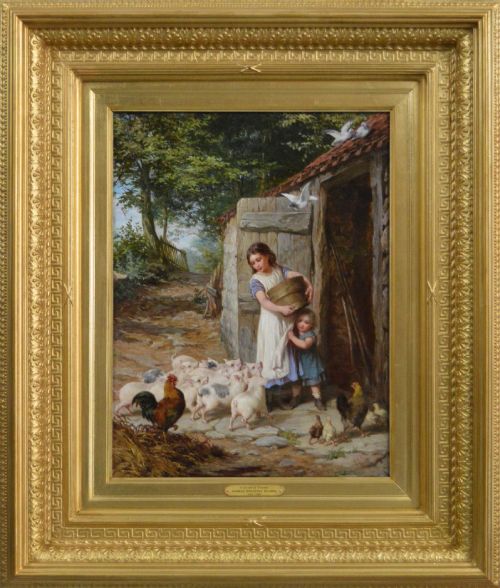
Farmyard scenes featuring poultry, pigs and goats appear alongside depictions of big cats and monkeys. The period encompasses both named academic artists and anonymous painters working in a regional tradition.
Materials and techniques
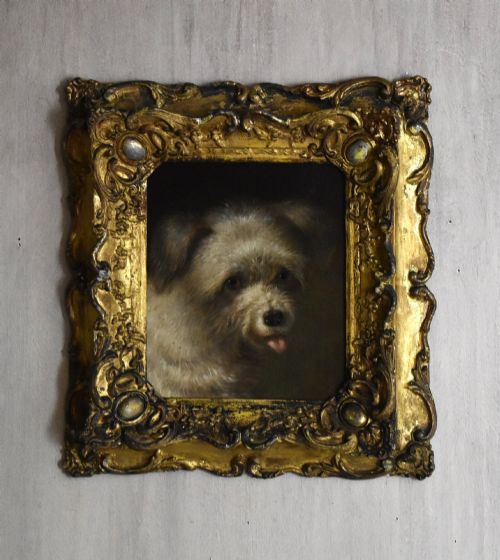
Oil paint applied to canvas or wood board forms the majority of the surviving pieces, often paired with heavy gesso and giltwood frames. Artists utilised fine brushes to render animal coats, feather textures and facial expressions in minute detail.
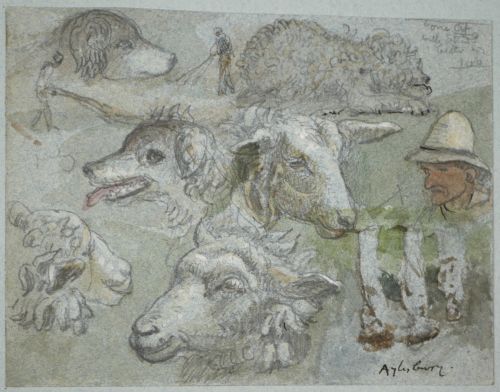
Watercolours on paper and etchings on vellum represent the graphic output of the era. Printers also produced chromolithographs to reproduce popular artist subjects for a wider audience.
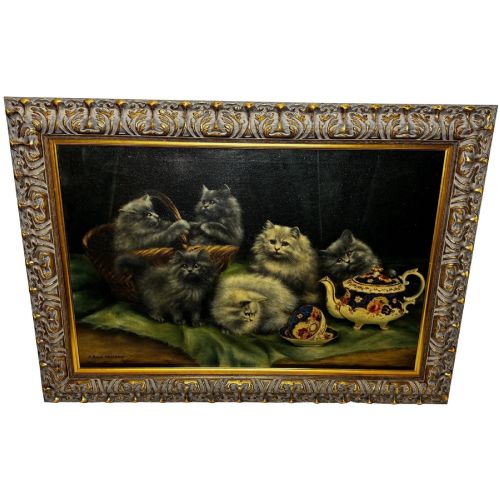
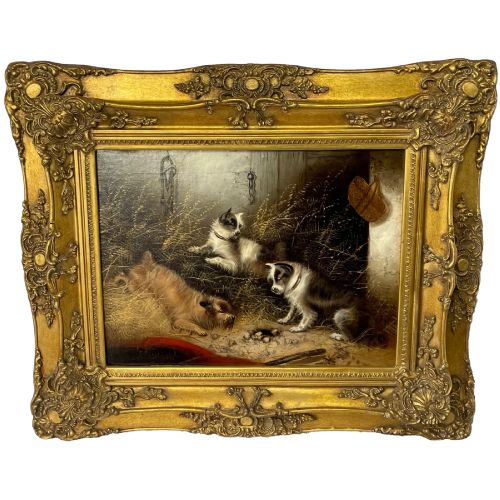
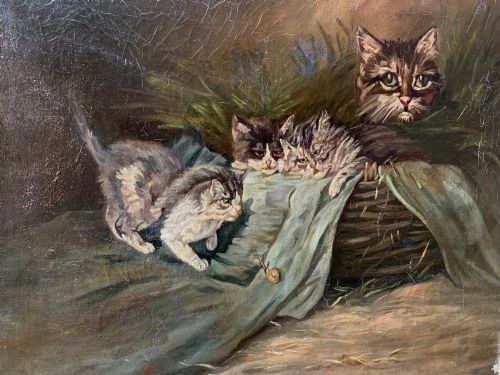
Cats, monkeys and snails share the canvas with traditional horses and hounds in nineteenth-century interpretations of animal life.
Factors determining quality
Anatomical accuracy and the rendering of light upon fur, hide or plumage separate competent commercial pieces from master works. The placement of the animal within a convincing landscape or interior adds to the compositional success.
The provenance and the standing of the artist within the period dictate the importance of the piece. Works bearing signatures from established Victorian painters command closer attention than unsigned provincial copies.
Eugène Verboeckhoven·James Smetham·Albert Clark·Martin Theodore Ward·George Augustus Holmes·John Sargent Noble·Robert Watson·Sir Edwin Henry Landseer·Fred Fitzpatrick·William Watson Jnr·Herbert Dicksee·Alfred Arthur Brunel de Neuville·Horatio Henry Couldrey·John Emms·Henry Robinson Hall·William Henry Mander·Thomas Sidney Cooper·Franz van Severdonck·George Lance·John Frederick Herring Jnr·William Barraud·Samuel Raven·Samuel Joseph Clark·George Armfield
The 19th Century Animal Artwork Glossary
- Chromolithograph
- A colour lithographic print produced from multiple stones to replicate the appearance of an oil painting. This technique allowed Victorian publishers to distribute popular animal imagery widely.
- Gesso
- A plaster-like mixture applied to wooden frames before gilding. It provides a smooth base that carvers shape into decorative mouldings.
- Etching
- A printmaking process where acid bites lines into a metal plate to hold ink. Artists pull impressions from the plate onto vellum or paper.
- Sporting art
- Depictions of hunting dogs, racehorses, shooting scenes and rural livestock. This genre flourished throughout the nineteenth century to record prized animals and field sports.
- Naive art
- Painting created by artists without formal academic training. These works feature flat perspectives and direct observation characteristic of folk traditions.
19th Century Animal Artwork: Frequently Asked Questions
What subjects are most common?
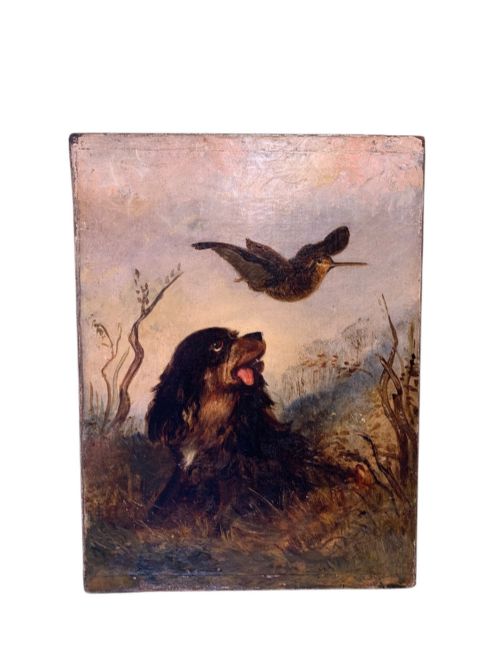
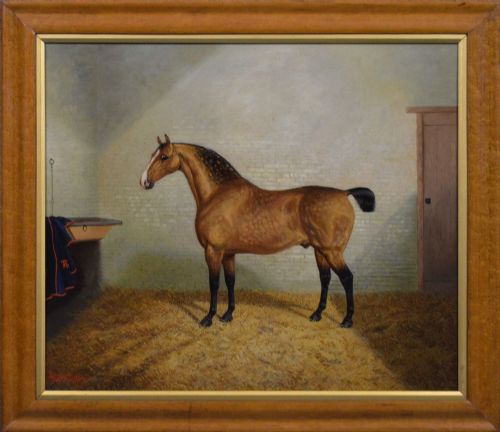
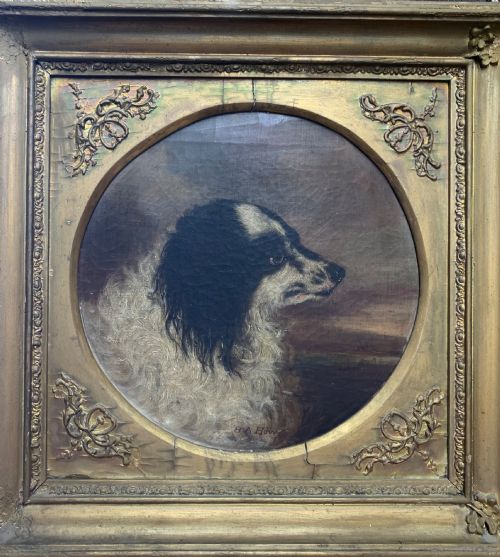
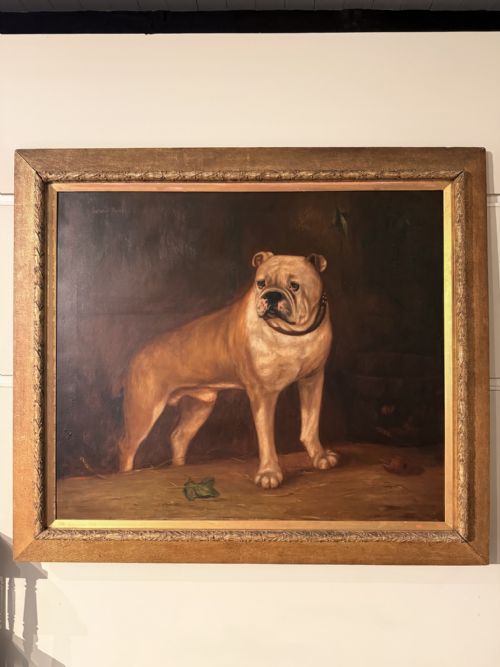
Dogs, horses and farmyard livestock dominate the surviving works from this era. Portraits of individual pet dogs and prized racehorses appear frequently alongside sheep resting in Highland landscapes.
Domestic scenes involving cats and kittens also feature prominently among the prints and paintings. Farmyard compositions combine horses with poultry, ducks and pigs in rural settings.
How do you date these pieces?
Dates rely on artist life spans, inscribed signatures, stencils on canvases, and framing styles. Costume details in companion human figures or documented exhibition records help narrow the decade.
Victorian and Regency aesthetics dictate framing weight and stretcher construction. Canvas stamps from nineteenth-century colourmen provide additional manufacturing windows.
Were these painted outdoors?
Artists typically executed preliminary pencil sketches and watercolours from life in fields, stables and kennels. The final oil paintings were then completed in the studio using these observational studies.
Some animal painters worked directly from life when commissioned to paint specific prize livestock or hunting dogs at country estates. Studio completion remained standard practice for larger or more complex landscape compositions.
How should I frame them?
Period giltwood frames with gesso ornament suit nineteenth-century oil paintings best. These heavy frames match the visual weight of the dark varnishes and deep canvases characteristic of the period.
Watercolours and etchings require conservation mounting behind glass to protect the paper from light damage. Simple wooden or gilded mouldings complement works on paper without overpowering the delicate medium.