



19th Century Altar Table
A 19th century altar table brings linear presence and architectural proportion to a room, offering a surface grounded in ritual use or domestic ceremony.
19th Century Altar Table
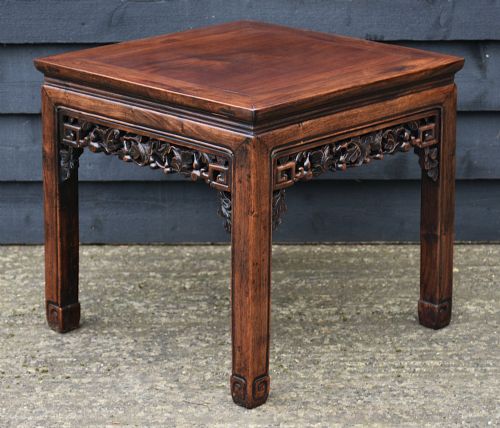
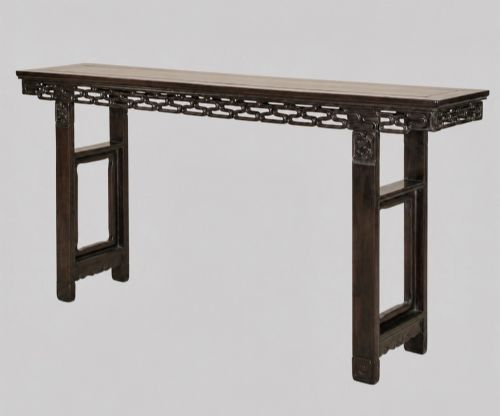
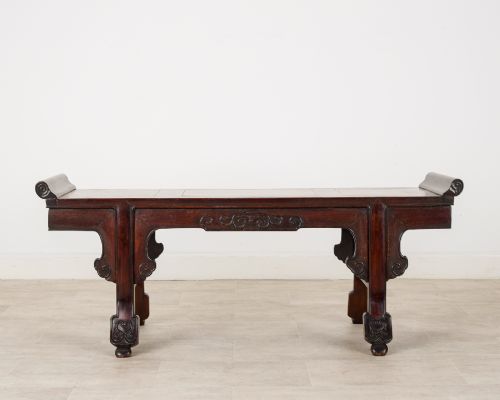
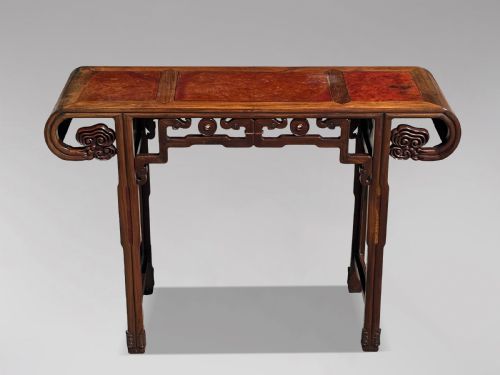
A 19th century altar table encompasses both ecclesiastical furnishings from European churches and domestic pieces originating from Chinese provincial workshops. These tables frequently present as narrow rectangular forms, often elevated on tall legs with characteristic structural stretchers or upturned ends.
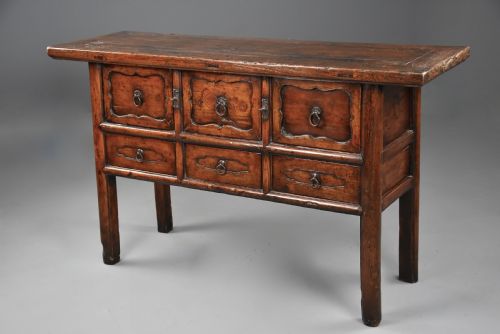
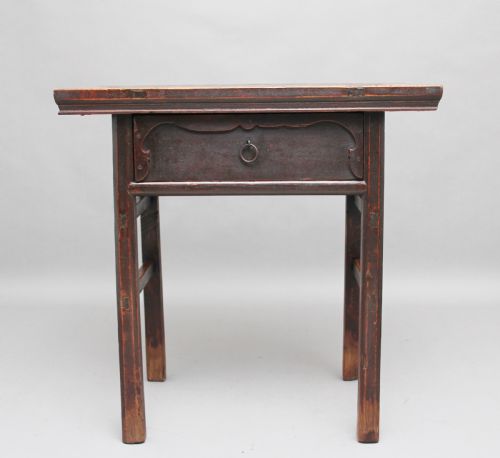
The Chinese examples appearing here span elm, rosewood, hongmu, and lacquered finishes, often linked to the Qing Dynasty or regional domestic traditions. European variants emerge in pitch pine, oak, and carved giltwood, carrying Gothic Revival or ecclesiastical styling typical of the Victorian period.
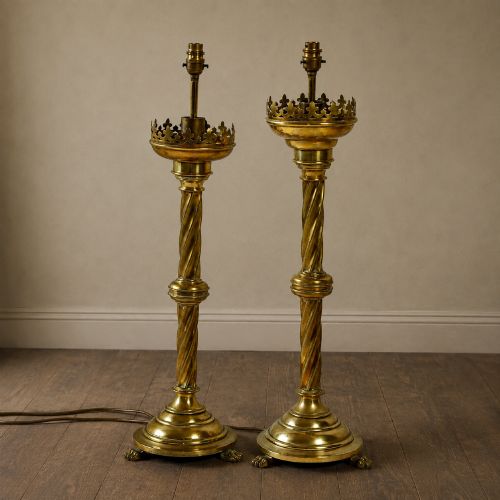
Buyers also encounter related forms on this page, including console tables, sideboards, benches, and converted church lamps or candlesticks. The selection bridges formal liturgical use and traditional Asian household design.
How they were made
Construction relies heavily on dense timbers such as elm, hardwood, and hongmu, alongside European oak and pitch pine. Joinery traditions in Chinese pieces utilise frame-and-panel construction and recessed leg placements, allowing the wood to move naturally with humidity changes.
Surface treatments range from clear beeswax finishes that highlight the natural grain of elm and rosewood to layers of dark red lacquer applied to export furniture. European ecclesiastical pieces incorporate carved giltwood, silver plating, and heavy cast brass for pricket sticks and standard lamps.
Listings feature woods spanning elm, hardwood, hongmu, oak, pitch pine, and rosewood, alongside brass and lacquer.
What varies in quality
Quality reveals itself through the selection of timber and the crispness of surviving carved details, particularly on Qing Dynasty hardwood surfaces and Gothic Revival oak mouldings. Dense rosewood and well-figured elm command attention through their natural weight and depth of grain.
The integrity of original finishes - such as undisturbed red lacquer or aged patinated pine - distinguishes untouched examples from those altered by later stripping or heavy restoration. Proportion and structural balance also separate utilitarian pieces from finer domestic or ritual furnishings.
The 19th Century Altar Table Glossary
- Hongmu
- A dense, dark tropical hardwood utilised in traditional Chinese furniture construction, prized for its weight and fine grain. It often takes a deep polish without the need for heavy staining.
- Pricket stick
- A candlestick featuring a central metal spike or pricket upon which a candle is mounted, commonly found in ecclesiastical settings. These pieces are frequently converted into table lamps in modern interiors.
- Gothic Revival
- An architectural and decorative style popular during the Victorian period, drawing inspiration from medieval ecclesiastical design. It is characterised by pointed arches, trefoils, and heavy carved oak or brass.
- Patina
- The surface sheen and colour developed by wood, metal, or lacquer over decades of handling, exposure to light, and use. A desirable patina reflects age rather than artificial distress.
19th Century Altar Table: Frequently Asked Questions
Where were these tables originally used?
Chinese examples generally served within domestic halls, temples, or ancestral shrines for displaying ritual objects or household goods. European variants originated primarily in churches and chapels for ecclesiastical services.
Over time, many of these pieces transitioned into domestic interiors as sideboards, console tables, or writing desks due to their narrow footprints.
What is the difference between an altar table and a console table?
Altar tables often feature distinct architectural details such as upturned flanges at the short ends of the top board, designed to prevent ritual items from sliding off. They also tend to have recessed legs and structural stretchers positioned for stability.
Standard console tables typically lack these specific ritual characteristics, focusing instead on flush surfaces intended for placement flat against a wall.
How do I identify Chinese elm from other woods?
Chinese elm displays a prominent, sweeping grain pattern with visible growth rings and a fibrous texture. It takes on a warm golden-brown or dark honey tone as it ages and acquires patination.
Unlike dense hardwoods such as hongmu or rosewood, elm is lighter in overall weight yet maintains structural resilience for large furniture forms.
Can converted altar lamps be used safely today?
Many brass pricket sticks and ecclesiastical candlesticks have been adapted to house electrical fittings for modern table lighting. These conversions allow historical metalwork to function in contemporary living spaces.
Buyers should inspect the internal wiring and consult professional electricians to ensure compliance with current safety standards.