

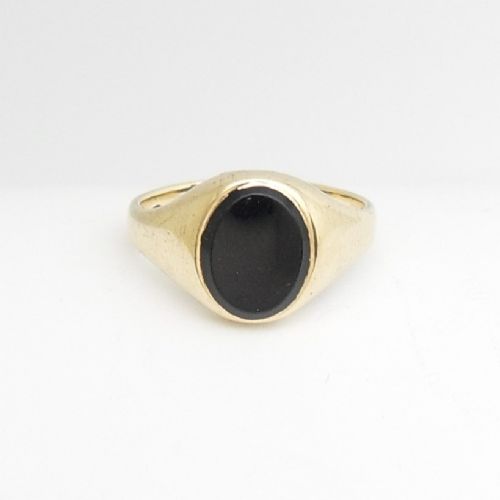


1960s Gemstone Ring
A 1960s gemstone ring brings mid-century design to the hand with bold stones and rich precious metals.
1960s Gemstone Ring
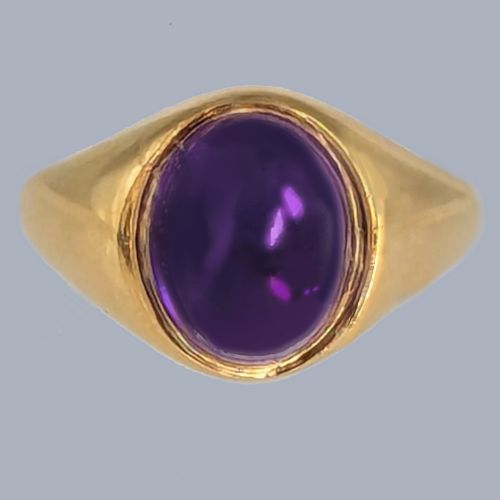
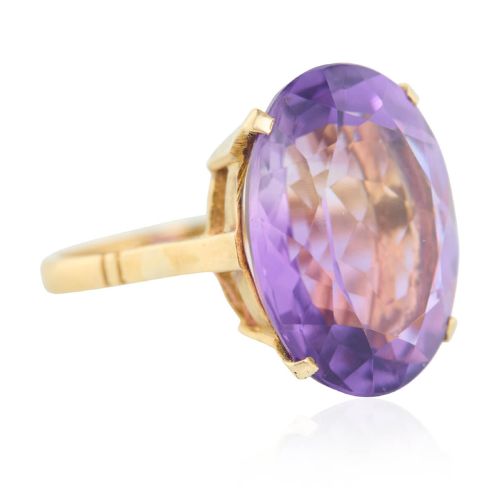
When you search for a 1960s gemstone ring, you encounter jewellery that captures the experimental spirit of mid-century design. The pieces available range from delicate single stone settings to large cocktail and dress rings featuring significant central gems.
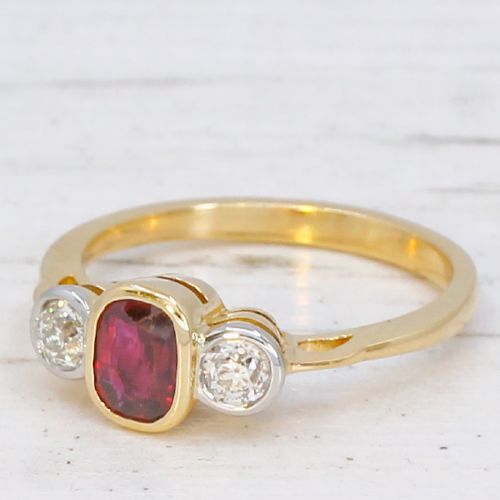
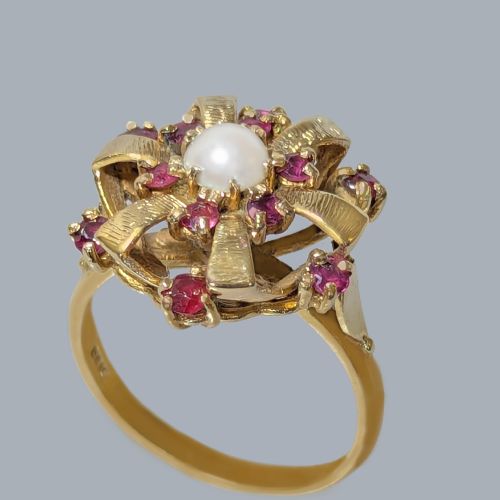
Amethyst, sapphire, aquamarine, ruby, emerald and opal appear frequently as the primary focal points. These are often accented with diamonds or set within cluster and ballerina formations that emphasise volume and colour.
Most examples originate from the 1960s or closely related mid-century periods, showcasing the characteristic styles of the decade. They serve both as everyday wear and as striking statement pieces for formal occasions.
Metals and Construction
Goldsmiths of the era worked primarily in yellow gold, white gold, and platinum, often using 9ct or 18ct purities to support substantial stones. Settings frequently combined white metal prongs or platinum heads with yellow gold shanks to highlight the brilliance of diamonds and coloured gems.
Stones were shaped into cabochons, traditional facets, or complex cuts to maximise their visual impact. Construction methods involved secure claw settings, bezel mounts, and intricate cluster arrangements designed to hold heavy gems firmly in place.
Some French examples feature interchangeable bead stones, allowing the wearer to alter their ring's colour palette on a whim.
Evaluating Gemstone Rings
Quality in these rings depends heavily on the natural characteristics of the primary gemstone, including its carat weight, colour saturation and clarity. Certified stones with documented origins, such as unheated Burmese sapphires or no oil Colombian emeralds, represent the upper tier of the market.
The standard of metalwork and the weight of the gold or platinum chassis also dictate overall excellence. Substantial shank weight, crisp hallmarks, and balanced stone arrangement distinguish superior workshop production from lighter commercial pieces.
The 1960s Gemstone Ring Glossary
- Ballerina ring
- A cluster ring featuring a central gemstone surrounded by radiating tapered baguette diamonds, resembling a ballerina's tutu.
- Cabochon
- A gemstone shaped and polished with a smooth, rounded convex surface rather than faceted planes.
- Hallmark
- An official stamp or marks applied to precious metals indicating purity, origin, and assay office.
- Solitaire
- A ring featuring a single prominent gemstone, typically a diamond or a large coloured stone.
- Cluster ring
- A design where a central stone is encircled by a group of smaller secondary stones, usually diamonds.
1960s Gemstone Ring: Frequently Asked Questions
How do I style a cocktail ring?
Cocktail and dress rings are designed to be focal points, making them ideal for evening wear or special occasions. Allowing the ring to stand alone on the hand prevents visual competition with other jewellery.
Pairing a large gemstone piece with simple attire ensures the mid-century design remains the centre of attention.
Are these rings suitable for daily wear?
Many pieces are robustly constructed in substantial gold or platinum, making them durable enough for regular use. However, softer stones like opal require additional care to avoid surface scratches.
Checking the security of the settings periodically helps protect heavier gems during everyday activities.
How can I identify a mid-century setting?
Mid-century settings often feature clean geometric lines combined with organic cluster formations, such as flower motifs or ballerina halos. The use of white gold or platinum top settings over yellow gold shanks is also typical.
Official hallmarks and stamps on the inner band frequently provide precise dates or assay office details.