





1960s French Artwork
These 1960s french artwork pieces bring mid-century Parisian energy and naive charm directly to your wall.
1960s French Artwork
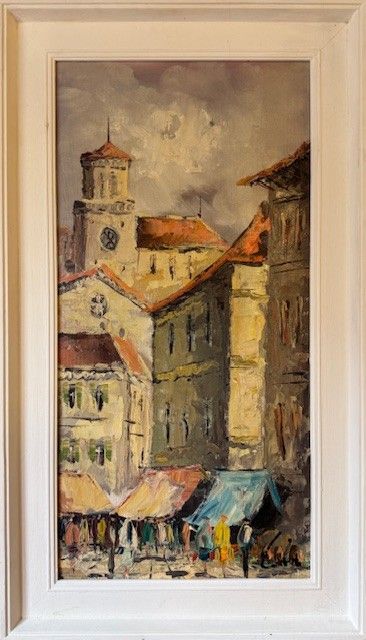
When you search for 1960s french artwork, you encounter mid-century paintings, lithographs, and prints created during a fertile decade for European visual culture. The selection here leans heavily towards oil on canvas, capturing subjects from Parisian street scenes and horse racing at Longchamp to abstract compositions and outsider art.
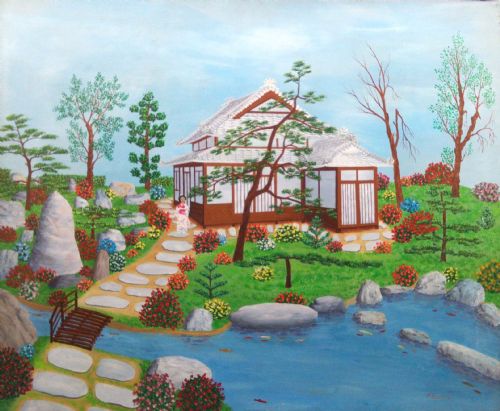
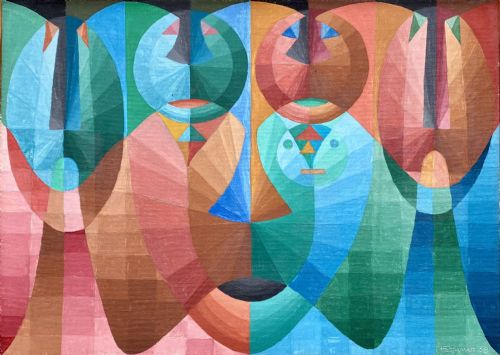
You meet works spanning multiple distinct movements, including Mid-Century Modernism, French Expressionism, Naive Art, and Op Art. Some carry specific signatures from known painters associated with groups like the Groupe De Gravelines, while others remain by unknown hands yet display characteristic period brushwork.
How they were made
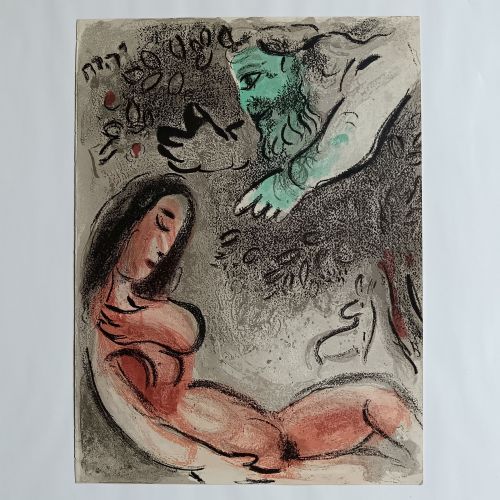
The physical objects rely primarily on oil paint applied to canvas, often supported by wooden frames. Lithographic ink on paper appears in printed editions, notably through workshop productions associated with Mourlot.
Makers utilised direct application of oil pigments to achieve both textured impasto and flat geometric planes. The framing typically consists of period wood surrounds that complement the canvas surface.
One canvas captures a child goofing around in fancy dress, reminding viewers that mid-century painters also embraced family mischief.
What varies in quality
The distinction between pieces rests upon the surety of the hand and the clarity of the artistic vision, moving from competent amateur naive scenes to confident modernist abstraction. Works by documented painters with established exhibition histories hold greater weight than anonymous student or outsider output.
Condition of the canvas, original framing integrity, and the preservation of pigment vibrancy also differentiate the items. Lithographs depend on impression crispness and sheet preservation rather than painted surface depth.
Marc Chagall·Raymond Picque·Gabriel Dauchot·Ron Folland·Christian Caillard
The 1960s French Artwork Glossary
- Lithograph
- A print made from a planographic process in which an image is drawn on limestone or metal. This technique allows for faithful reproduction of original drawings.
- Impasto
- Paint applied in thick layers that stand out from the canvas surface. This method creates tangible texture and catches the light.
- Op Art
- A style of visual art that uses optical illusions through geometric patterns. These works play with perception and movement.
- Naive Art
- Art produced by a self-taught creator lacking formal academic training. These pieces often feature simplified perspective and direct colour choices.
- Expressionism
- A modernist movement where artists seek to evoke emotional experience rather than physical reality. Brushwork tends to be dynamic and charged.
1960s French Artwork: Frequently Asked Questions
What defines 1960s French art?
These works capture a transitional period in European modernism, moving between figurative traditions and bold abstraction. Painters explored varied approaches, from expressive street scenes to geometric optical patterns.
The materials are straightforward, predominantly oil on canvas or lithographic ink on paper. They reflect the diverse cultural atmosphere of mid-century Paris and regional art communities.
How do I hang a vintage canvas?
Mid-century canvases generally require secure wall hooks suited to the weight of the wooden frame and stretcher bars. Ensure the wall surface can support the piece safely.
Keep oil paintings away from direct sunlight and damp environments to protect the pigment and canvas integrity over time.
Are lithographs original artworks?
Original lithographs are printed from plates or stones prepared by the artist or executed in collaboration with specialised workshops like Mourlot. They represent a distinct printmaking medium rather than a reproduction photograph.
Check for catalogue references and signature details to understand the specific edition and printing context of the sheet.
What is outsider art?
Outsider art describes pieces created by self-taught individuals outside the mainstream artistic establishment. These creators work independently of conventional stylistic trends. N The resulting canvases often display an uninhibited approach to perspective, subject matter, and colour application.