



1960s Diamond Halo Ring
A 1960s diamond halo ring brings together mid-century design and brilliant cluster settings, offering a striking centre stone surrounded by glittering diamonds.
1960s Diamond Halo Ring
A 1960s diamond halo ring represents the mid-century period, taking the form of a central gemstone encircled by a border of smaller diamonds. These pieces frequently appear as cluster rings or flower engagement rings, designed to maximise the visual impact of the primary stones.
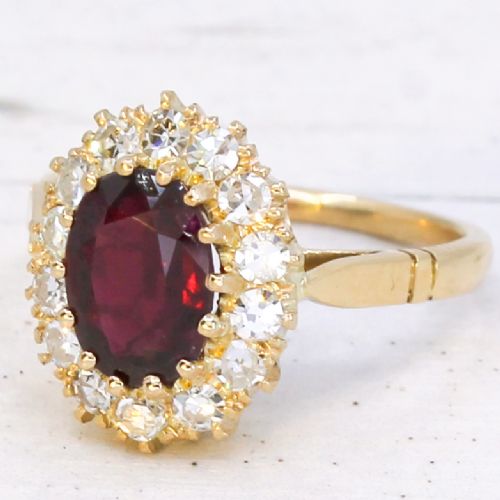
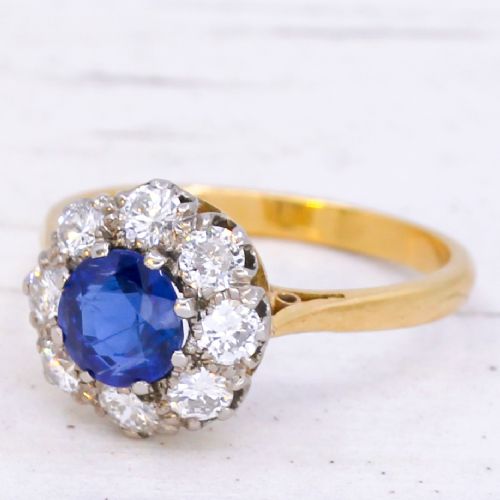
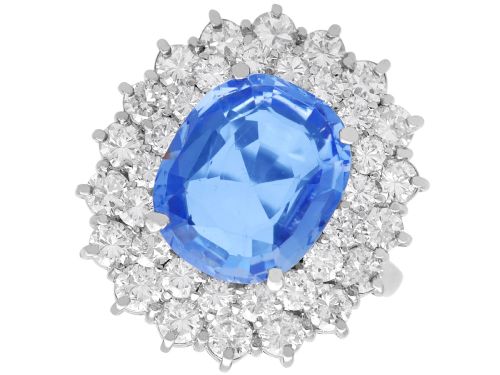
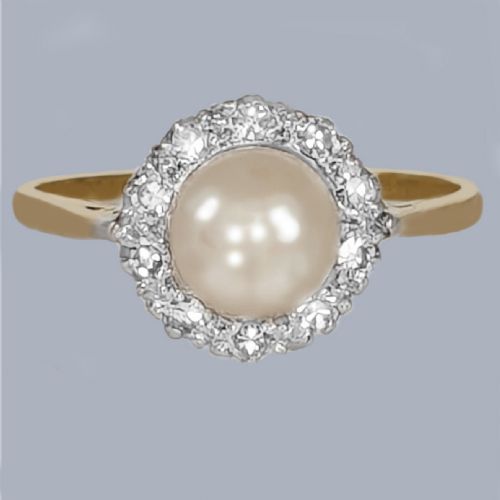
The selections available highlight various central stones alongside the signature diamond border. Sapphires, emeralds, garnets, and pearls feature prominently as centrepieces, set within circular or clustered arrangements that typify mid-century jewellery design.
Most examples originate directly from the nineteen-sixties, incorporating styles associated with mid-century modern aesthetics. Buyers encounter platinum settings, white gold mounts, and yellow gold bands that reflect the material preferences of the decade.
How they were made
Goldsmiths of the era utilised precious metals such as platinum, eighteen-carat white gold, and yellow gold to construct the mounts and bands. Platinum often secured the diamond settings, offering durability and a bright backdrop for the stones.
Jewellers arranged brilliant-cut and rose-cut diamonds around central coloured gemstones, securing them within tight cluster configurations. Setting techniques of the period ensured that the surrounding halo stones framed the primary gem closely to enhance overall brilliance.
1960s Diamond Halo Ring Retail Price Guide 2026
Typical asking prices for 1960s diamond halo ring among the pieces listed under this phrase on Sellingantiques today, from the lower quarter to the upper quarter. They describe what is for sale here now, not the wider market.
Some mid-century designs arranged diamonds to mimic blooming petals, ensuring your finger perpetually plays host to a tiny metallic garden.
What varies in quality
The calibre of the central gemstone dictates much of the distinction across these rings, particularly with natural sapphires and emeralds possessing certification or specific geographic origins like Burma, Ceylon, or Colombia. Untreated stones and those with notable carat weights elevate the standing of a piece.
Metal selection and setting execution also create variation, as seen in pieces combining eighteen-carat white gold with platinum settings. The precision of the diamond cluster arrangement and the integrity of the original hallmarking contribute to the overall character of the ring.
The 1960s Diamond Halo Ring Glossary
- Halo ring
- A ring featuring a central gemstone encircled by a concentric ring of smaller diamonds. This layout enhances the perceived size and sparkle of the primary stone.
- Cluster ring
- A jewellery design where multiple stones are grouped tightly together, frequently forming a floral or geometric pattern.
- Platinum
- A dense, durable, and naturally white precious metal utilised for securely holding diamonds and fine gemstones in mid-century settings.
- Ballerina ring
- A distinctive mid-century cluster style featuring a central stone surrounded by radiating tiers of tapered diamonds, resembling a dancer's tutu.
- Rose-cut
- An antique diamond cut featuring a flat base and a domed crown with triangular facets, often seen in mid-century interpretations of older styles.
1960s Diamond Halo Ring: Frequently Asked Questions
What defines a 1960s diamond halo ring?
These rings feature a central gemstone, such as a sapphire, emerald, or diamond, framed by a border of smaller diamonds. They originate from the mid-century period and often employ cluster or flower motifs.
The use of platinum and eighteen-carat white or yellow gold is typical for mounts and bands of this era.
How should I wear a vintage cluster ring?
A mid-century cluster ring works well as an engagement ring or a distinctive dress ring for regular wear. Careful handling helps preserve the delicate stone settings.
Removing the ring during manual tasks protects the gold or platinum band and keeps the diamond halo secure.
How can I tell the period of these rings?
Mid-century rings often display specific design characteristics such as floral cluster layouts, ballerina configurations, and combinations of white gold and platinum. Hallmarks stamped inside the band provide official verification of the assay office and year of manufacture.
Certification documents accompanying emeralds or sapphires also assist in confirming the period and origin of the central stones.
What stones appear alongside diamonds in these rings?
Natural sapphires from origins like Ceylon and Burma, as well as Colombian emeralds, frequently form the centre stone. Garnets and pearls also appear within these mid-century cluster designs.
The surrounding halo consistently consists of brilliant-cut diamonds.