


1950s Pearl Strand
A 1950s pearl strand delivers the distinct Mid-Century glamour of structured elegance through layered rows and gemstone clasps.
1950s Pearl Strand
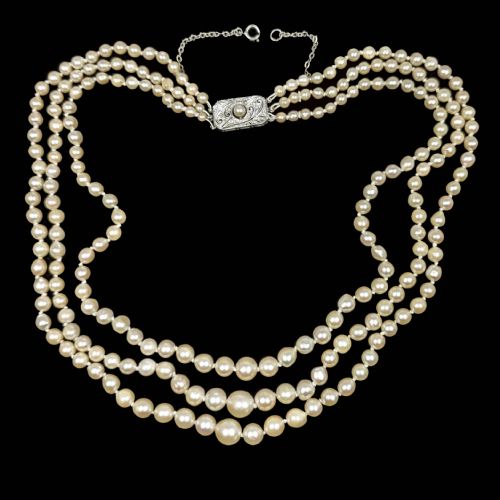
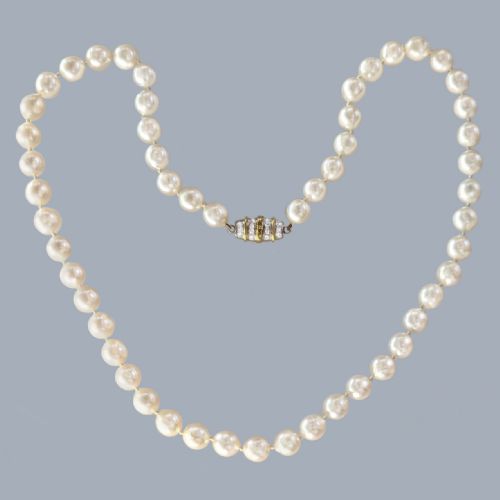
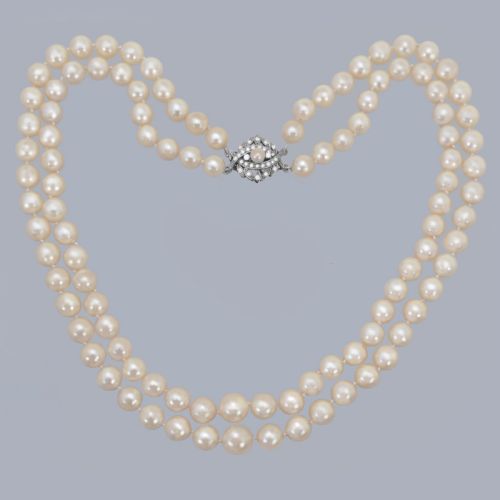
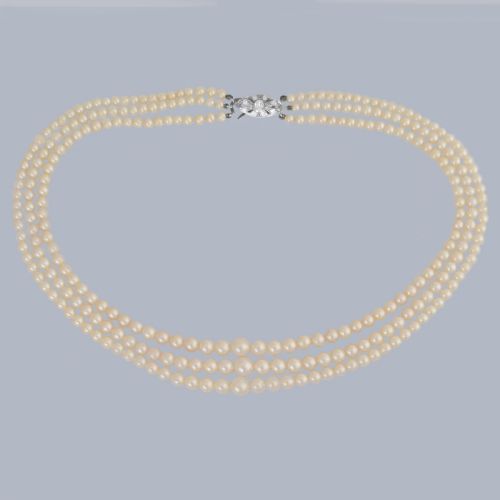
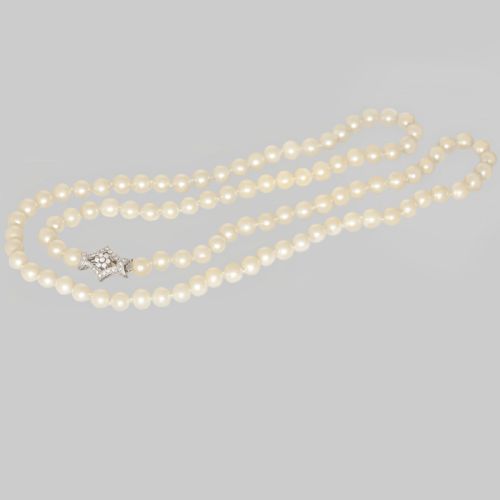
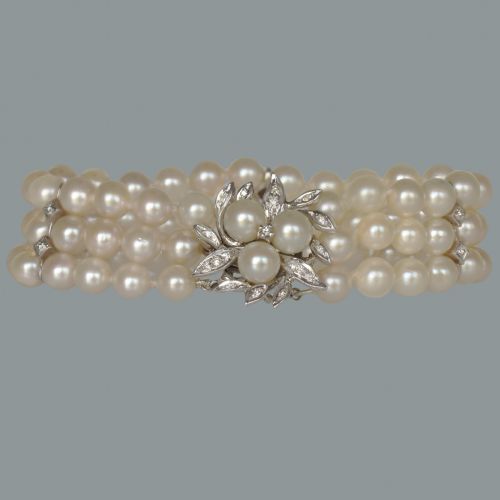
A 1950s pearl strand comprises single or multiple rows of pearls, most frequently encountered in double and triple strand configurations. These pieces originate from the Mid-Century period and include matching bracelets alongside the standard necklace format.
The objects frequently incorporate secure clasps fashioned from 9ct or 18ct gold, often set with diamonds, sapphires, garnets, or emeralds. Buyers encounter freshwater seed pearls alongside larger cultured variations that define the period's aesthetic.
Materials and construction
Jewellers utilised cultured pearls and freshwater seed pearls threaded into single or multi-strand layouts, pairing them with precious metal clasps. These clasps employ 9ct gold, 18ct gold, and platinum to secure the ends.
Master craftsmen integrated diamonds, sapphires, rubies, and emeralds into the clasp mechanisms using foliate, floral, or geometric cluster designs. Many pieces demonstrate traditional stringing techniques that require periodic professional restrung maintenance.
Listings feature 9ct gold, 18ct gold, platinum, diamonds, sapphires, garnets, emeralds, and rubies across 1950s pieces.
What separates the grades
The quality of a 1950s pearl strand depends heavily on the uniformity, lustre, and size of the pearls utilised across the rows. Heavier multi-strand constructions with well-matched pearl diameters command greater attention from collectors.
Clasp complexity and gemstone weight dictate the upper tiers of the range, particularly when platinum or high-carat gold supports substantial old-cut diamonds or fine sapphires. Hallmarking clarity and accompanying gemological certificates further distinguish the finest examples.
The 1950s Pearl Strand Glossary
- Cultured pearl
- Pearls formed through the introduction of a nucleus into an oyster, resulting in the smooth nacre layers seen in Mid-Century jewellery. These make up the vast majority of stones from this era.
- Seed pearl
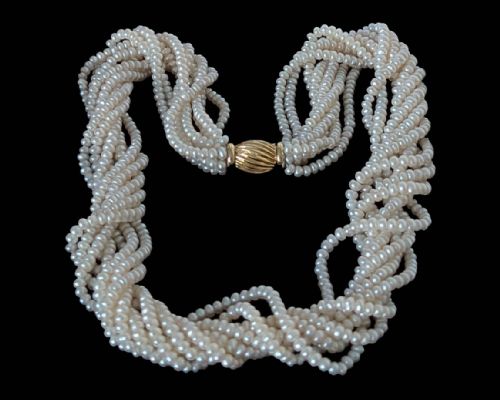
- Very small natural or freshwater pearls tightly strung in multi-row formations. They create a dense, textured look popular in 1950s bracelets and necklaces.
- Clasp
- The mechanical closure mechanism that fastens the strand, frequently designed as an ornamental focal point set with diamonds and coloured gemstones. In 1950s pieces, these often feature foliate or geometric motifs.
- Restrung
- The maintenance process of replacing worn silk or nylon thread holding the pearls. Regular restringing prevents strand failure and keeps the rows hanging correctly.
- AnchorCert
- An independent laboratory report providing gemstone and pearl verification. These certificates confirm the origin and treatment details of the materials.
1950s Pearl Strand: Frequently Asked Questions
How do I wear a multi-strand pearl necklace?
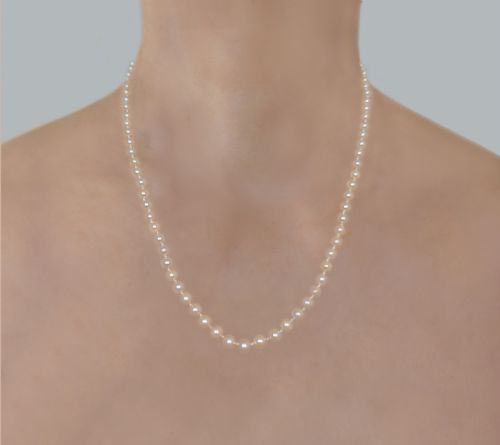
Multi-strand necklaces sit closely against the collarbone due to their layered weight, making them well-suited to open necklines and evening wear.
The prominent clasp can be worn at the back for traditional formality or rotated to the side to showcase the diamonds and coloured gemstones.
Are these pearls natural or cultured?
The pieces from this era primarily utilise cultured pearls grown with human intervention to stimulate nacre production.
Freshwater seed pearl variations also appear across the selection, offering a different textural profile to standard round cultured pearls.
What metal is used in the clasps?
Clasps from this period are predominantly cast in 9ct or 18ct yellow and white gold, with occasional platinum settings used for high-value diamond arrangements.
These mounts frequently incorporate secure box clasps or tongue fasteners hidden beneath floral or abstract gemstone clusters.
How often should pearl strands be restrung?
Professional jewellers recommend restringing pearl strands every few years, especially if the silk thread shows stretching or dirt accumulation between the knots.
Knots tied between each pearl protect the individual stones from rubbing together and prevent total loss if the cord snaps.