
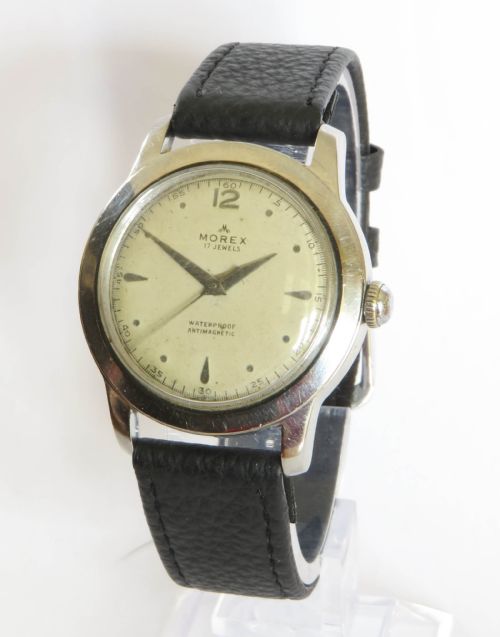
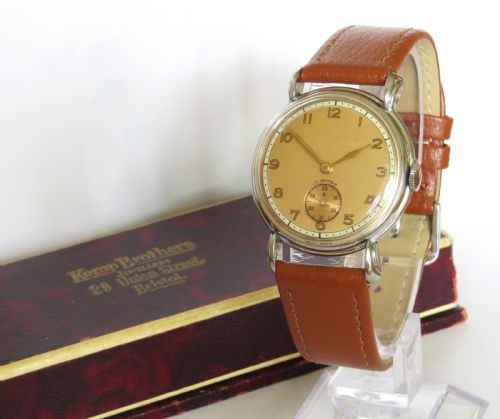
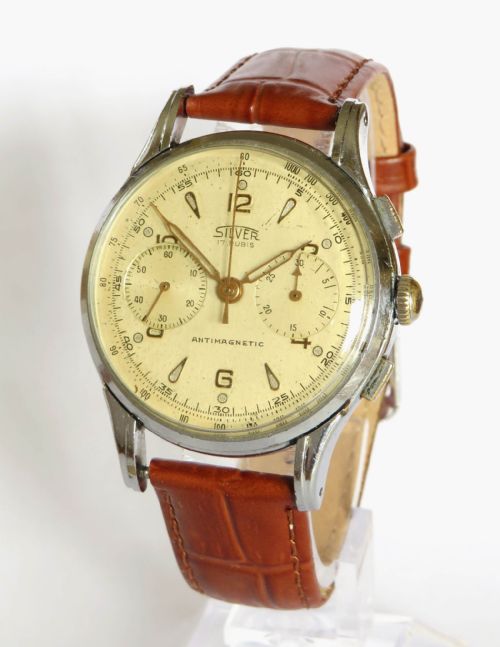
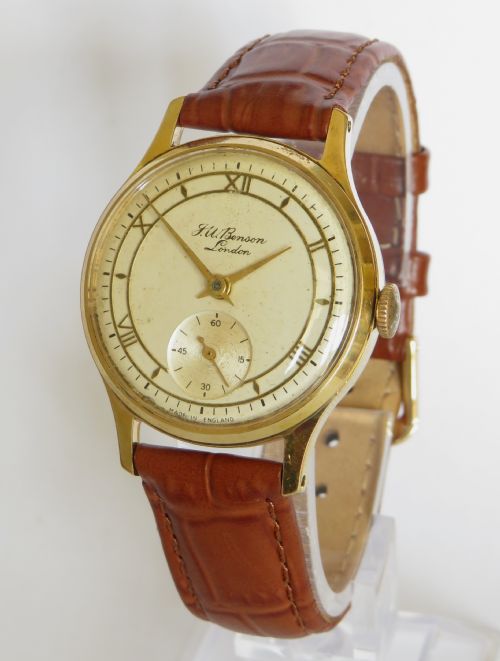


1950s Manual Wind Watch
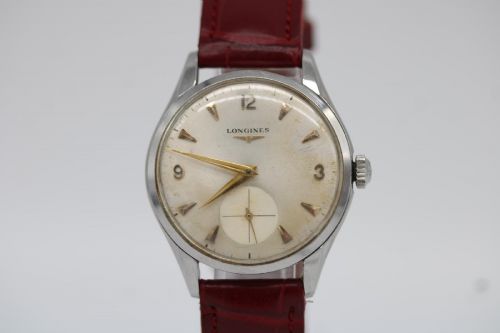
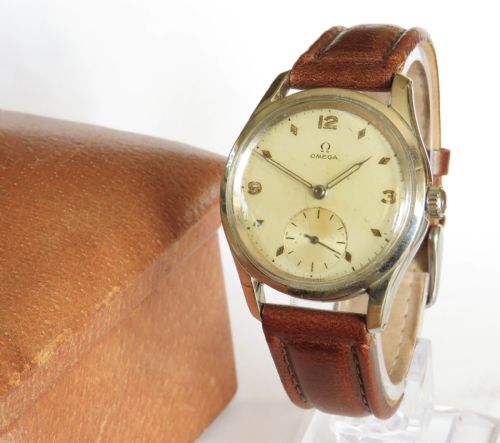
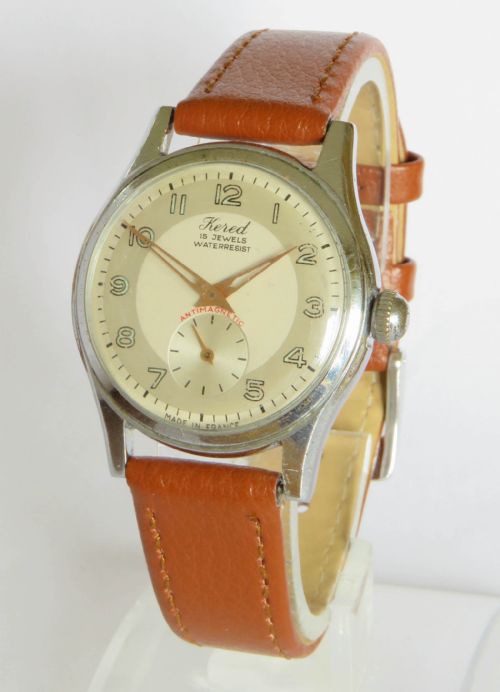
A 1950s manual wind watch offers a direct connection to mid-century horology through mechanical precision and timeless wristwear design.
1950s Manual Wind Watch
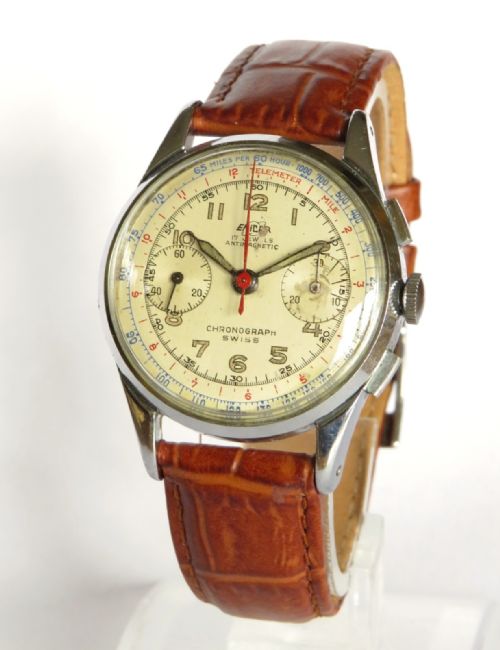
A 1950s manual wind watch is a mechanical timepiece powered by hand rather than automatic winding or a battery. These pieces belong to the mid-century period, spanning general gents and ladies wristwatches alongside specialised chronographs.
The selections available range from sturdy daily wearers in stainless steel and chrome to precious metal pieces in gold plate, 9ct gold, and 18ct yellow or rose gold. British and Swiss makers dominate the designs, reflecting the primary horological centres of the decade.
Buyers will encounter various forms, including simple three-hand dials, complex triple-date calendars, moonphase variants, and diamond-set cocktail pieces. Mid-century modern aesthetics dictate the clean dial layouts and balanced case proportions typical of the era.
How they were made
The cases utilise metals such as stainless steel, chrome, gold plate, and solid 9ct or 18ct gold, paired with protective acrylic or glass crystals. Leather straps provide the standard mounting for gents models, while integrated metal bracelets accompany select ladies dress pieces.
Inside the metal cases sit mechanical movements containing jewels that reduce friction on pivot points. Dials feature applied metal numerals or indices, often protected by water-resistant or dust-resistant case designs like the Oyster system.
Some models squeeze triple-date calendars and moonphase displays into wristwatches smaller than a modern coin.
What varies in quality
Quality separates by the refinement of the internal movement and the grade of the casing materials. Solid gold cases and proprietary in-house calibres from established Swiss and British houses sit above plated brass cases and generic movements.
Condition of the dial and original components dictates the level of preservation. Unrefinished dials with matching hands command greater attention from collectors than heavily restored or mismatched assemblies.
Montilier·Antoremi·Smiths·J W Benson·Longines·Enicar·Omega·Kered·Lanco·Dogma Prima·Certina·Rolex·Baume and Mercier·Tissot·Miramar·Jaeger-LeCoultre·Chronographe Suisse·Movado
The 1950s Manual Wind Watch Glossary
- Calibre
- The specific manufacturer's designation for a particular watch movement design. It helps identify the exact mechanical architecture inside the case.
- Chronograph
- A watch equipped with a stopwatch function alongside the standard time-displaying hands. Independent sub-dials record elapsed seconds and minutes.
- Manual wind
- A mechanical movement wound by hand via the crown daily or as needed. It lacks an internal rotor for automatic winding.
- Incabloc
- A brand of spring-loaded shock absorber system used to protect balance staff pivots from impact damage. It appears frequently on mid-century Swiss movements.
- Moonphase
- A complication displaying the current phase of the moon on a rotating disc through a dial aperture. This feature is typically found on calendar watches.
1950s Manual Wind Watch: Frequently Asked Questions
How often should I wind my watch?
A 1950s manual wind watch requires winding once a day, typically in the morning, to maintain consistent tension on the mainspring.
Turn the crown gently until resistance builds, stopping before forcing it further to prevent internal damage.
Are these watches water resistant?
Mid-century watches generally lack modern water resistance standards and should be kept away from moisture, rain, and immersion.
Gaskets and seals degrade over decades, meaning even pieces marked waterproof require professional testing before exposure to water.
Can I wear a vintage watch daily?
Daily wear is possible provided the piece receives regular servicing by a qualified watchmaker familiar with vintage mechanical movements.
Avoiding heavy impacts, magnetic fields, and water ensures these delicate horological items continue running accurately.
How do I identify the production year?
Production years are often determined by matching serial numbers engraved on the case or movement against manufacturer archives.
Certain makers stamped reference numbers or production dates inside the case back during assembly.