


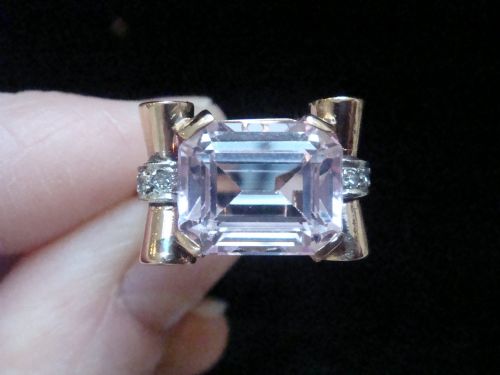


1940s Retro Cocktail Ring
These substantial 1940s retro cocktail ring designs combine heavy gold settings with vivid coloured stones, offering a striking statement for evening wear.
1940s Retro Cocktail Ring
A 1940s retro cocktail ring stands out through generous proportions and bold geometric shaping. These substantial jewels emerge predominantly from the 1940s period, alongside related examples from the 1930s and 1950s.
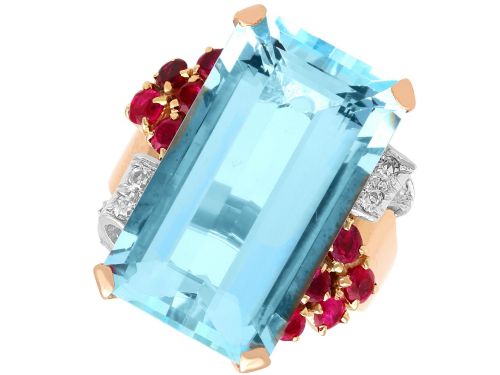
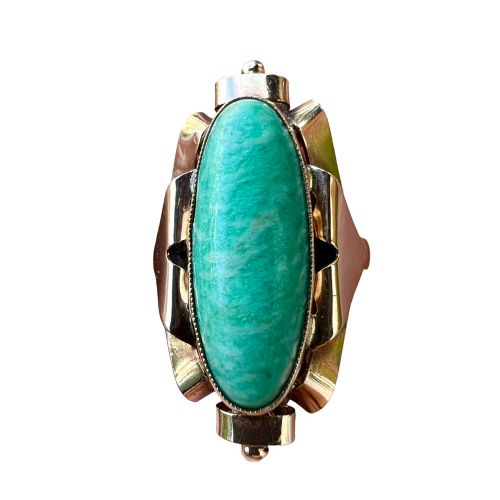
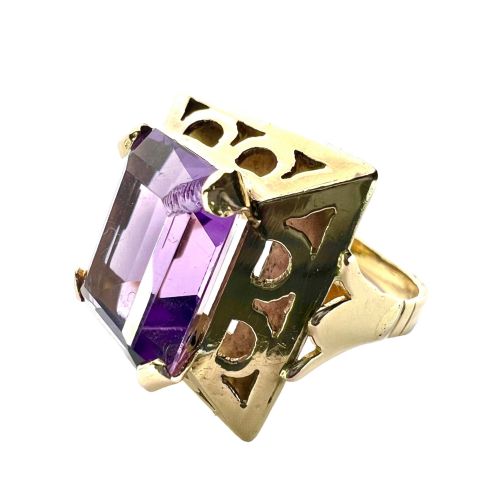
The aesthetic embraces the robust tank style, often featuring architectural metalwork that mimics machinery or ribbon folds. Central stones are typically large, spanning aquamarines, rubies, amethysts, opals, and sapphires.
Most pieces on display showcase yellow gold, rose gold, or platinum as a foundation. They carry significant weight on the hand, serving the original purpose of drawing attention during cocktail hour.
Materials and Construction
Goldsmiths of the era utilised 14ct and 18ct gold in yellow and rose tones, frequently pairing them with platinum for secure stone settings. This metal combination provided the structural strength required for massive centre stones without sacrificing pliability.
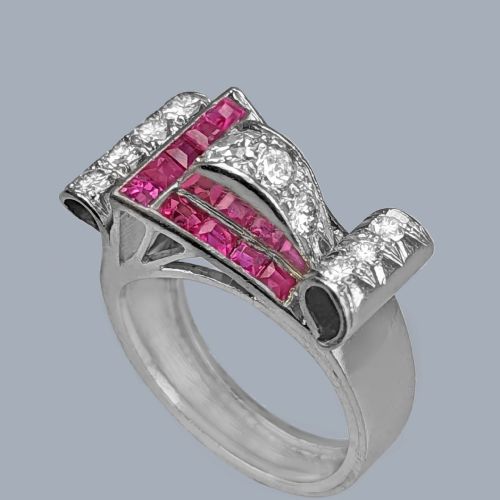
Gemstones such as diamonds, rubies, and aquamarines are integrated using channel, bezel, or pavé settings. The tank style relies on heavy cast and folded metal ribbons that wrap around the finger with volumetric presence.
1940s Retro Cocktail Ring Retail Price Guide 2026
Typical asking prices for 1940s retro cocktail ring among the pieces listed under this phrase on Sellingantiques today, from the lower quarter to the upper quarter. They describe what is for sale here now, not the wider market.
Some heavy tank rings weigh over eleven grams, ensuring your finger gets a solid workout during every cocktail party.
Distinctions in Quality
Superior examples distinguish themselves through the exceptional carat weight and clarity of central gems, such as substantial aquamarines or Ceylon padparadscha sapphires. The heft of the mount, often exceeding several grams of gold or platinum, also separates finer work from lighter iterations.
Execution of the tank style dictates the upper tier of craftsmanship. Pieces that exhibit precise geometric folding, integrated diamond accents, and balanced proportions represent the peak of period production.
The 1940s Retro Cocktail Ring Glossary
- Tank ring
- A jewellery style originating in the mid-twentieth century, characterised by bulky, volumetric gold work inspired by military hardware. It often incorporates channel-set side stones alongside a prominent central gem.
- Retro modern
- A design period spanning the 1930s and 1940s that favoured oversized, sculptural jewellery in warm-toned gold. It moves away from the flat, linear geometry of earlier decades towards three-dimensional curves.
- Old cut diamond
- A diamond cutting style prevalent before modern brilliant cuts, featuring a smaller table, higher crown, and open culet. These stones project a softer, warmer scintillation under candlelight.
- Paste
- Hand-cut and polished lead glass used as a gemstone simulacrant in period jewellery. It provides brilliance and colour saturation comparable to natural stones.
1940s Retro Cocktail Ring: Frequently Asked Questions
What defines a 1940s retro cocktail ring?
These rings are defined by their oversized proportions, bold sculptural metalwork, and use of warm-toned gold or platinum. They frequently feature large central coloured stones flanked by diamonds in architectural tank-style settings.
They reflect the post-war shift towards flamboyant, confidence-boosting jewellery designed for evening social events.
How do I wear a tank ring daily?
Given their substantial weight and prominent settings, tank rings suit special occasions or careful daily wear. Pairing them with simpler attire allows the bold metalwork and large gemstones to remain the focal point.
Because many pieces feature high profiles, take care to avoid striking hard surfaces with the central stone.
Are these rings made of solid gold?
The listings consist of pieces fashioned from solid 14ct gold, 18ct yellow gold, 14ct rose gold, and platinum. These durable metals support the heavy stones and complex folded designs typical of the era.
Precious metal content is reflected in the physical weight of the mount, which often feels notably heavy on the finger.
How can I tell a 1940s ring from an Art Deco one?
While Art Deco jewellery relies on flat, strict symmetry and white metals like platinum, 1940s retro pieces introduce three-dimensional curves and warm rose or yellow gold. The later style favours bulk, volume, and mechanical motifs.
Overlap does occur as styles transitioned during the late 1930s and early 1940s.