
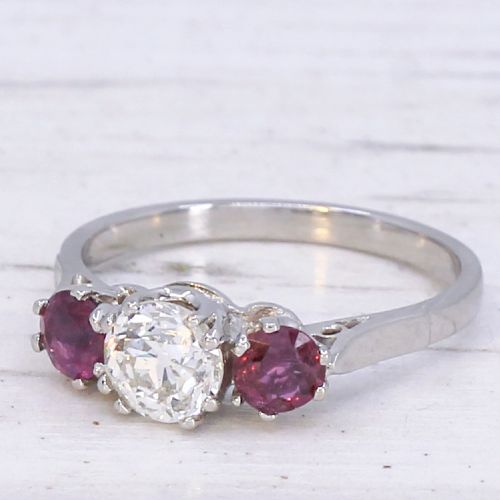


1940s Platinum Diamond Ring
A 1940s platinum diamond ring delivers the crisp, durable elegance of mid-century design combined with substantial old cut stones.
1940s Platinum Diamond Ring
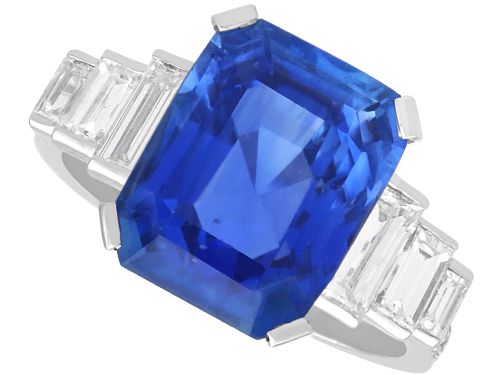
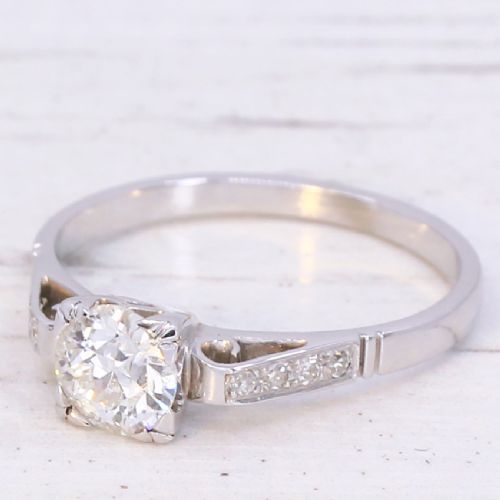
A 1940s platinum diamond ring brings together the bold geometry of the Art Deco period and the robust, sculptural forms of 1940s Retro design. These pieces combine bright white metal with old cut diamonds, often accented by rubies, sapphires, or opals.
The most common examples on this page are engagement rings and cluster rings featuring prominent centre stones. These items reflect the transition from strict interwar symmetry to the more fluid, substantial jewellery styles of the mid-1940s.
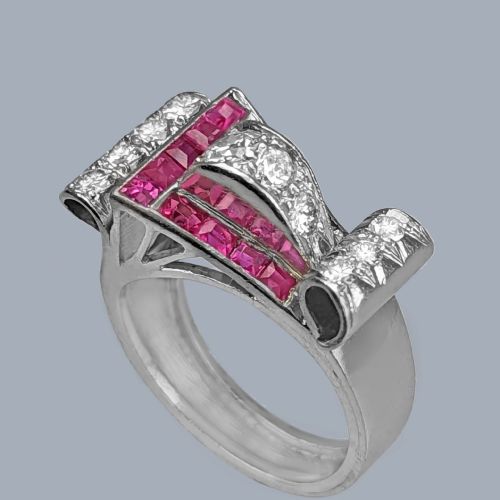
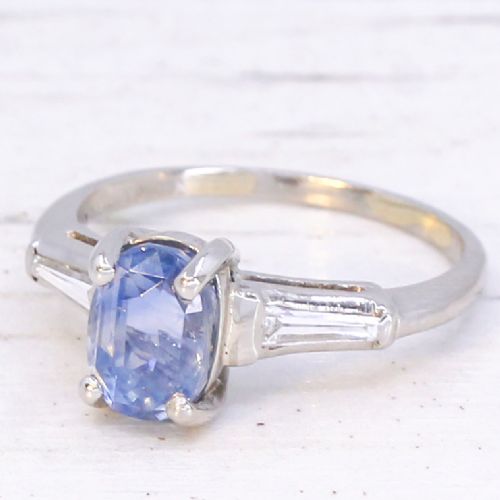
Makers of the era utilised platinum for its strength, allowing intricate settings to hold significant carat weights securely. Alongside diamond solitaires and trilogy rings, buyers encounter buckle rings and elaborate coronet clusters.
How they were made
Craftsmen built these rings primarily in platinum, a dense and resilient metal that supported delicate claw and pave settings without adding excessive bulk. This material choice kept mountings secure while maximising the play of light through the stones.
Gemstones in these pieces typically feature old cut diamonds, prized for their deeper pavilions and hand-faceted character. Coloured stones such as Ceylon sapphires, rubies, and chrysoberyls are integrated directly into the platinum framework alongside the diamond work.
Listings feature platinum paired with diamonds, sapphires, rubies, and opals across the Art Deco, Retro, and Mid-Century styles.
What varies in quality
Quality in a 1940s platinum diamond ring rests on the harmony between the mounting and the cut of the primary stones. Superior examples display precise hand-cut facets in the diamonds and secure, well-balanced settings that complement the natural colour of accompanying sapphires or rubies.
The integrity of the platinum structure dictates longevity, with finer pieces showing crisp edges and minimal wear to the prongs. The origin and treatment of centre stones, such as unheated Kashmir sapphires or high-carat Ceylon padparadscha gems, also determine the standing of an individual piece.
The 1940s Platinum Diamond Ring Glossary
- Platinum
- A dense, naturally white precious metal chosen for its durability and strength in fine jewellery settings. It permits slender claws that secure large gemstones safely.
- Old Cut Diamond
- A diamond faceted by hand before modern symmetrical standards were established, characterised by a smaller table and a higher crown. These stones display a distinctive, softer scintillation under candlelight.
- Trilogy Ring
- A ring set with three principal stones, often symbolising the past, present, and future. In mid-century pieces, these frequently combine a central diamond with side stones.
- Coronet Cluster
- A mounting style where a central gemstone is encircled by a crown of smaller stones, elevating the cluster to catch light from multiple angles.
1940s Platinum Diamond Ring: Frequently Asked Questions
How do I identify a 1940s ring?
Look for a combination of late Art Deco geometry and heavy Retro styling executed in platinum. The use of old cut diamonds alongside substantial precious metal work typically points to this decade.
Examine the mounting techniques and gemstone combinations, such as sapphires or rubies paired with heavy platinum bands. Hallmarks and period-specific design cues help confirm the era of manufacture.
Are platinum diamond rings durable for daily wear?
Platinum is one of the most durable and resilient metals used in jewellery, making it exceptionally well-suited for everyday wear. Its density means it wears down very little over decades.
Parks and claws forged in platinum hold diamonds securely under normal conditions. Routine checks by a specialist ensure the settings remain tight.
What is the difference between an old cut and a modern diamond?
Old cut diamonds are shaped by hand rather than by machine, resulting in deeper proportions and wider facets. This historical cutting style produces broader flashes of light rather than the pinpoint brilliance of modern stones.
These diamonds often possess a distinct warmth and charm unique to mid-century and earlier craftsmanship. They integrate seamlessly into vintage platinum settings.
Can I wear coloured gemstone rings daily?
Sapphires, rubies, and diamonds possess high hardness ratings that make them robust enough for regular wear. Softer stones like opals require greater care to avoid impact and scratching.
Matching the stone type to your daily routine ensures the ring retains its condition. Secure platinum settings protect coloured gems from accidental displacement.