
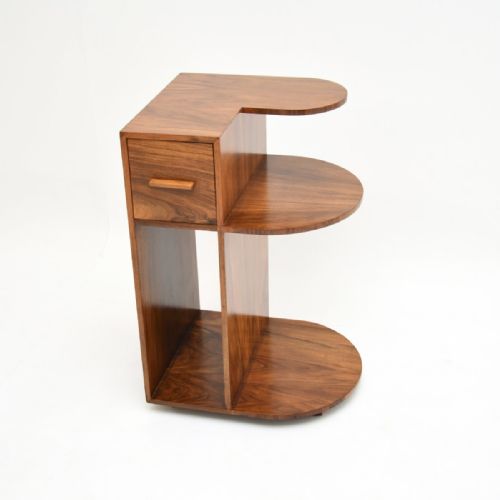
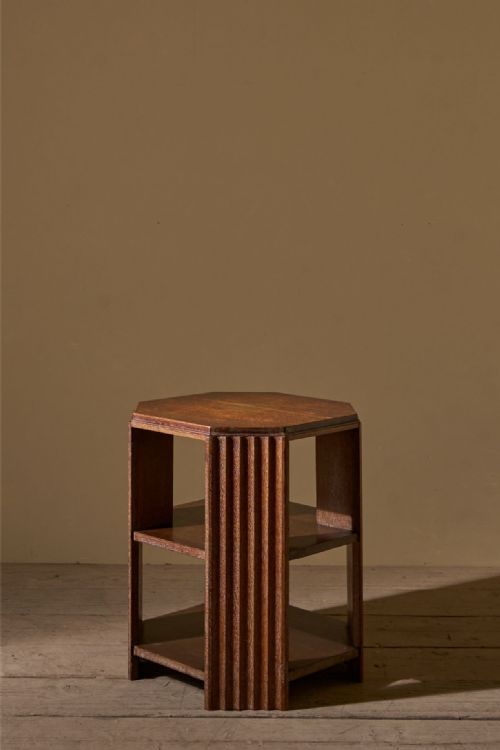
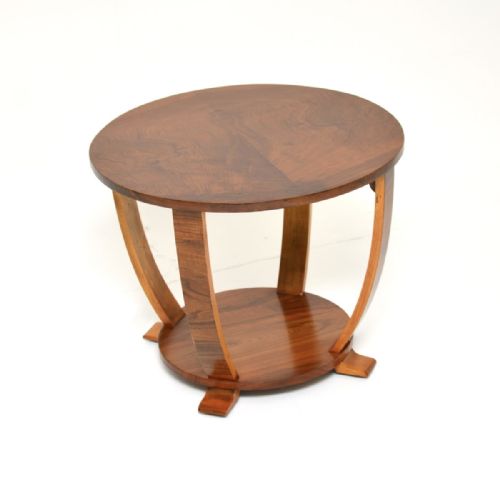
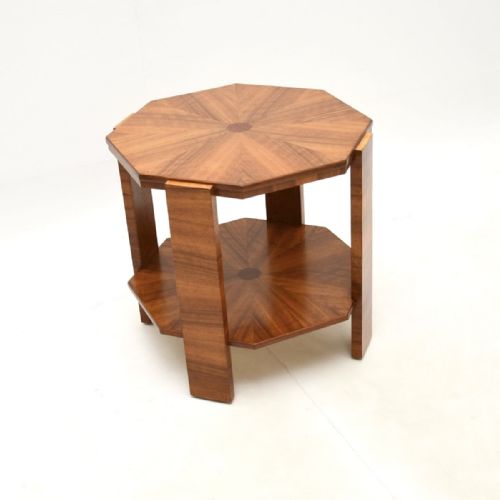


1930s Tiered End Table
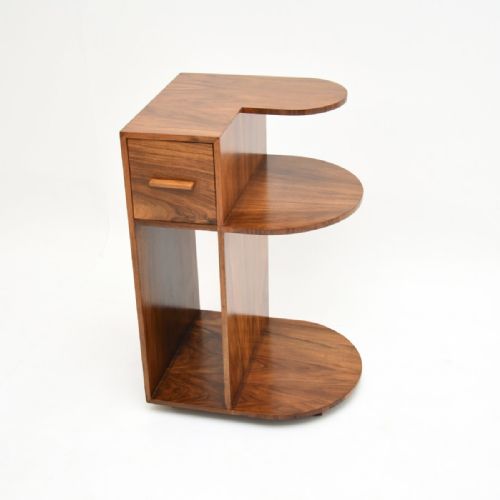
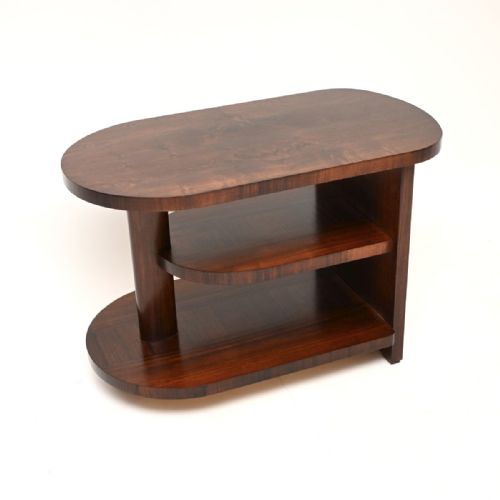
These 1930s tiered end table designs bring geometric lines and warm timber tones to any corner.
1930s Tiered End Table
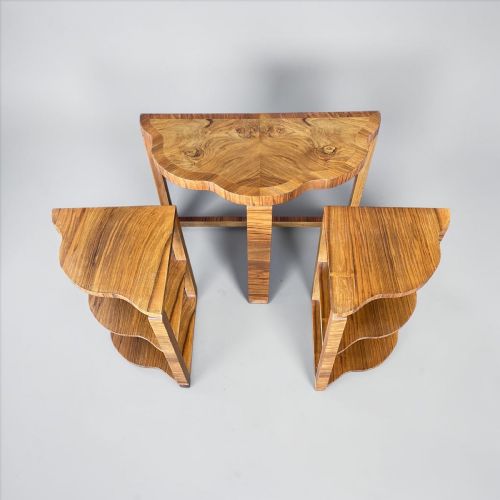
A 1930s tiered end table functions as a compact surface for lamps, books, and daily items while anchoring a room in the Art Deco style. Most examples appearing here span side tables, occasional pieces, nests, and coffee tables originating around 1930, though some stretch into the 1920s and 1940s.
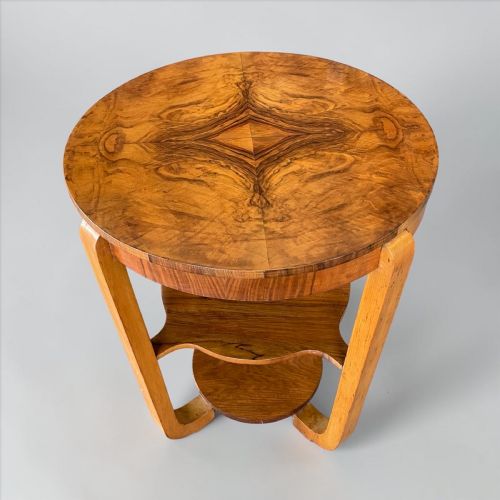
The dominant forms rely on multiple surfaces stacked vertically, creating stepped profiles that maximise display space without expanding the floor footprint. Walnut, oak, and exotic veneers define the silhouettes, frequently enhanced by contrasting borders or metal accents.
How they were made
Cabinetmakers constructed these pieces using solid timbers such as oak alongside rich veneers including figured walnut, burr walnut, rosewood, and birds eye maple applied to stable core woods. Skilled hands laid these grain patterns to create symmetrical movement across the top surfaces and tiered shelves.
Many designs incorporate chrome supports, ebonised wood details, or maple inlays to break up the expanses of dark timber. Joinery remained precise and hidden, allowing the geometric lines of the Art Deco movement to take primary visual focus.
Some tables include hidden wheels, letting you effortlessly roll your afternoon tea across the carpet.
What varies in quality
The distinction between standard commercial production and superior craftsmanship rests in the selection of the veneer and the complexity of the tiered architecture. Pieces utilising highly figured burr walnut, Karelian birch, or rosewood demand greater skill in matching and laying the grain.
Hardware integration and secondary materials also set examples apart, with heavier chrome plating and thoughtful combinations of contrasting woods like maple and ebonised timber indicating elevated workshop standards.
Gilbert Rohde·Hille
The 1930s Tiered End Table Glossary
- Art Deco
- A design movement spanning the interwar period characterised by streamlined geometric forms, stylised motifs, and modern industrial materials.
- Veneer
- A thin layer of decorative timber applied over a structurally stable base wood to display dramatic grain patterns.
- Occasional table
- A versatile small table designed for flexible placement around a room rather than a single fixed purpose.
- Burr walnut
- A prized timber harvested from walnut tree growths, featuring swirling, knotted grain patterns highly sought after by cabinetmakers.
- Ebonised wood
- Timber treated with chemical stains or dark finishes to imitate the deep, uniform blackness of ebony.
1930s Tiered End Table: Frequently Asked Questions
Where should I place a tiered end table?
These pieces fit naturally beside armchairs, sofas, or in awkward corners where vertical stacking provides maximum surface area.
Their compact footprints allow them to function as lamp tables or display surfaces without overwhelming the surrounding floor space.
How do I care for walnut veneer?
Dust surfaces regularly with a soft, dry cloth and keep tables away from direct heat sources to prevent timber shrinkage.
Applying occasional appropriate wood waxes helps maintain the moisture and natural lustre of the historical finish.
What defines the Art Deco style?
The aesthetic relies on clean geometric lines, stepped profiles, and a sophisticated mix of traditional and modern materials.
Tables from this period often balance symmetry with bold contrasts between dark woods and bright metallic accents.
How do I distinguish between decades?
Pieces attributed to the 1920s tend to experiment with early modernist geometry, while 1930s examples fully embrace tiered waterfall edges and chrome.
Items reaching into the 1940s often show simpler construction methods driven by wartime material restrictions.