
1930s Table Lighting
These 1930s table lighting pieces bring distinct period form and utilitarian purpose into a room, offering functional illumination shaped by early twentieth-century design.
1930s Table Lighting
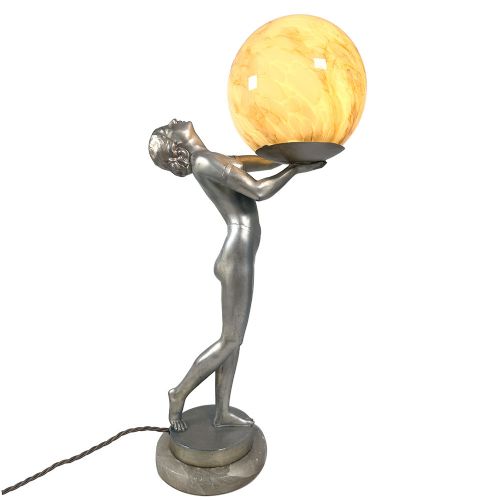
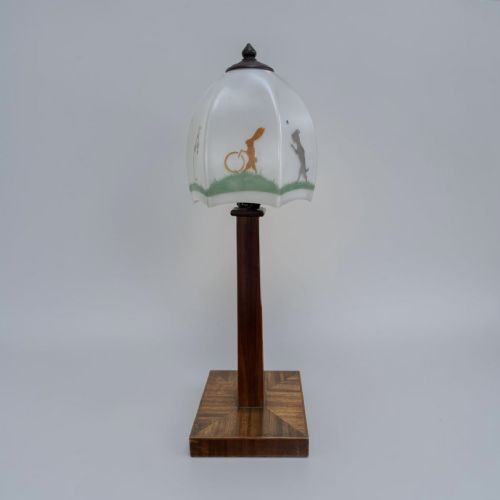
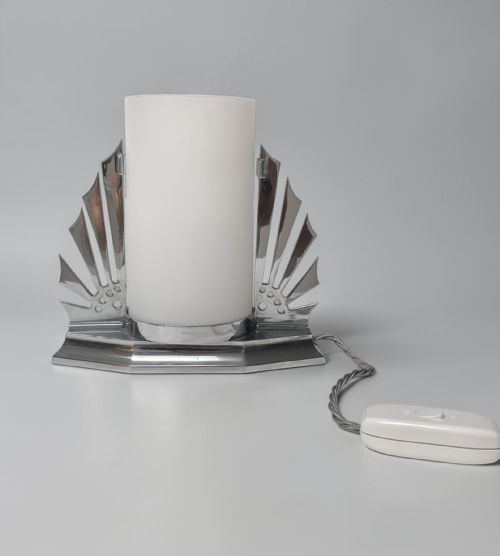
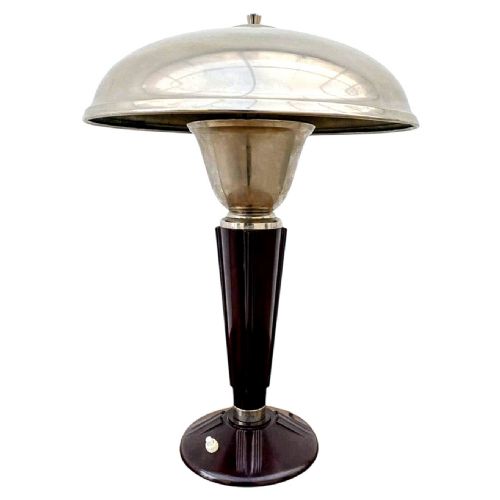
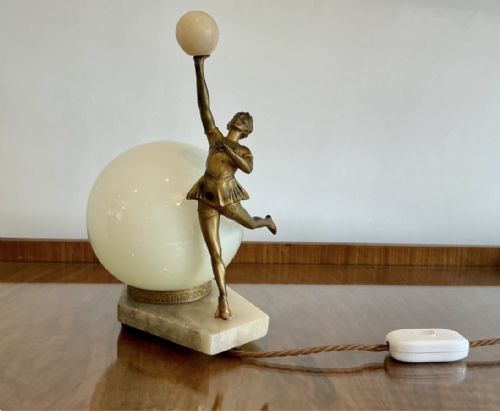
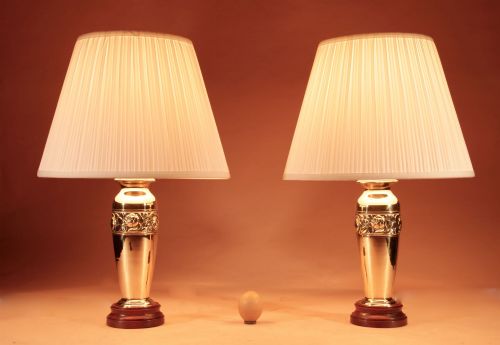
When you search for 1930s table lighting, you encounter functional objects that combine period utility with decorative presence. These items emerge from the 1920 and 1930 periods, encompassing table lamps, desk lamps, and novelty figural pieces.
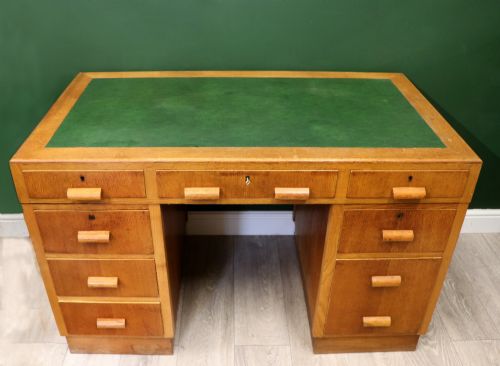
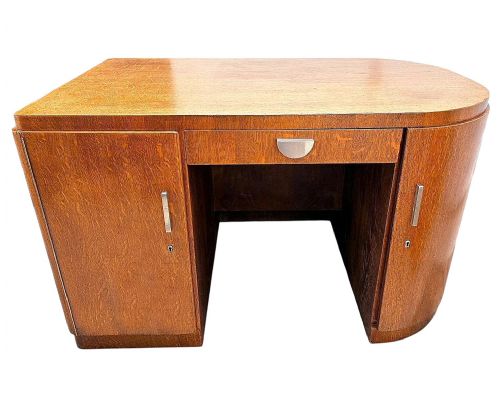
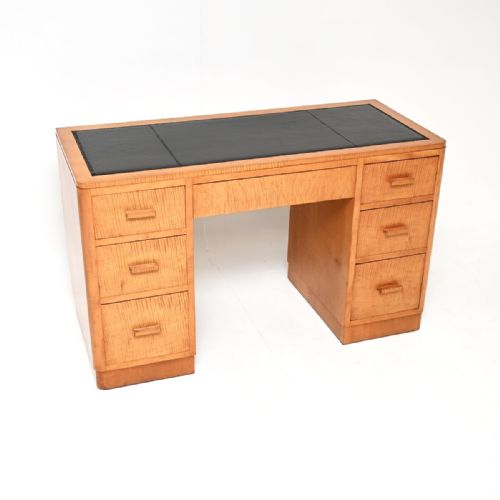
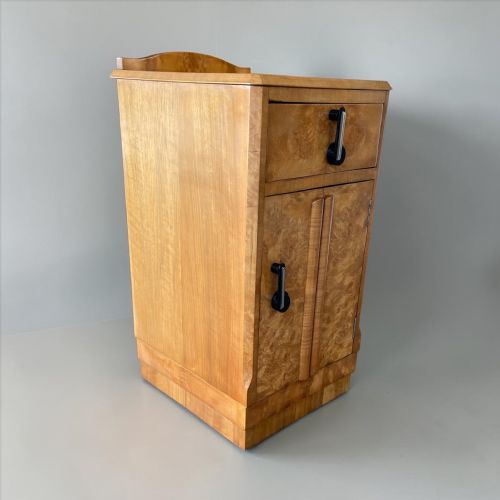
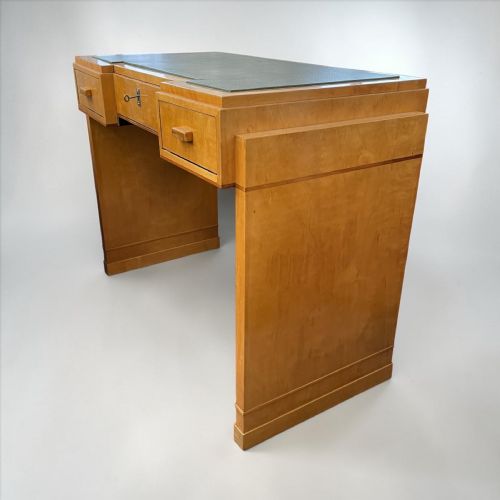
The objects frequently manifest in styles such as Art Deco, Machine Age, and 1930s Modern. You are likely to meet table lamps paired with specialised forms like desks, bedside tables, and dressing tables.
Origins span British, French, Italian, Scandinavian, and American workshops. The selection ranges from straightforward metal desk fixtures to sculptural glass and alabaster items.
Materials and construction
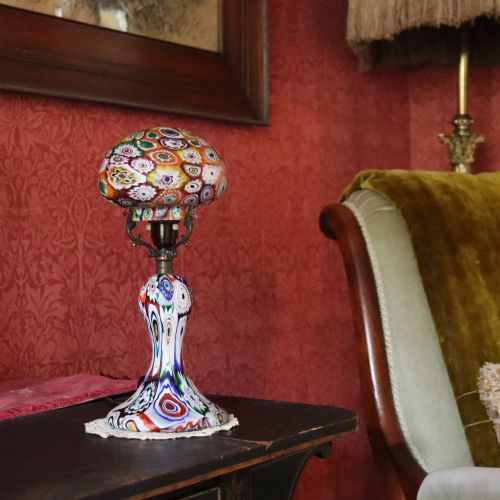
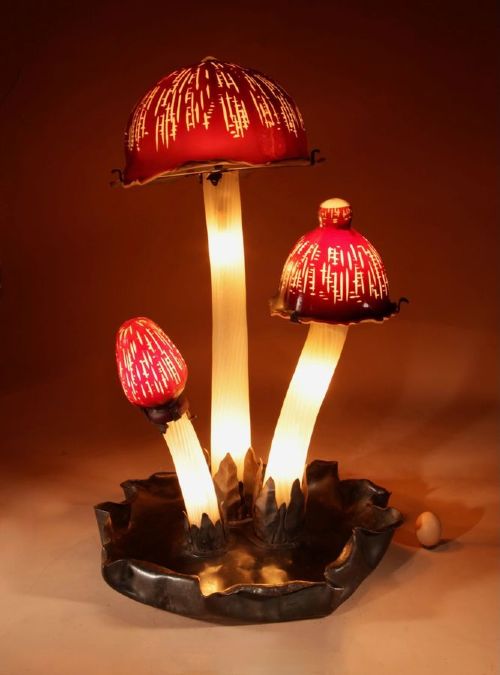
Makers utilised a diverse palette of hard and tactile materials, pairing metals such as brass, bronze, chrome, copper, and cast iron with organic elements like oak, walnut, elm, birch, and marble. Glass serves a central role, appearing as mottled, opalescent, millefiori, or mushroom shades.
Fabric elements and early synthetics like Bakelite appear alongside wrought iron and alabaster. Construction methods combine cast metal components, turned woods, and specialised glass-blowing techniques to achieve industrial and decorative results.
Separating the ordinary from the exceptional
Quality rests upon the integrity of the materials and the sophistication of the design execution. Pieces incorporating high-grade opalescent glass, rich hardwoods, or substantial bronze and brass castings occupy the upper tier.
Subtlety of form and clarity of attribution elevate certain examples. Items displaying specific stylistic coherence within Art Deco or Machine Age canons command greater interest than standard commercial variants.
Fratelli Toso·Eileen Grey·Charles Schneider·Heal's·Herbert Terry
The 1930s Table Lighting Glossary
- Bakelite
- An early form of thermosetting plastic used for durable lamp bodies and electrical components. It provides a smooth, tactile surface typical of industrial manufacturing in this era.
- Opaline glass
- A milky, semi-translucent glass that diffuses light evenly across a room. This material is frequently moulded into shades for desk and table lamps.
- Machine Age
- A design style celebrating industrial progress through clean lines and metallic finishes. Chrome and steel components dominate lamps from this movement.
- Millefiori
- A glasswork technique producing multicoloured mosaic patterns. It appears in decorative lamp bodies originating from Italian glasshouses.
- Spelter
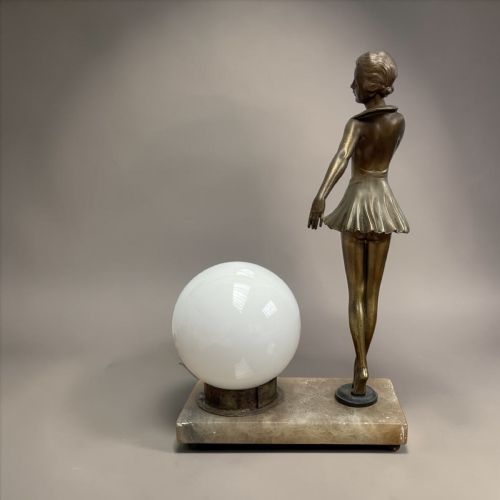
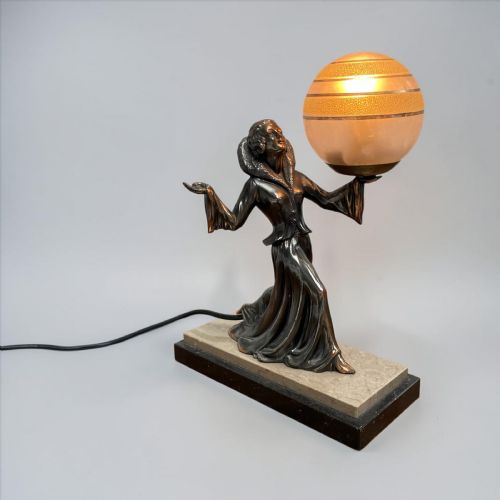
- A zinc alloy used as a cost-effective substitute for bronze in decorative figures and lamp bases. It is typically painted or electroplated to simulate more precious metals.
1930s Table Lighting: Frequently Asked Questions
What defines 1930s table lighting?
These pieces combine period illumination with distinct stylistic movements like Art Deco and Machine Age design.
They utilise materials ranging from chrome and brass to glass and Bakelite, forming functional desk and table lamps.
How do I identify Art Deco lamps?
Art Deco lighting typically exhibits geometric symmetry, stylised figural elements, and streamlined metallic or glass components.
Look for combinations of chrome, brass, and mottled or opalescent glass shades characteristic of French and British manufacture.
Where were these lamps manufactured?
The pieces originate from various international centres, notably France, Britain, Italy, Scandinavia, and America.
European workshops frequently produced sculptural glass and bronze models, while British and American makers focused on utilitarian desk solutions.
How do I care for vintage lamps?
Maintain metal and wood components with appropriate dry cloths to preserve surface patinas and finishes.
Ensure vintage wiring is inspected by a qualified professional before regular domestic use.