
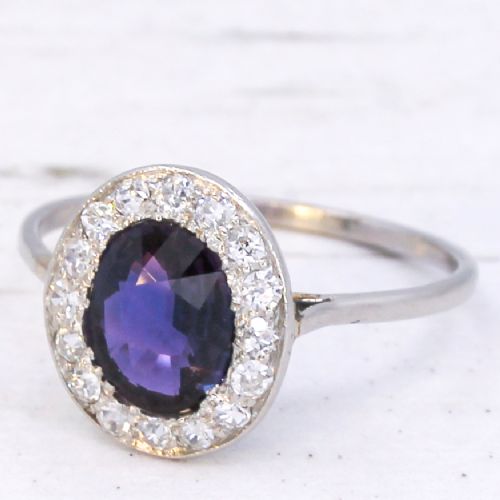


1930s Style Diamond Ring
A 1930s style diamond ring brings geometric clarity and old cut brilliance to the hand, capturing an era of bold design.
1930s Style Diamond Ring
A 1930s style diamond ring embodies the crisp lines and architectural symmetry of the Art Deco period. Pieces matching this phrase span the 1930 and 1940 periods, showing how interwar design favoured angular geometry over Victorian flourish.
Most examples found here take the form of rings, including three stone configurations, cluster arrangements, and substantial dress rings. Alongside the central diamonds, these rings frequently incorporate sapphires, emeralds, and amethysts.
The aesthetic draws directly from the original production of the 1930s and 1940s, delivering authentic period character rather than modern reproduction work. Buyers seeking this look encounter genuine vintage items shaped by the stylistic shifts of the early twentieth century.
Distinctions in quality
Quality in a 1930s style diamond ring rests upon the precision of the metalwork and the integration of the secondary stones. Superior examples display seamless platinum claw or bezel work that frames the old cut diamonds without obscuring their facets.
The character of the central gemstones dictates the upper tier of the range, particularly where unheated Burmese or Colombian emeralds and sapphires accompany the diamonds. Balance between the diamond weight and the coloured centre stone determines the visual harmony of the piece.
Even a modest diamond cluster ring from this era carries enough historical geometry to make modern minimalist jewellery look positively timid.
The 1930s Style Diamond Ring Glossary
- Old cut diamond
- A vintage diamond faceting style characterised by a smaller table, higher crown, and open culet. These stones produce a distinctive softer light return compared to modern brilliant cuts.
- Platinum
- A dense, white precious metal utilised during the Art Deco era for its exceptional strength. It allows jewellers to create ultra-fine settings that secure stones with minimal visible metal.
- Cluster ring
- A ring design featuring a central gemstone surrounded by a border of smaller stones. This arrangement maximises visual impact and creates a bold silhouette on the finger.
- Pave set
- A method of setting multiple small gemstones close together with tiny beads of metal. The surface appears paved with stones rather than held by traditional individual claws.
1930s Style Diamond Ring: Frequently Asked Questions
What defines a 1930s style diamond ring?
These pieces are defined by their geometric Art Deco aesthetic, featuring old cut diamonds set in platinum or 18ct gold. They capture the architectural motifs and clean lines prevalent in the 1930 and 1940 periods.
Alongside pure diamond configurations, many incorporate coloured gemstones like sapphires, emeralds, and amethysts to create striking visual contrast.
How should I wear a vintage diamond ring?
Wear these rings with an awareness of their age and delicate platinum or gold settings. While robust enough for regular wear, removing them during manual tasks protects the fine metalwork and claw settings.
Pairing a cluster or three stone ring with a simple wedding band allows the intricate geometric design of the vintage piece to remain the focal point.
How do I care for platinum ring settings?
Clean platinum settings gently using warm water, mild soap, and a soft brush to remove everyday oils from the old cut diamonds and coloured stones. Avoid harsh chemical dips that might damage softer stones like emeralds or amethysts.
Regular inspection by a professional jeweller ensures the tiny claws holding pave set stones remain secure over time.
Are coloured gemstones common in this style?
Coloured gemstones appear frequently alongside diamonds in 1930s jewellery, notably unheated sapphires and emeralds. These stones reflect the period's taste for vibrant, contrasting colour palettes within structured platinum mounts.
Amethysts also feature in larger dress rings, providing a bold splash of purple framed by sparkling diamond borders.