
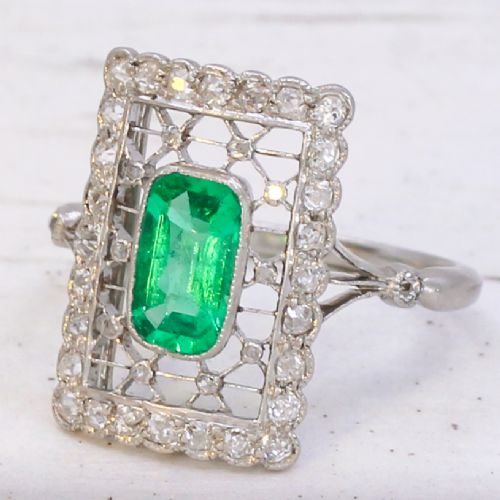
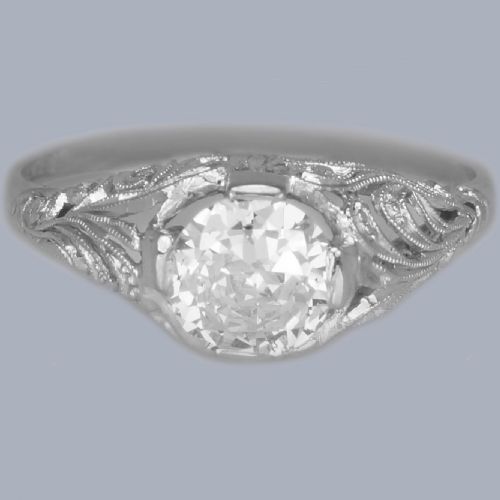


Vintage Filigree Engagement Ring
A vintage filigree engagement ring offers delicate metalwork and old-cut stones that capture the distinct craftsmanship of past decades.
Vintage Filigree Engagement Ring
A vintage filigree engagement ring represents a search for intricate openwork metal designs set with diamonds, sapphires, emeralds, or rubies. Buyers examining this page encounter pieces primarily spanning from the Victorian and Edwardian eras through the Art Deco period and into mid-century modern styles.
The assortment relies heavily on Art Deco and Edwardian examples featuring platinum or white gold frames. These rings showcase geometric panel designs, cluster settings, and elongated shapes alongside traditional solitaire and three-stone arrangements.
How they were made
The construction of these rings typically combines platinum or gold with intricate wirework and granulation techniques. Metal is drawn into fine threads and soldered into lace-like patterns to support central gemstones.
Gems such as old-cut diamonds, sapphires, and emeralds are secured using claw or bezel settings integrated into the pierced metal framework. Yellow gold, white gold, and platinum provide the structural foundation for these detailed compositions.
Listings incorporate designs across eight distinct decades and styles, spanning Victorian, Edwardian, Art Nouveau, Art Deco, Retro, and Mid-Century periods.
What varies in quality
Quality in these rings rests on the crispness and complexity of the openwork metal piercing. Finer examples maintain structural integrity while presenting exceptionally delicate, uniform wire patterns without distortion.
The selection and cut of the central gemstones also dictate the standing of a piece. Older diamond cuts, such as old European or transitional cuts, combine with natural untreated rubies, emeralds or sapphires to elevate the character of the setting.
The Vintage Filigree Engagement Ring Glossary
- Filigree
- Ornamental work of fine wire formed into delicate open patterns. This technique creates the lace-like metal background characteristic of the period.
- Platinum
- A dense, ductile, malleable silvery-white precious metal. It provides the strong, thin settings required for intricate wirework.
- Old Cut
- A diamond cut from the late 19th or early 20th century featuring a smaller table and larger facets. These stones produce a softer candlelight sparkle compared to modern brilliant cuts.
- Cluster Ring
- A ring featuring a central gemstone surrounded by a cluster of smaller stones. This arrangement maximises visual presence and light reflection.
- Art Deco
- A design style prevalent in the 1920s and 1930s characterised by sleek geometric shapes and stylized motifs. Pieces from this era often feature symmetrical platinum panels.
Vintage Filigree Engagement Ring: Frequently Asked Questions
What periods do these rings come from?
The pieces span several distinct design eras, starting from Victorian and Edwardian foundations through Art Deco and Retro periods up to the mid-century. Each era contributes specific geometric or organic motifs to the metalwork.
Art Deco examples dominate the selection with platinum panel and cluster designs, while earlier Edwardian pieces favour lighter, lace-like platinum and yellow gold constructions.
What materials are used in these rings?
Construction relies predominantly on platinum, white gold, and yellow gold as the primary mounting metals. These materials support intricate wirework and secure the central gemstones.
Gemstones include old-cut diamonds alongside coloured stones such as sapphires, emeralds, and rubies, often arranged in multi-stone clusters or dress configurations.
How do I care for a filigree ring?
Delicate openwork metal requires gentle cleaning to prevent damage to the fine threads. Soft brushes and mild soapy water remove residue safely from the intricate recesses.
Professional inspection helps ensure the tiny prongs holding the old-cut diamonds or coloured stones remain secure within the pierced metal structure.
Are these rings suitable for daily wear?
Daily wear is possible when the platinum or gold structure remains robust and thick enough to withstand regular contact. Platinum offers superior durability for fine wire settings compared to softer high-carat golds.
Regular checks by a jeweller ensure that the detailed filigree work and stone settings stay intact over years of active use.