

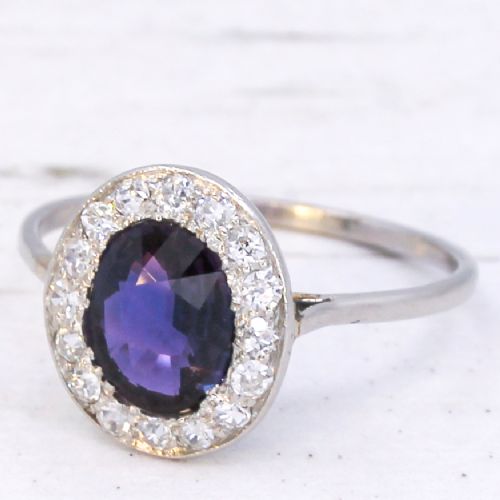
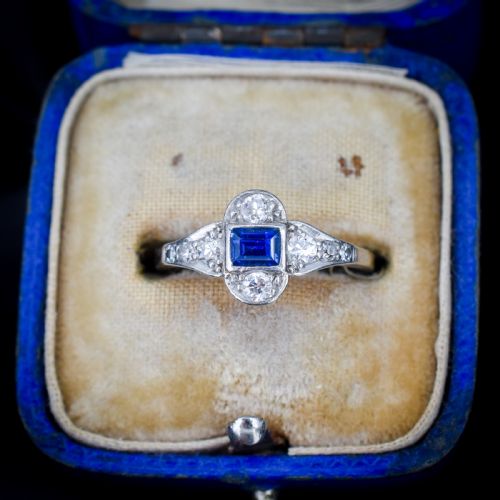


1930s Sapphire Jewellery
1930s sapphire jewellery brings together striking blue stones and bright diamond work in sharp geometric settings that define mid-century elegance.
1930s Sapphire Jewellery
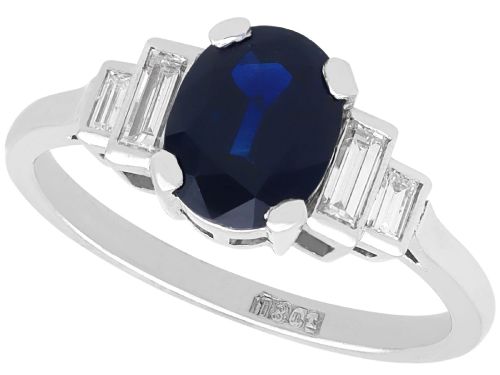
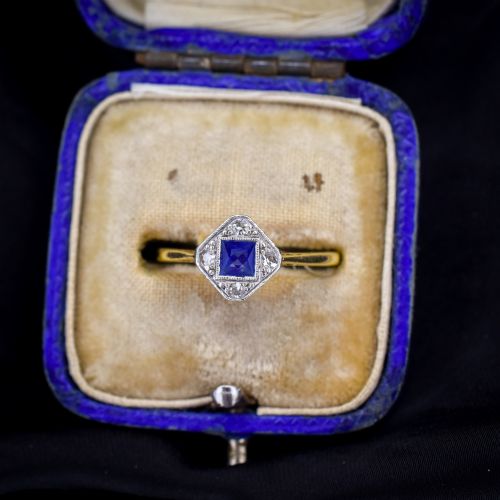
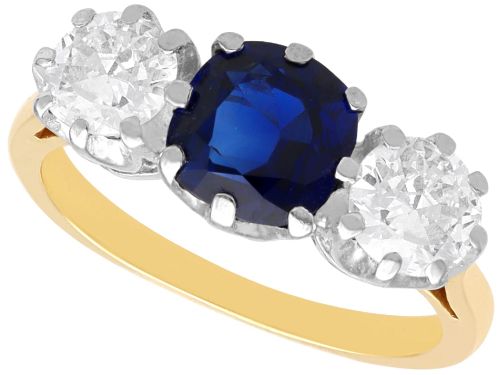
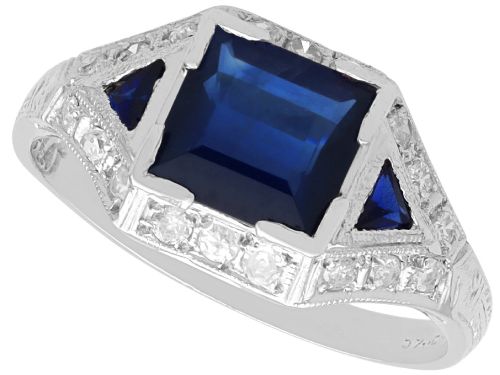
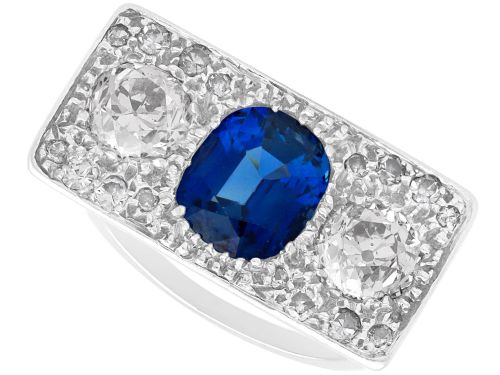
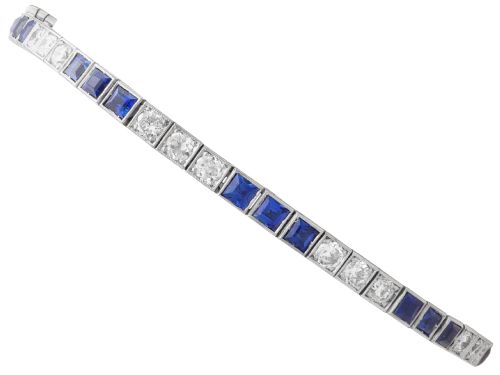
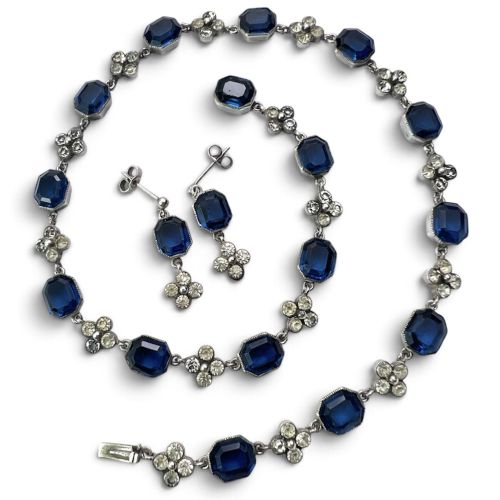
When searching for 1930s sapphire jewellery, buyers encounter pieces defined by the geometric rigour of the Art Deco style. Rings dominate the selection, appearing alongside line bracelets, cluster earrings, brooches, and matched sets.
The stones themselves show considerable diversity in origin and tone, ranging from deep blue Burmese and Ceylon sapphires to vibrant yellow and pink varieties. Platinum settings and white gold mountings provide the bright, reflective foundation typical of this decade.
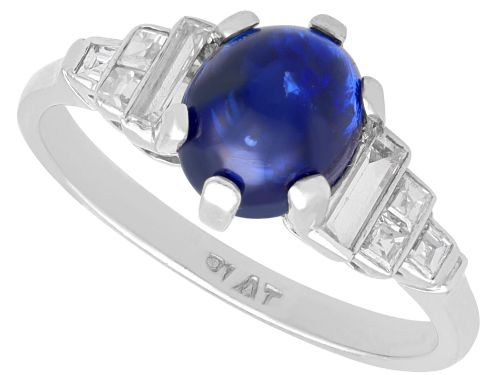
While rings set with central blue sapphires and diamond shoulders are the most common form, buyers also discover elaborate cabochon stones and multi-gem bracelets. Each piece reflects the transitional design language moving away from rigid 1920s symmetry toward softer, yet still structured, forms.
Materials and construction methods
Makers predominantly utilised platinum and various carats of white and yellow gold to secure the precious stones. Platinum offered the structural strength required for delicate, intricate claw and channel settings without adding excessive bulk to the metalwork.
Diamonds were cut to complement the central sapphire, frequently utilising baguette, single, and brilliant cuts to build contrast against the deep blue or yellow hues. Goldsmiths constructed these mountings by hand, balancing heavy stone weights with slender, geometric bands.
1930s Sapphire Jewellery Retail Price Guide 2026
Typical asking prices for 1930s sapphire jewellery among the pieces listed under this phrase on Sellingantiques today, from the lower quarter to the upper quarter. They describe what is for sale here now, not the wider market.
Even strict Art Deco designers occasionally indulged in whimsical orange synthetic stones just to keep clients guessing.
Distinctions in quality and execution
The hierarchy of quality rests primarily on the natural origin, thermal treatment status, and weight of the sapphire itself. Unheated stones with desirable geographic origins, such as Ceylon or Burma, elevate a piece significantly above standard commercial grades.
Execution of the metalwork also divides fine examples from ordinary production. Superior pieces display precise millegrain edging, well-matched diamond pavé work, and robust platinum mountings that hold substantial gemstone carats securely.
The 1930s Sapphire Jewellery Glossary
- Art Deco
- A design style characterised by sleek geometric shapes, stylised motifs, and linear symmetry. It dominated decorative arts throughout the interwar period.
- Cabochon
- A gemstone cut with a smooth, convex, rounded surface rather than faceted planes. This style highlights the deep internal colour and natural growth patterns of the sapphire.
- Millegrain
- A decorative technique featuring a line of tiny raised metal beads along the edges of a setting. It adds a refined, textured border to platinum and gold mounts.
- Unheated
- A term indicating a natural gemstone that has undergone no artificial thermal enhancement to improve its colour or clarity. Such stones command higher regard among collectors.
- Line bracelet
- A flexible bracelet featuring a continuous line of closely set gemstones, often sapphires and diamonds alternating in metal channels.
1930s Sapphire Jewellery: Frequently Asked Questions
How do I identify a genuine 1930s piece?
Examine the construction methods and metal choices, as authentic items typically feature handmade platinum or white gold mountings with distinct Art Deco geometry.
Look closely at the setting details, such as millegrain edges and hand-cut diamond shoulders, which reflect the manufacturing standards of the period.
Are these sapphires usually treated?
Many sapphires from this era are natural, though thermal enhancement has long been practiced to improve colour saturation in precious stones.
Certification from established gemological laboratories often helps clarify whether a specific sapphire has retained its natural state or undergone heating.
How should I care for delicate antique settings?
Protect fragile platinum and gold mountings by removing rings and bracelets before engaging in strenuous physical tasks or housework.
Clean the jewellery gently using warm soapy water and a soft brush, avoiding harsh chemical ultrasonic cleaners that might loosen older stones.
What metals were most common during this decade?
Platinum was the premier metal of choice for fine gem-set pieces because its strength allowed for slender, intricate wirework and secure settings.
Yellow gold and white gold also appeared frequently, particularly in rings and brooches produced during the latter half of the decade.