



1930s Open Shelving Unit
A 1930s open shelving unit brings architectural lines and practical display space into a room, dominated by Art Deco forms and honest timber construction.
1930s Open Shelving Unit
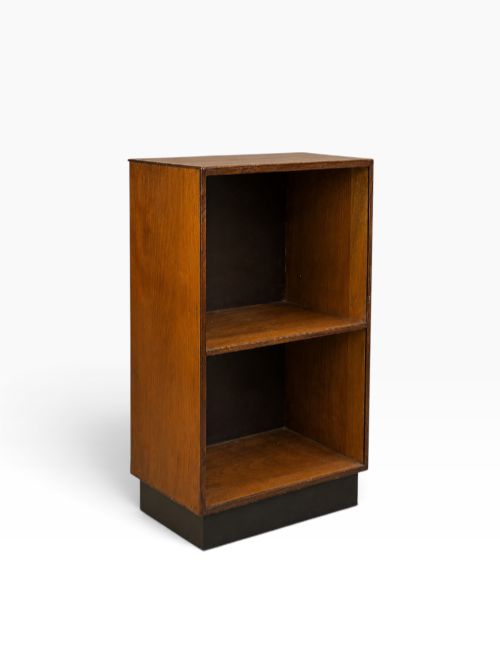
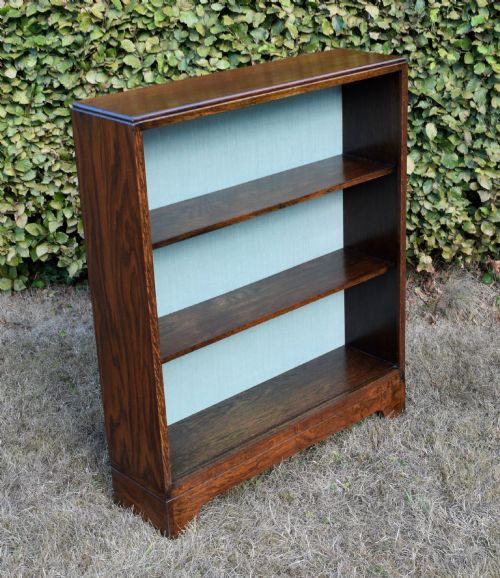
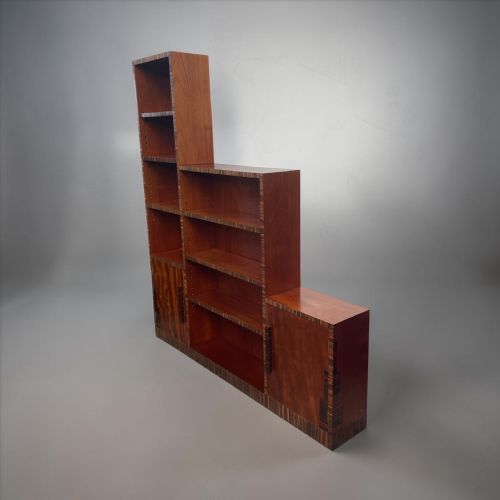
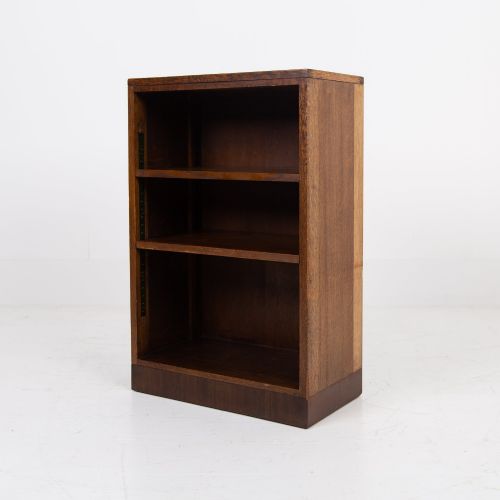
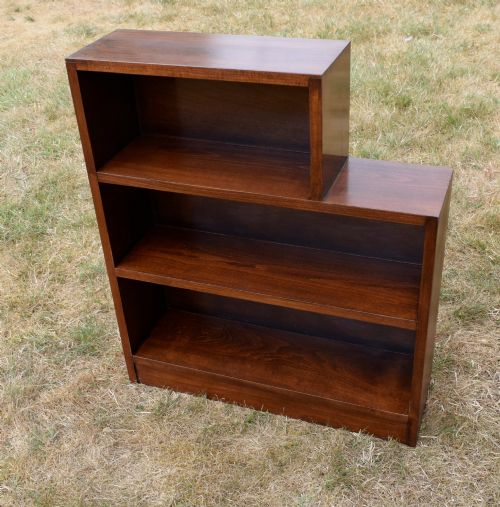
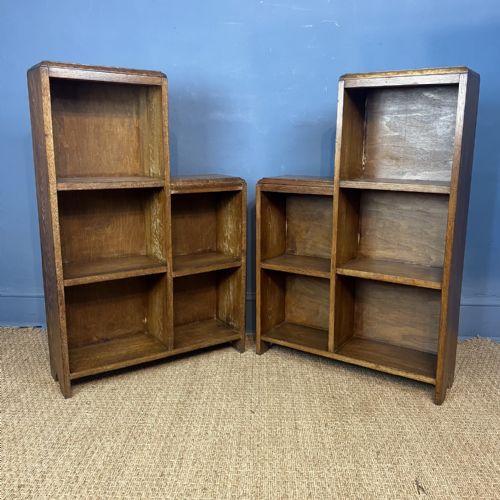
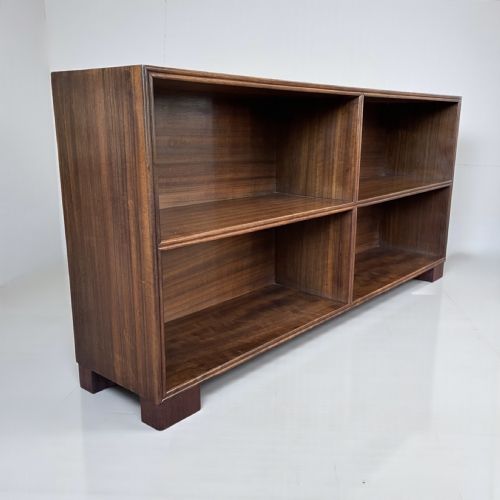
A 1930s open shelving unit typically takes the form of an open bookcase, cabinet, or stepped storage piece designed to display books and objects without the visual weight of closed doors. You are most likely to encounter pieces finished in the Art Deco style, alongside occasional interpretations drawing on Tudor Revival or Anglo-Indian Regency traditions.
The objects span from simple oak bedside formats and low shelving to dynamic stepped bookcases and tall architectural units. Origins cross English workshops and manufacturers, keeping timber construction at the forefront of domestic interior design during the period.
How they were made
Makers utilised a variety of solid hardwoods and veneers, with oak and walnut appearing most frequently alongside ash, mahogany, teak, and ebonised timber. Surfaces often highlight natural grain patterns, sometimes enhanced with decorative mouldings, leather inserts, or fabric details.
Construction methods rely on traditional cabinet-making joined with the geometric impulses of 1930s Modernism. Stepped profiles and clean vertical lines dictate the structural silhouette, keeping the emphasis squarely on the carpentry.
Listings demonstrate that oak and walnut remain the dominant timbers across these interwar shelving units.
What varies in quality
The distinction between standard commercial items and finer cabinet-making lies in the selection of timbers and the handling of veneers. Pieces featuring figured walnut or ash display greater attention to grain continuity across the shelves and panels.
Design ambition also separates the production. Simple utilitarian oak cases contrast with sophisticated stepped bookcases and marked pieces by known designers, where proportion and architectural detailing command closer visual interest.
Heals·Betty Joel·Maurice Adams
The 1930s Open Shelving Unit Glossary
- Art Deco
- A design style characterised by geometric shapes, streamlined forms, and stylised ornamentation popular during the interwar period. It defines the majority of these shelving units.
- Stepped bookcase
- A bookcase featuring receding tiers or shelves that create a descending staircase silhouette. This layout was favoured in modern interwar interiors for dynamic display.
- Walnut veneer
- A thin layer of valuable walnut timber applied over a secondary wood base to provide a decorative surface. It allows complex grain patterns to show across larger panels.
- Ebonised timber
- Wood that has been treated to achieve a dense, black finish resembling ebony. This technique was used to create stark, dramatic contrasts in modern furniture.
- Tudor Revival
- An architectural and decorative style looking back to 16th-century English building traditions. It appears in heavier oak pieces with period-inspired mouldings.
1930s Open Shelving Unit: Frequently Asked Questions
How do I style a 1930s open shelving unit?
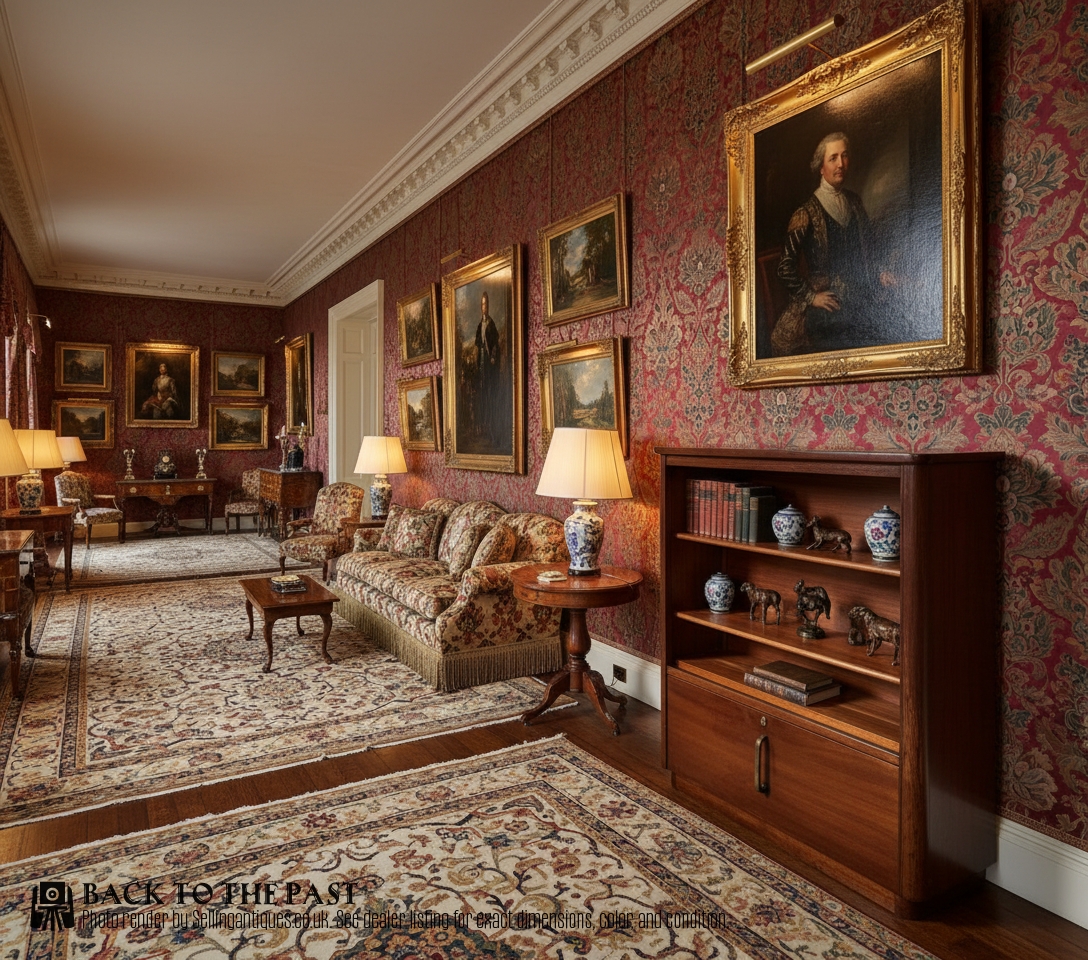
Balance books with ceramics and decorative objects, keeping vertical and horizontal lines in tension. Let the timber grain and stepped geometry remain visible rather than overcrowding every shelf.
Position the unit against a neutral wall so the architectural form of the piece can act as the primary visual focus of the room.
Are these units suitable for heavy books?
Solid hardwood construction in oak or walnut provides sturdy support for everyday library storage. Fixed or adjustable timber shelves handle standard volumes securely when distributed evenly.
Heavier folios sit best on the deeper lower shelves, preserving the structural integrity of the upper tiers.
How do I identify an Art Deco bookcase?
Look for symmetrical stepped profiles, clean vertical partitions, and geometric massing rather than traditional carved ornamentation. Ash and walnut veneers often display sharp, linear grain directions.
Hardware and mouldings remain minimal, favouring the silhouette of the timber over surface decoration.
Can I mix these with modern furniture?
The clean lines and honest timber surfaces of interwar shelving sit comfortably alongside contemporary minimalist interiors. Neutral wood tones bridge historical periods without clashing.
Allow enough surrounding space for the stepped or geometric silhouette to stand out clearly against simpler modern backdrops.