



1930s Oak Pedestal Desk
A 1930s oak pedestal desk brings robust twentieth-century craftsmanship and generous workspace to a study.
1930s Oak Pedestal Desk
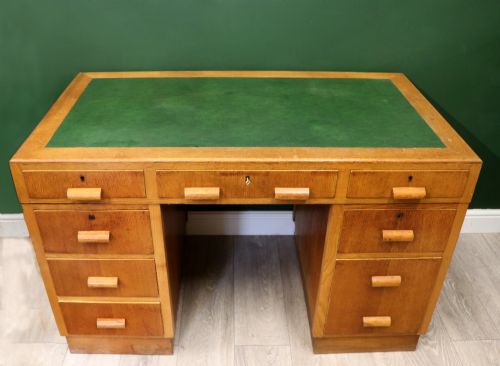
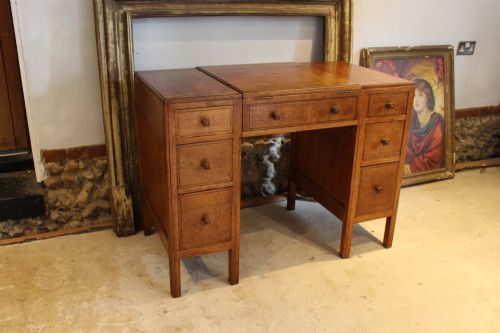
A 1930s oak pedestal desk stands as a sturdy piece of furniture designed for heavy office or domestic use during the interwar period. These examples typically feature a central writing surface flanked by banks of drawers, creating a substantial twin pedestal formation. The items on this page span the 1920s and 1930s, reflecting both traditional craftsmanship and the emerging modernist impulses of the era.
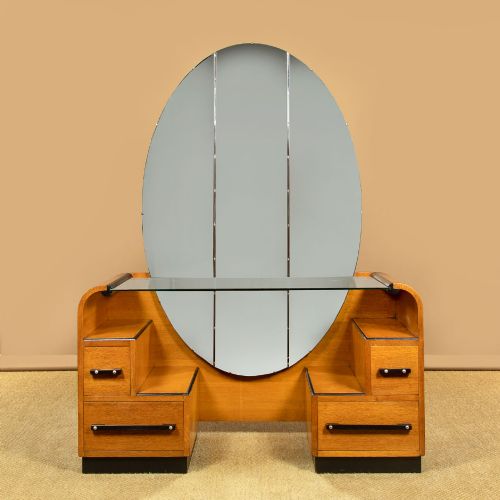
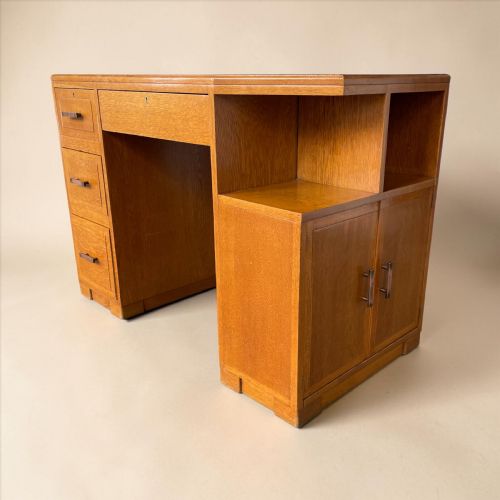
Most pieces encountered here display the clean, functional lines of Art Deco design or the honest construction of the Cotswold School and Arts and Crafts movement. While primarily configured as office desks, related forms such as dressing chests in oak also appear amongst the listings. English and French workshops dominate the origins, ranging from utilitarian office furniture to sophisticated modernist designs.
Buyers seek these items for their durable construction and distinct period character, which suits both modern home offices and traditional libraries. The heavy timber framing ensures longevity, while the variety in styling allows for placement in diverse interior schemes. Identifying the specific design lineage helps collectors appreciate the functional evolution of the office desk during this decade.
Materials and construction
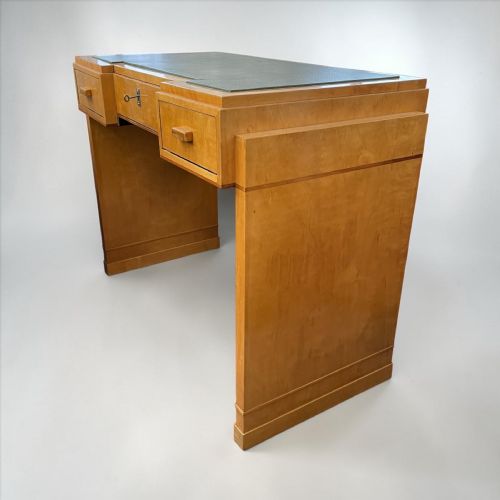
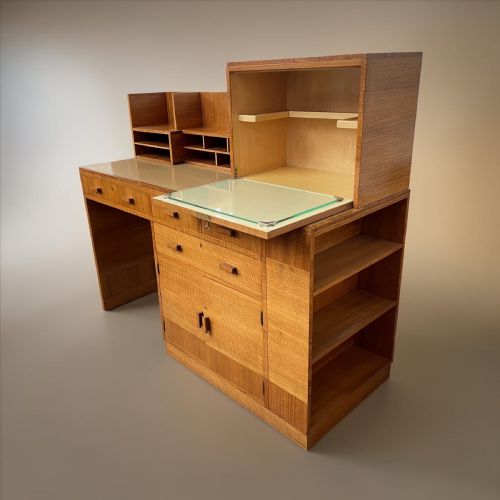
Makers relied heavily on solid oak and light oak veneers to build the primary carcass and drawers of these pedestals. Additional materials such as metal, chrome, brass, glass, leather, birch, and walnut appear as secondary elements for handles, feet, and writing surfaces. This mix of traditional timber with modern metal accents defines the visual vocabulary of the period.
Construction methods range from utilitarian joinery built for daily office routines to refined cabinetmaking associated with prominent retail houses. The integration of chrome and brass hardware alongside traditional oak panels highlights the transitional nature of 1930s furniture production. Every element serves a structural or functional purpose without excessive ornamentation.
1930s Oak Pedestal Desk Retail Price Guide 2026
Typical asking prices for 1930s oak pedestal desk among the pieces listed under this phrase on Sellingantiques today, from the lower quarter to the upper quarter. They describe what is for sale here now, not the wider market.
The furniture spans two distinct decades, drawing from both 1920s traditional forms and 1930s modernist shapes.
Factors of quality
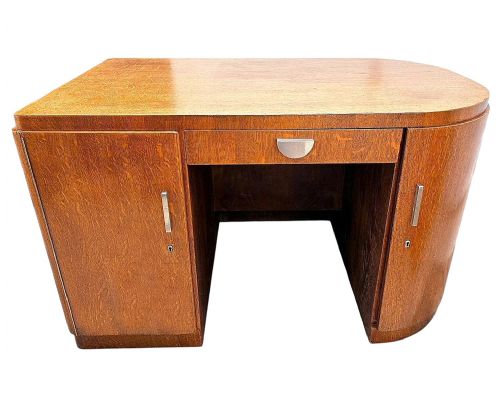
The distinction between standard utilitarian items and superior pieces rests largely on the sophistication of the design and the reputation of the maker. Finer desks exhibit considered proportions, such as D-end configurations and thoughtful integration of secondary materials like leather and chrome. Anonymous office furniture differs significantly from branded pieces bearing maker labels or attributed to known designers.
Timber selection and hardware execution further separate the top tier from standard commercial production. High-quality examples display well-figured oak, precise dovetailing in the drawer construction, and original metal fittings. The presence of documented workshop origins elevates the status of a desk beyond basic office utility.
Heal's·Heal & Sons·Étienne Kohlmann
The 1930s Oak Pedestal Desk Glossary
- Pedestal desk
- A heavy writing table supported by two vertical banks of drawers on either side of the user. This format provides substantial storage beneath the main working surface.
- Twin pedestal
- A structural arrangement where the desk rests upon two separate pedestals or columns of drawers. It balances the visual weight and doubles the available storage capacity.
- Art Deco
- A design style of the 1920s and 1930s characterised by sleek lines, geometric shapes, and modern industrial materials. It replaced more ornate Victorian and Edwardian aesthetics.
- D-end
- A desk configuration featuring semicircular ends that soften the rectangular geometry of the workspace. This shape often allows the desk to function effectively when placed away from a wall.
1930s Oak Pedestal Desk: Frequently Asked Questions
What defines a 1930s oak pedestal desk?
These pieces consist of a central writing surface supported by two banks of drawers, constructed primarily from oak during the 1930s. They often incorporate Art Deco or Cotswold School design principles.
The inclusion of materials like chrome, brass, and leather further characterises the era's transition toward modern office furniture.
How do I identify an Art Deco desk?
Art Deco desks feature streamlined silhouettes, geometric forms, and a deliberate absence of heavy traditional carving. They frequently combine light oak with contrasting metal elements.
Design variations can range from strictly utilitarian office models to sophisticated D-end shapes intended for double-sided use.
Where were these desks originally made?
The pieces available originate primarily from English and French workshops and retail houses active during the interwar period. Major makers and retailers from London and Paris drove these production trends.
Regional English craft traditions, such as the Cotswold School, also contributed distinctive regional interpretations to the market.
How should I care for an oak desk?
Maintain the oak surfaces by dusting regularly with a soft cloth and avoiding prolonged exposure to direct sunlight or moisture. Leather inserts require specific leather balms to prevent cracking.
Preserving original hardware like brass and chrome pulls ensures the historical integrity of the piece remains intact.