


1930s Oak Nightstands
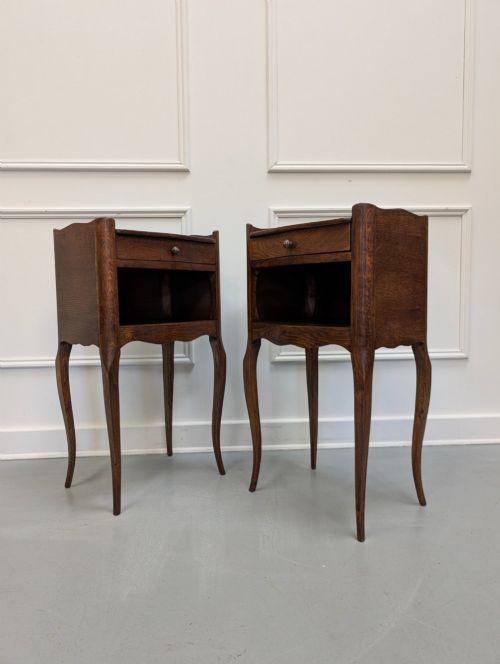
These 1930s oak nightstands bring compact utility and geometric modernist lines straight beside the bed.
1930s Oak Nightstands
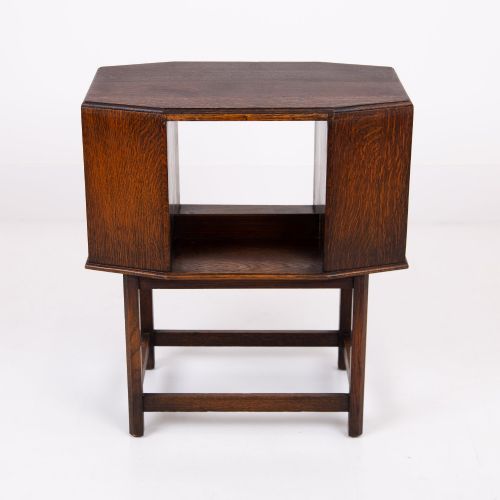
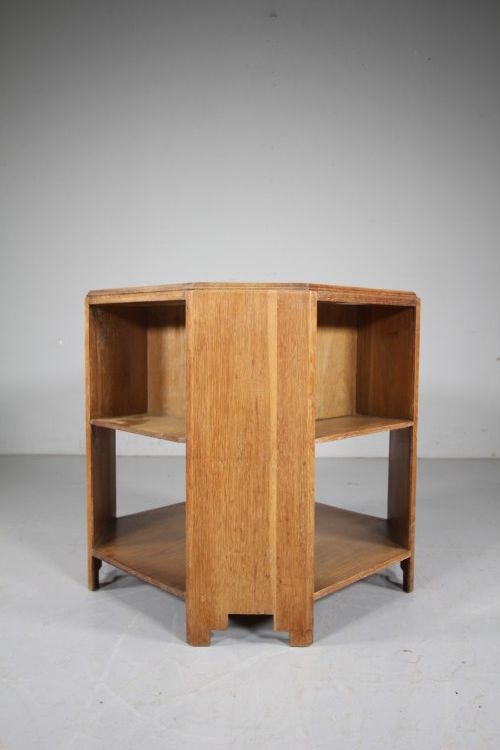
When you search for 1930s oak nightstands, you encounter bedside tables, bedside cabinets, and side table bookcases designed for bedroom storage. The items appearing here include compact two-drawer cabinets and paired bedside units originating from the 1920s and 1930s.
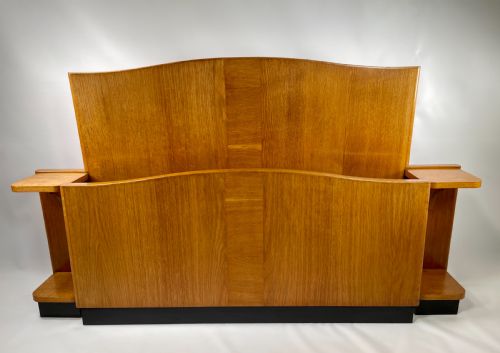
Makers such as Gomme, Heal's, and Betty Joel shaped these forms alongside French workshop output and broader Art Deco designs. You will also find side tables, cabinet combinations, and integrated bed structures featuring attached bedside surfaces.
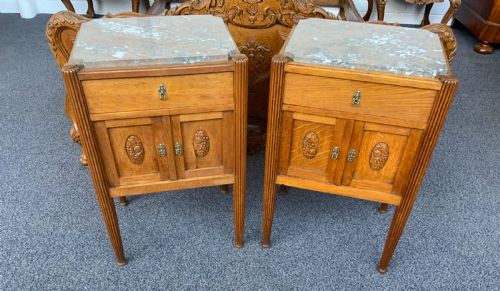
The dominant material is oak, often paired with sycamore or wood veneer, sometimes supplemented by marble tops, brass fittings, and bakelite details. These pieces bridge traditional timber construction with the clean lines of early twentieth-century modernism.
How they were made
Construction relies primarily on oak timber and wood veneer, shaped into geometric cabinets and tables using standard cabinet-making techniques of the period. Drawers and doors are integrated cleanly into the rectilinear forms characteristic of Art Deco design.
Surface details incorporate contrasting woods such as sycamore alongside functional hardware in brass and bakelite. Selected items introduce marble tops to provide a durable and decorative upper surface for daily bedside use.
Bakelite handles bring a cheerful splash of early synthetic durability right to your midnight glass of water.
What varies in quality
Quality differentiates itself through the presence of recognised makers such as Heal's, Gomme, or Betty Joel, whose cabinet-making demonstrates distinct proportion and joinery. Pieces carrying documented attribution hold a different standing compared to unbranded workshop output.
The selection of secondary materials also alters the character of each piece, ranging from simple solid oak constructions to those enhanced with marble tops, sycamore veneers, and specialised brass or bakelite hardware.
Gomme·Betty Joel
The 1930s Oak Nightstands Glossary
- Art Deco
- A design style spanning the 1920s and 1930s characterised by streamlined geometric forms and modern materials. This aesthetic defines the majority of the bedside furniture seen here.
- Wood Veneer
- A thin layer of superior wood applied over a base timber to provide decorative grain patterns. It allows cabinet-makers to display striking surface figures across table tops and drawer fronts.
- Bakelite
- An early synthetic plastic used for handles and decorative fittings during the period. Its distinct tactile quality marks authentic mid-century hardware.
- Sycamore
- A light-coloured timber utilised for contrasting details and interior elements within modernist cabinet-making. It offers a pale visual balance against darker oak surfaces.
1930s Oak Nightstands: Frequently Asked Questions
How do I identify maker attribution?
Attribution often relies on stamps, labels, or distinct structural characteristics associated with prominent workshops and retailers of the era. Makers such as Heal's and Betty Joel left specific design signatures on their bedside furniture.
Unsigned pieces nevertheless reflect the broader modernist and Art Deco trends popularised across French and English workshops.
Were these sold as pairs?
Many bedside cabinets and tables from this period were manufactured and purchased as symmetrical pairs to flank a double bed. Surviving matched pairs remain a common find in 1930s bedroom furniture.
Single bedside tables and integrated bed units with attached surfaces also appear within this category.
What materials accompany the oak?
While oak forms the primary structural timber, makers frequently incorporated wood veneers and contrasting light woods like sycamore. Functional and decorative accents often include marble tops, brass fittings, and bakelite details.
These varied materials contributed to the refined surface textures characteristic of Art Deco design.