


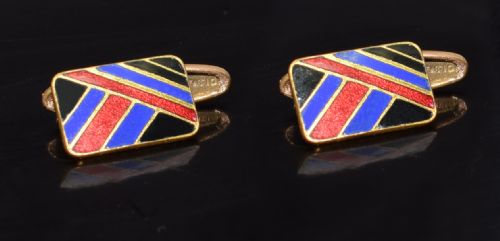

1930s Mens Cufflinks
These 1930s mens cufflinks deliver crisp Art Deco geometry and vibrant colour to double cuffs, offering a sharp touch of period tailoring.
1930s Mens Cufflinks
When you search for 1930s mens cufflinks, you encounter functional shirt fastenings shaped by the bold geometric vocabulary of the period. These accessories are designed to secure double-breached cuffs with architectural precision.
The version you meet most frequently on this page is the matching pair featuring enamel work. These pieces lean heavily into the Art Deco and Modernist aesthetic popular around nineteen thirty.
Originating largely from English workshops, these items reflect the sleek, streamlined tastes of interwar menswear. They bridge the gap between sober formal attire and expressive decorative detail.
How they were made
Metals form the structural foundation of these accessories, utilising silver, silver plate, brass, and precious gold alongside silver-tone metal. Yellow gold of nine carat and eighteen carat purity provides a warm, substantial backing for decorative faces.
Vitreous enamel and standard enamel supply the characteristic blocks of green, black, and multi-coloured patterns. Artisans applied these glass-based pastes into metal recesses before firing them to a durable, glossy finish.
1930s Mens Cufflinks Retail Price Guide 2026
Typical asking prices for 1930s mens cufflinks among the pieces listed under this phrase on Sellingantiques today, from the lower quarter to the upper quarter. They describe what is for sale here now, not the wider market.
Listings focus on the nineteen thirties, spanning pieces from nineteen thirty to nineteen forty with a strong concentration of Art Deco enamel work.
What varies in quality
The calibre of metalwork sets pieces apart, distinguishing solid gold or substantial silver construction from brass and silver-tone alternatives. Heavier gauge metals retain their structural integrity through decades of fastening and unfastening.
Enamel condition dictates the refinement of individual examples, separating intact, smooth vitreous surfaces from those bearing chips or hairline fractures. Precision in the geometric layout determines the visual impact of the design.
Payton Pepper And Co
The 1930s Mens Cufflinks Glossary
- Art Deco
- A design style characterised by sleek geometric shapes, streamlined forms, and modern industrial motifs. It dominates the aesthetic of interwar decorative arts.
- Vitreous Enamel
- A material created by fusing powdered glass to a metallic substrate through high-temperature firing. This technique produces a hard, glossy, and colourfast surface.
- Silver-tone Metal
- An alloy finished to resemble silver without containing the precious metal itself. It appears frequently in utilitarian or accessible period accessories.
- Matching Pair
- Two identical or complementarily designed pieces intended for simultaneous use on opposite cuffs. Complete sets remain central to collector interest.
1930s Mens Cufflinks: Frequently Asked Questions
How do I wear these?
Slide the fastening bar through the buttonholes of a double-cuff shirt so the decorated face sits flat against the outer fabric. Ensure the toggle secures behind the inner layer to hold the cuff closed.
Pair them with crisp white or pastel shirts to let the geometric enamel patterns stand out. They suit formal tailoring and smart daywear equally well.
Are they solid gold?
Not all examples use precious metal, as the listings include silver, silver plate, brass, and silver-tone alternatives alongside nine carat and eighteen carat yellow gold.
Check the metal composition of each individual piece to confirm whether it utilises gold, silver, or base metals.
What is vitreous enamel?
Vitreous enamel is a glass material fused to a metal base through intense heat, creating a smooth and permanent coloured surface. It resists fading and maintains its gloss over decades.
This technique allows for the sharp green and black geometric patterns characteristic of the period.
How do I date them?
Dating relies on the distinct geometric motifs, Modernist layouts, and material combinations typical of the nineteen thirties. Art Deco styling provides the primary visual marker for this era.
English manufacture and specific maker marks, where present, help narrow the timeframe further alongside structural cues.