



1930s Maple Cabinets
These 1930s maple cabinets combine striking Art Deco geometry with blonde wood figuring, offering practical storage alongside distinctive period character.
1930s Maple Cabinets
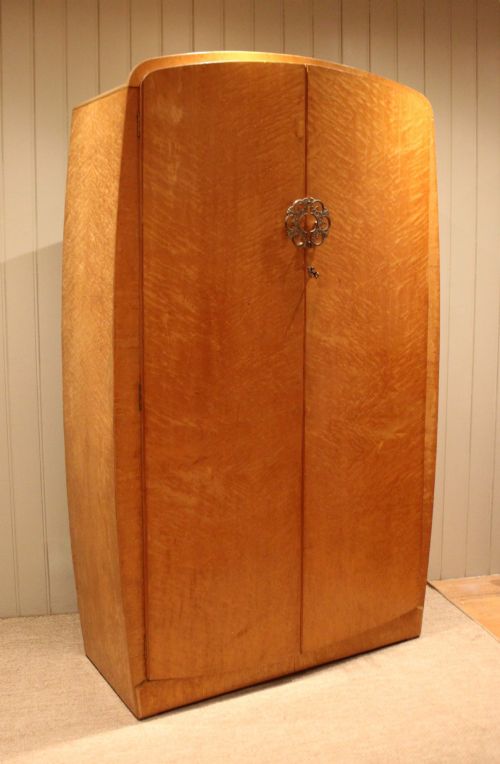
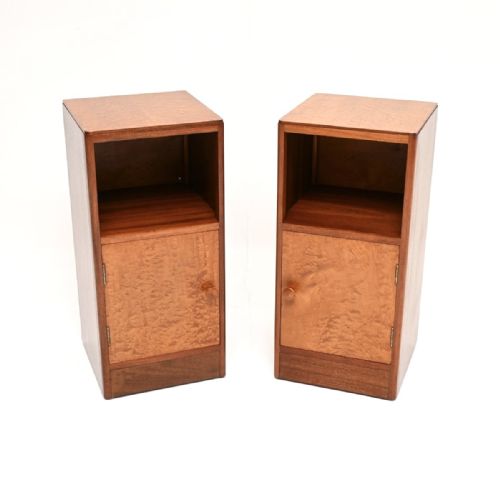
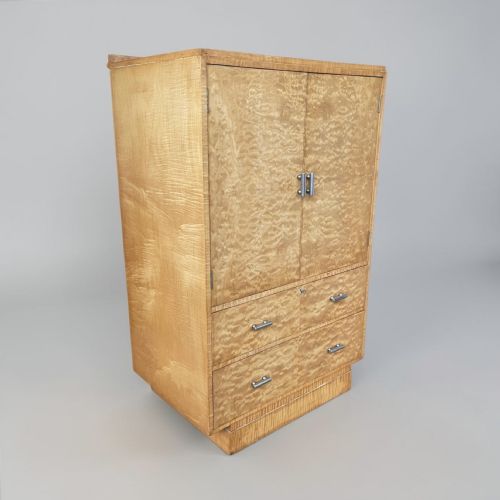
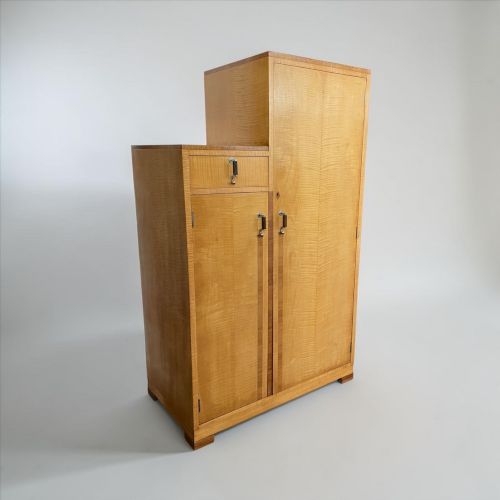
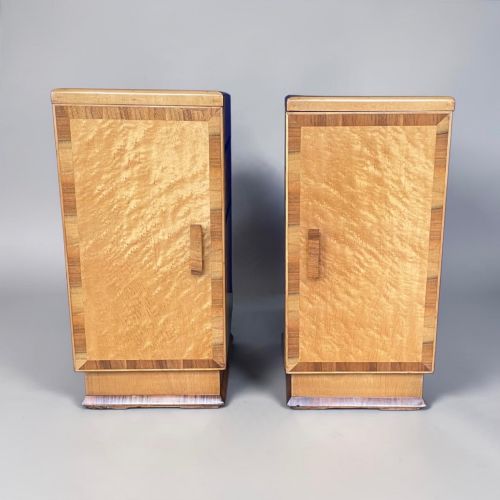
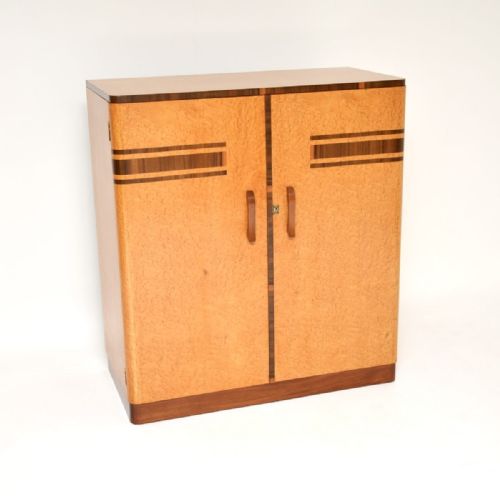
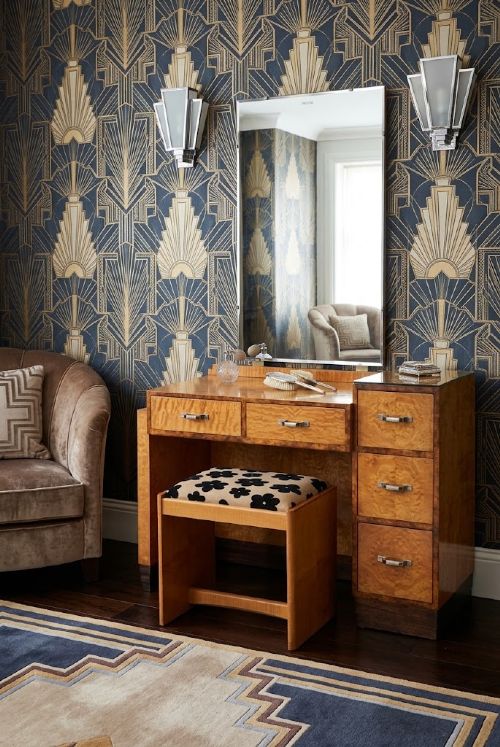
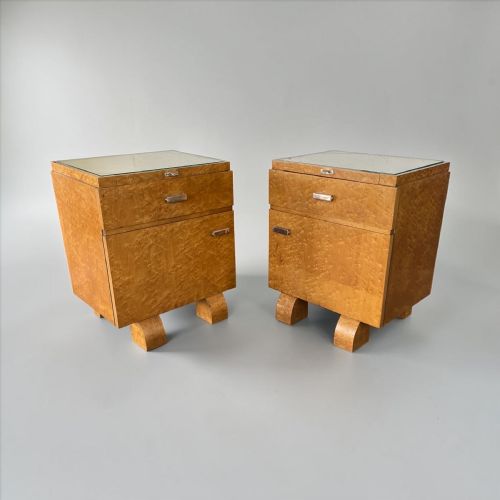
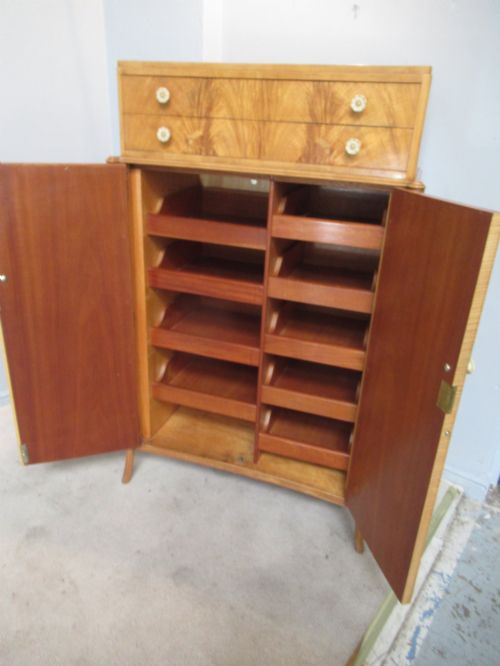
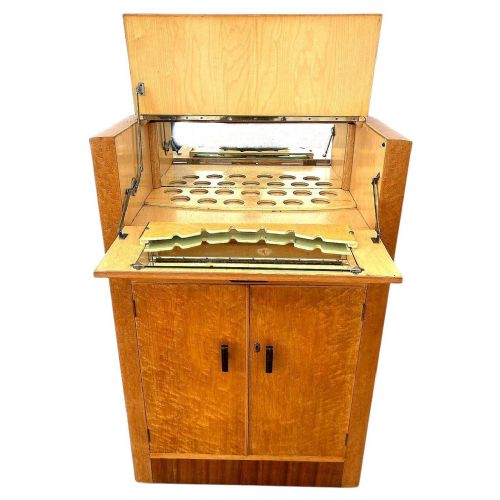
When you search for 1930s maple cabinets, you encounter storage furniture produced during the Art Deco era, predominantly utilising birds eye maple, blonde maple, and maple veneer. The selection spans bedside cabinets, bedside tables, tallboys, compactums, cocktail cabinets, and drinks cabinets, reflecting the domestic requirements of the period.
The most common variations on this page are matching pairs of bedside cabinets and tallboy cabinets executed in blonde birds eye maple. These pieces frequently incorporate contrasting details in walnut or mahogany, aligning with the dominant stylistic currents of the 1920s, 1930s, and 1940s.
How they were made
Cabinetmakers of the period applied birds eye maple veneer over solid timber carcases, selecting wood with distinct natural figuring to create decorative patterns across doors and drawer fronts. Walnut and mahogany were frequently utilised alongside maple for banding, contrasting mouldings, and secondary framing elements.
Hardware and structural detailing incorporated glass, metal, and chrome, particularly on cocktail cabinets and wardrobes. Construction methods relied on traditional joinery combined with veneering techniques that highlighted the blonde tones of the maple.
1930s Maple Cabinets Retail Price Guide 2026
Typical asking prices for 1930s maple cabinets among the pieces listed under this phrase on Sellingantiques today, from the lower quarter to the upper quarter. They describe what is for sale here now, not the wider market.
Cocktail cabinets from this era occasionally conceal mirrored interiors designed to sparkle when the doors open for evening guests.
What varies in quality
The sophistication of the veneer matching largely determines the visual success of a piece, particularly how the natural eyes in the maple grain align across multiple drawers or cabinet doors. Grain selection separates standard production items from bespoke commissions.
Attribution to known makers or workshops elevates the standing of certain items, whilst the integrity of secondary timbers like walnut and the original finish contribute to the overall standard of preservation.
Maurice Adams·Harry and Lou Epstein
The 1930s Maple Cabinets Glossary
- Birds Eye Maple
- A figure in maple wood that resembles tiny swirling eyes, highly prized by Art Deco cabinetmakers for its decorative surface pattern. It was frequently sliced as veneer for cabinet facades.
- Compactum
- A multi-functional wardrobe combining hanging space, shelves, and internal drawers within a single fitted unit. These pieces maximise interior storage capacity.
- Tallboy
- A tall chest of drawers or a wardrobe-style cabinet standing higher than a standard chest. It provides vertical storage whilst occupying a smaller floor footprint.
- Art Deco
- The prevailing design style of the 1920s and 1930s, characterised by streamlined geometric forms, symmetry, and contrasting wood veneers. It replaced the ornate curves of earlier periods.
1930s Maple Cabinets: Frequently Asked Questions
What is a 1930s maple cabinet?
These items are storage pieces built during the interwar period, utilising blonde maple and birds eye maple veneers. They embody the geometric lines typical of the Art Deco style.
Such furniture ranges from bedside cupboards to large cocktail cabinets and tallboys, designed to suit contemporary domestic spaces.
Where were these cabinets placed in a home?
Bedside cabinets and tallboys stood in bedrooms, providing enclosed storage for nighttime items or folded garments. Cocktail and drinks cabinets served living rooms and entertaining spaces.
Matching pairs of bedside tables flanked the bed, often coordinating with larger wardrobes or bed frames from the same suite.
How do I care for blonde maple veneer?
Maintaining these surfaces requires keeping them away from direct sunlight to prevent the blonde maple tones from darkening or fading. Regular dusting with a dry, soft cloth preserves the polished finish.
Moisture and harsh cleaning agents should be avoided to protect the delicate veneer and its underlying adhesive.