




1930s Mahogany Table
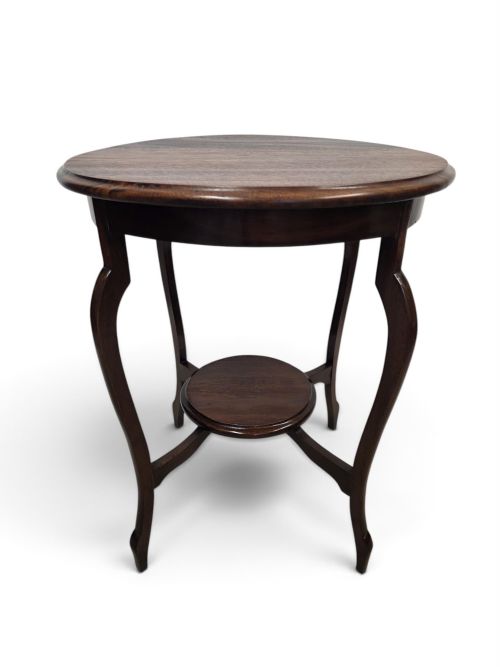
A 1930s mahogany table brings rich grain and practical form into a room, offering sturdy utility paired with interwar style.
1930s Mahogany Table
A 1930s mahogany table encompasses diverse forms created during the interwar years, ranging from compact bedside cupboards and nests of tables to larger centre tables, games tables, and desks. Buyers searching for a 1930s mahogany table typically encounter pieces rooted in Art Deco design or traditional revivals such as Georgian, George II, Regency, and Chippendale styles.
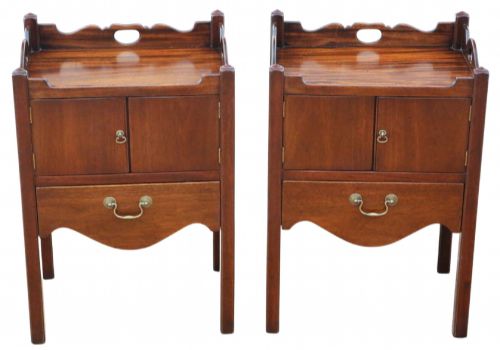
The selection leans heavily toward occasional furniture, side tables, and bedside cabinets produced in Britain and France. These items combine the deep reddish-brown tones of traditional timber with the sleek geometry typical of the 1930s and 1940s eras.
Makers and workshops of the period adapted classic timber furniture for modern interwar interiors, creating versatile items like drop-leaf gateleg designs and kidney-shaped nightstands alongside striking sunburst centre tables.
How they were made
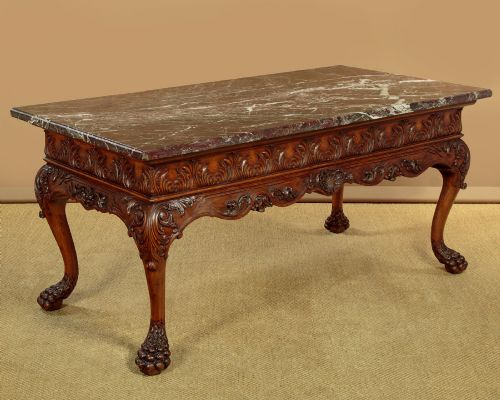
Makers utilised solid mahogany and rich mahogany veneer laid over timber cores to build these tables, frequently incorporating contrasting materials like brass, chrome, glass, and marble. Surface finishes relied on traditional French polishing or clear varnishes that highlighted the natural grain patterns of the wood.
Construction techniques combined robust joinery for structural stability with decorative veneering methods, particularly visible in geometric Art Deco motifs and sunburst patterns. Brass fittings, handles, and gallery rails appeared frequently on cabinets, desks, and bedside tables to accent the dark timber.
1930s Mahogany Table Retail Price Guide 2026
Typical asking prices for 1930s mahogany table among the pieces listed under this phrase on Sellingantiques today, from the lower quarter to the upper quarter. They describe what is for sale here now, not the wider market.
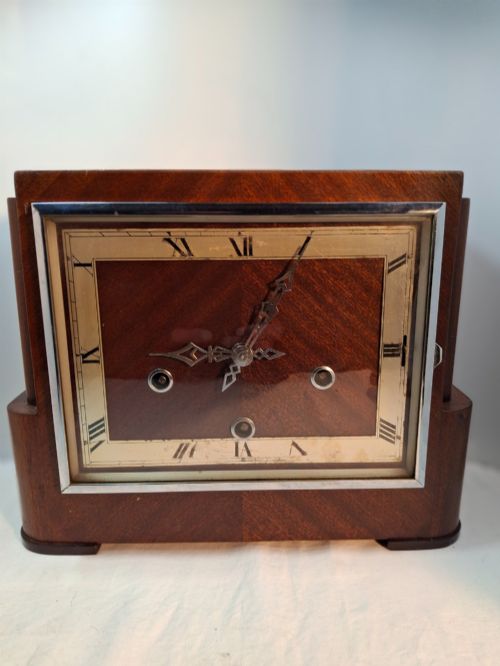
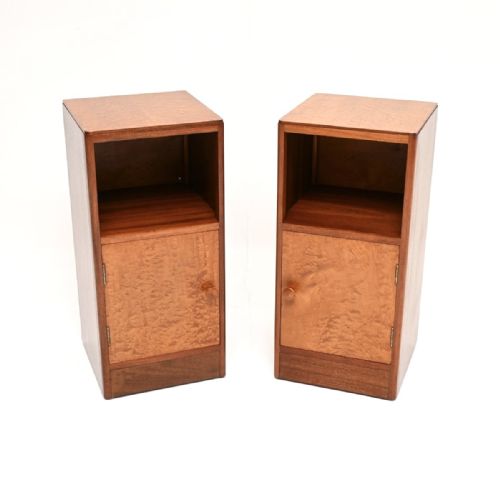
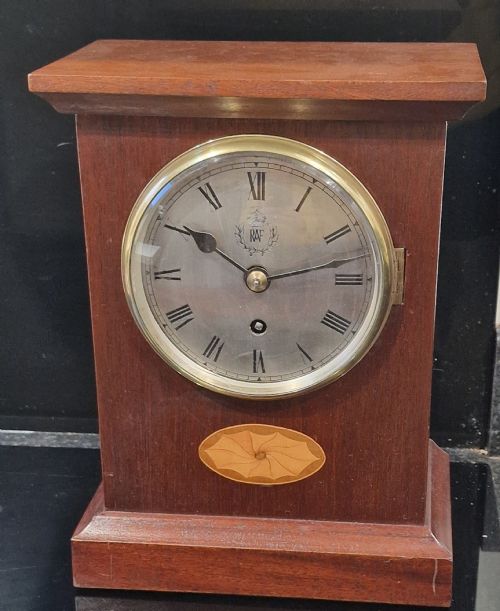
An officer's mess clock from 1938 shares space with delicate kidney-shaped nightstands, proving mahogany served both tea and military time.
What varies in quality
Quality in these tables depends largely on the selection of timber and the precision of the veneer work, where book-matched grain and seamless joints separate finer workshops from mass production. The integrity of the underlying timber framework and the crispness of revival carving or Art Deco lines dictate the overall standard.
Origin and maker attribution also influence the standing of a piece, with documented works from notable interwar firms commanding greater attention than unassigned factory output. The condition of secondary materials, such as integrated brass mounts, marble tops, and glass inserts, further defines the grade of the piece.
Betty Joel·The Bowman Brothers·Elkington Co·WMC
The 1930s Mahogany Table Glossary
- Art Deco
- A design style dominant in the 1930s characterised by sleek geometric shapes, stylised motifs, and modern industrial materials. It represented a distinct break from heavy Victorian ornamentation.
- Veneer
- A thin layer of fine mahogany applied over a sturdy timber base to provide complex grain patterns without heavy solid construction. This technique allowed makers to create symmetrical sunburst designs.
- Quartetto
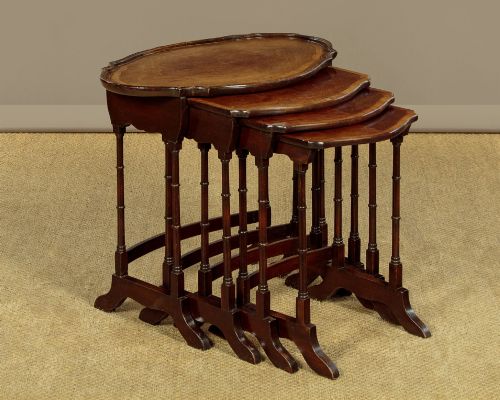
- A matched set of four stackable occasional tables designed to slide neatly underneath one another. They became popular in the early twentieth century for compact living spaces.
- Gateleg
- A table design featuring hinged drop leaves supported by swing-out legs that pivot outward. This mechanism allowed users to expand surface space easily when needed.
- Georgian Revival
- A style popular in the 1930s that reinterpreted eighteenth-century British furniture designs. Makers utilised traditional forms like claw-and-ball feet and carved mahogany details.
1930s Mahogany Table: Frequently Asked Questions
Are 1930s mahogany tables purely Art Deco?
While Art Deco is prominent among these listings, traditional revivals are equally common. Pieces span from geometric French designs to Georgian and Chippendale revival styles.
Buyers will find that cabinetmakers during this decade balanced modern modernist lines with faithful reproductions of eighteenth-century furniture forms.
How do I identify a genuine 1930s table?
Examine the construction methods, timber selection, and hardware styles typical of the interwar period. Mahogany veneer work, brass fittings, and structural proportions usually point to this era.
Makers of the 1930s utilised specific joinery techniques and stylistic cues that distinguish them from later mid-century modern productions or earlier Victorian items.
What rooms suit a 1930s mahogany table?
These versatile tables fit well into living rooms, bedrooms, and studies as occasional surfaces, bedside storage, or compact desks. Their dark timber tones ground neutral modern interiors.
Smaller formats like nests of tables and drop-leaf designs offer practical surface area without dominating restricted floor space.
Did British and French makers differ in style?
British production often favoured traditional revival styles and practical household utility, such as gateleg tables and bedside cupboards. French workshops leaned more into bold Art Deco geometry and luxury.
Both traditions relied heavily on mahogany timber, but French pieces frequently integrated striking veneers, marble tops, and contrasting metal accents.