




1930s Gold Dress Ring
When choosing a 1930s gold dress ring, you are selecting an authentic piece of Art Deco jewellery designed to make a bold statement on the hand.
1930s Gold Dress Ring
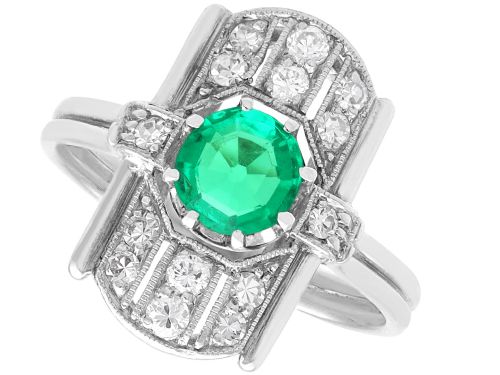
A 1930s gold dress ring typically displays the geometric lines and structured symmetry characteristic of the Art Deco period. These pieces frequently combine yellow or white gold settings with contrasting platinum to accentuate the central stones.
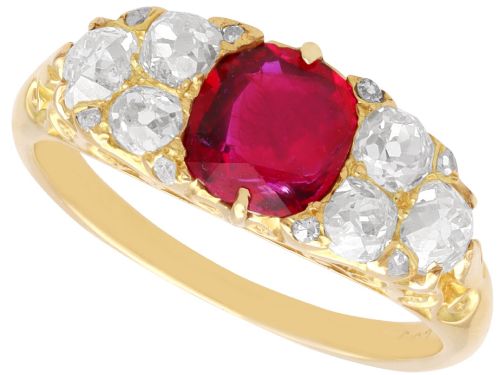
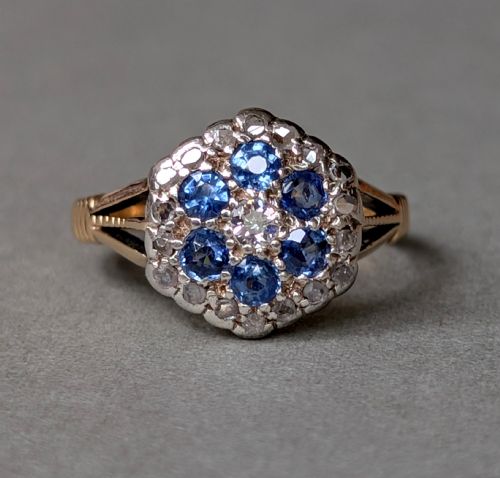
The selections available range from striking multi-stone cluster designs featuring sapphires, rubies, and emeralds to minimalist solitaire and three-stone arrangements. Many examples incorporate old cut diamonds surrounding a vibrant coloured gemstone centre.
Originating primarily from the 1920s to the 1940s, these rings reflect the transition from elaborate Edwardian ornamentation to streamlined modernism. Buyers will frequently encounter cluster and trilogy configurations among the current selection.
Materials and construction
Goldsmiths of the era utilised 18ct yellow and white gold alongside platinum settings to secure diamonds and coloured gemstones firmly in place. Platinum claw or pave settings were frequently mounted onto gold shanks to provide maximum durability with a bright, reflective finish.
Gemstones such as rubies, sapphires, and emeralds were cut by hand into old European, round, or cushion shapes to fit geometric channel and cluster arrangements. This combination of yellow gold warmth and platinum brilliance defines the period's manufacturing technique.
The selection includes diamond, sapphire, ruby, emerald, zircon, amethyst, aquamarine, and pearl gemstone varieties.
Evaluating the craftsmanship
Quality in these rings is determined by the natural origin, clarity, and carat weight of the central gemstones, particularly certified sapphires and emeralds. Superior examples maintain original stone cuts without modern recutting and exhibit precise symmetry within the cluster or geometric mounting.
The integrity of the platinum-to-gold bonding and the crispness of millegrain detailing also distinguish finer workshop output from standard commercial production. Heavier, well-preserved shanks indicate a ring designed to withstand generations of daily wear.
The 1930s Gold Dress Ring Glossary
- Art Deco
- A design style spanning the 1920s and 1930s characterised by geometric shapes, stylised motifs, and streamlined elegance. It rejected Victorian ornamentation in favour of modern industrial aesthetics.
- Old European Cut
- A vintage diamond cut featuring a small table, heavy crown, and a large culet facet. This precursor to the modern brilliant cut produces a distinctive warm sparkle under candlelight.
- Cluster Ring
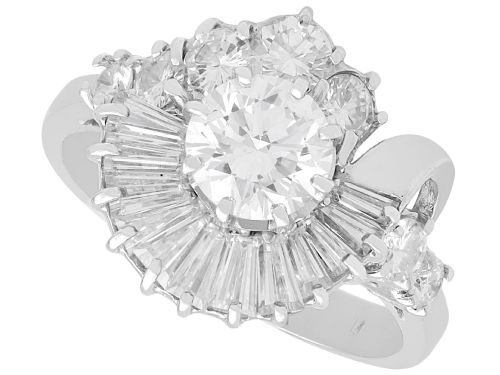
- A ring style featuring a prominent central gemstone surrounded by a border of smaller stones, typically diamonds. This arrangement maximises visual impact and perceived gemstone size.
- Trilogy Ring
- A ring set with three stones in a row, traditionally symbolising the past, present, and future. They are commonly configured with a larger central diamond flanked by two smaller accent stones.
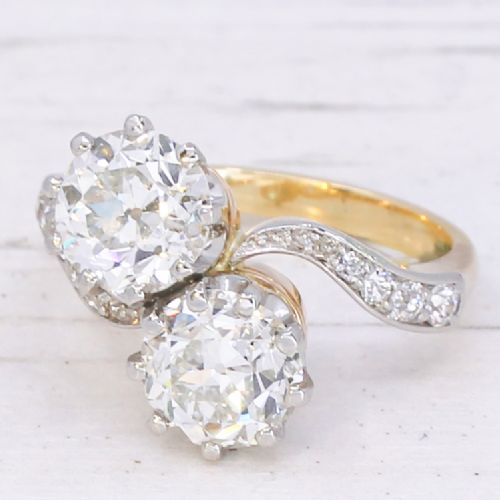
- Toi et Moi
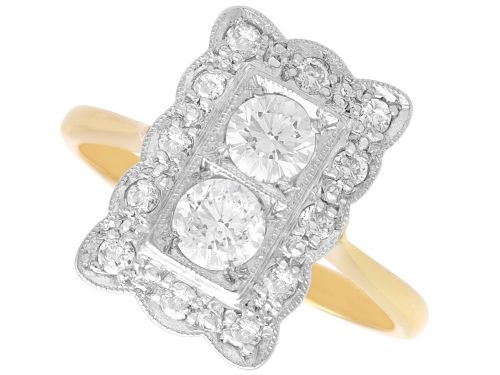
- A French term meaning you and me, describing a ring featuring two main gemstones set side by side. This design represents intertwined souls and gained popularity during the early twentieth century.
1930s Gold Dress Ring: Frequently Asked Questions
How do I clean my ring safely?
Warm soapy water and a soft brush are sufficient for removing daily residue from gold and platinum settings.
Avoid harsh chemical dips or ultrasonic cleaners, especially if the piece contains emeralds or pearls.
Can these rings be resized easily?
Most gold and platinum bands can be adjusted by a skilled jeweller without compromising the structural integrity.
Intricate gallery work or stones set continuously around the band may limit the adjustment range.
Are the gemstones certified?
Certain high-value pieces include independent laboratory reports detailing gemstone origin and treatment history.
Checking individual listings will confirm whether a specific certificate is supplied with the ring.
How do I identify a genuine period piece?
Authentic examples exhibit period-appropriate hand-cut stones, traditional metal hallmarks, and construction techniques characteristic of 1930s workshops.
Comparing the setting style and wear patterns against documented historical pieces helps confirm authenticity.