



1930s Glass Globe Lamp
A 1930s glass globe lamp brings architectural warmth and striking silhouettes to a room through diffused illumination.
1930s Glass Globe Lamp
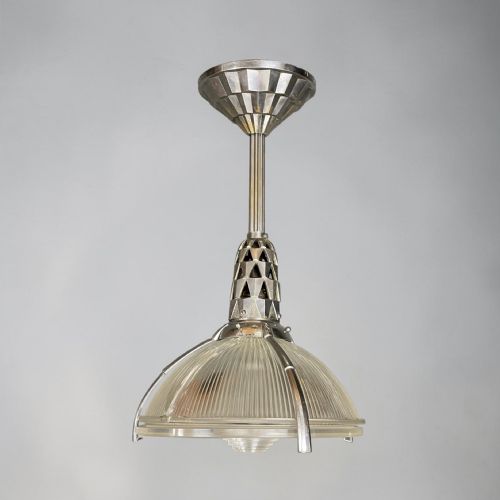
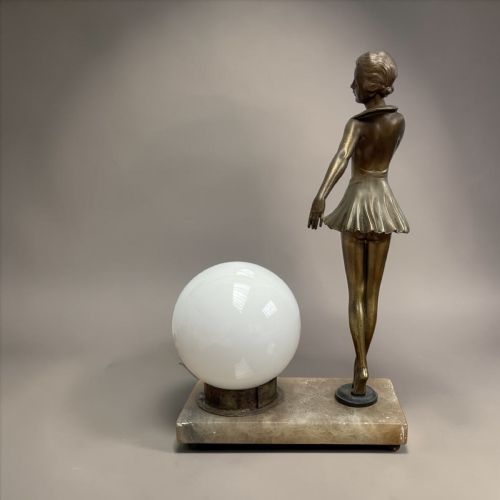
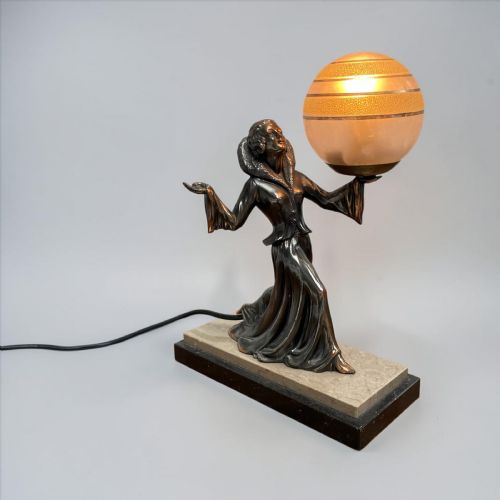
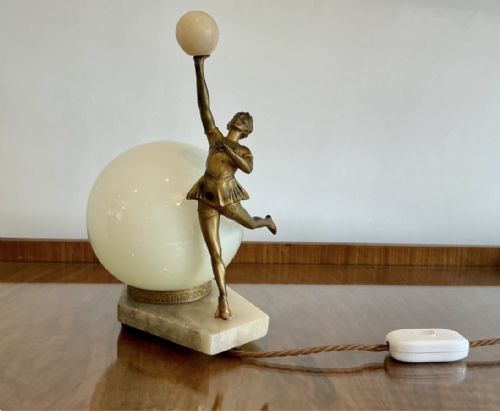
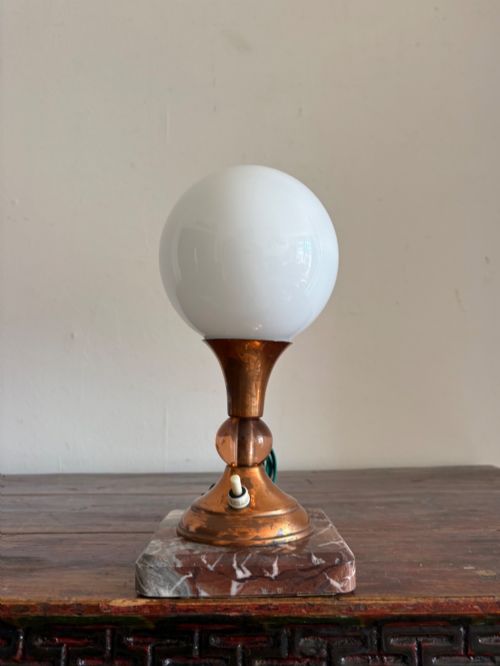
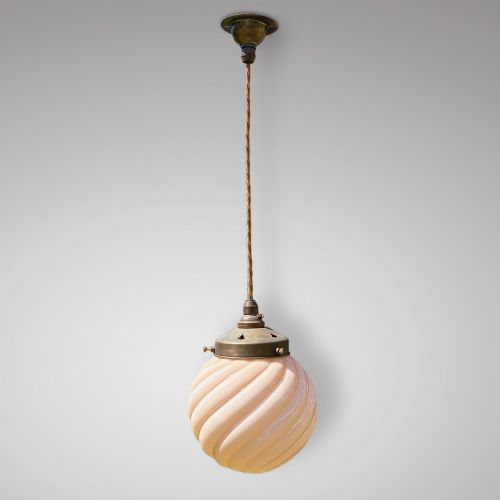
A 1930s glass globe lamp centres on spherical or rounded lighting forms created during the Art Deco era, encompassing table lamps, ceiling lights, and pendants. These pieces combine geometric design with functional illumination.
The selections available here range from modest bedside night lights to large ceiling globes and figural table lamps. Common domestic forms integrate spheres with stands, figures, or architectural bases.
Origins span British and continental workshops, with significant representation from French makers working in the Art Deco style across the 1920s to 1940 period.
Materials and construction methods
Glass production during this period utilised techniques such as frosting, etching, and opalescence to soften the glare of early electric bulbs. Opaline and frosted glass dominate the shade forms.
Bases and structural mounts pair glass elements with heavy metals like chrome, bronze, patinated metal, and spelter, frequently anchored on marble or granite plinths.
Early plastics including bakelite and catalin phenolic appear alongside copper and brass fittings, reflecting the industrial material innovations adopted by 1930s designers.
Listings incorporate items spanning the 1920 to 1940 period, featuring glass, marble, chrome, and bronze.
Evaluating quality and execution
Quality reveals itself in the weight and purity of the glass components, where uniform thickness and subtle colour dispersion indicate superior manufacture. Heavier metal castings and dense marble bases elevate the stability and finish of the piece.
The crispness of figural modelling distinguishes standard production from finer examples, particularly in cast spelter or bronze animal and human forms. Precision in the joinery between metal mounts and glass shades reflects the original maker's skill.
Émile-Jacques Ruhlmann
The 1930s Glass Globe Lamp Glossary
- Opaline glass
- A milky, semi-translucent glass developed to diffuse light evenly. It appears frequently in period pendants and table lamp shades.
- Spelter
- A zinc alloy commonly used in Art Deco figure casting as a cost-effective alternative to bronze. It accepts patination readily to resemble heavier metals.
- Torchiere
- An uplighter floor or table lamp designed to throw illumination towards the ceiling. These fixtures often employ prominent bowls or spherical shades.
- Bakelite
- An early synthetic thermosetting plastic utilised for switches, bases, and decorative trim. Its dark lustre defines many electrical items from this decade.
- Patinated metal
- Metal treated with chemicals or heat to alter its surface colour and texture. This finish protects the underlying material while adding depth.
1930s Glass Globe Lamp: Frequently Asked Questions
How do I identify a 1930s glass globe lamp?
Look for characteristic Art Deco geometric lines, heavy marble or metal bases, and authentic materials such as opaline glass and chrome.
Examine the construction methods and fixings for period manufacturing techniques typical of the 1920s to 1940s eras.
Where should I place a globe table lamp?
These lamps suit side tables, desks, or credenzas where their spherical forms can provide soft, ambient illumination.
Ensure the surface is sturdy enough to support heavier combinations of glass, marble, and metal.
How do I care for vintage opaline glass?
Dust the glass gently with a soft, dry cloth to prevent accumulation without scratching the surface.
Avoid harsh chemical cleaners that might damage vintage patination on surrounding metal or brass components.
What is the difference between a pendant and a ceiling light?
Pendant lights suspend from a cord, chain, or rod, hanging lower into the room space.
Ceiling lights mount directly against the plaster surface, offering a more compact profile for hallways and smaller rooms.