






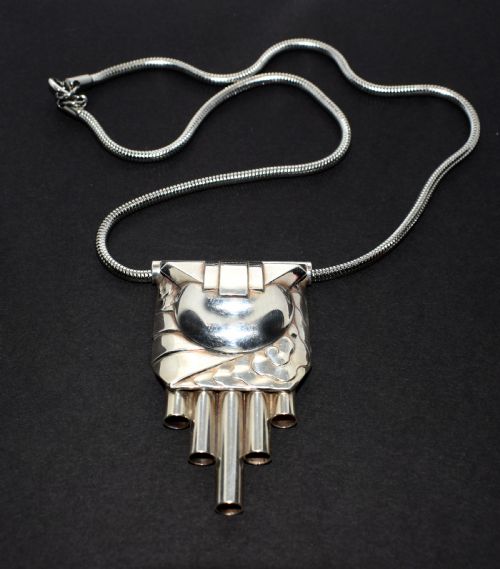
1930s Geometric Pendant Necklace
A 1930s geometric pendant necklace brings together sharp modernist lines and the distinctive industrial materials of the interwar years.
1930s Geometric Pendant Necklace
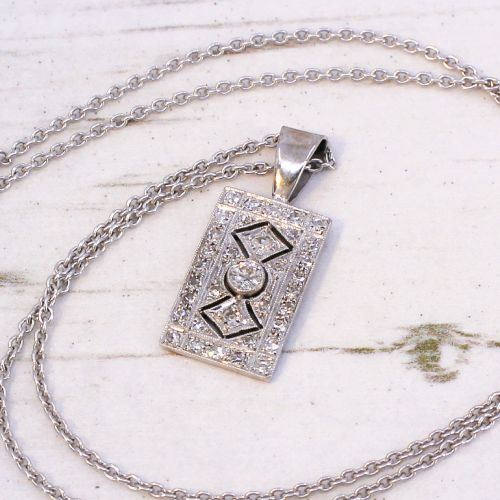
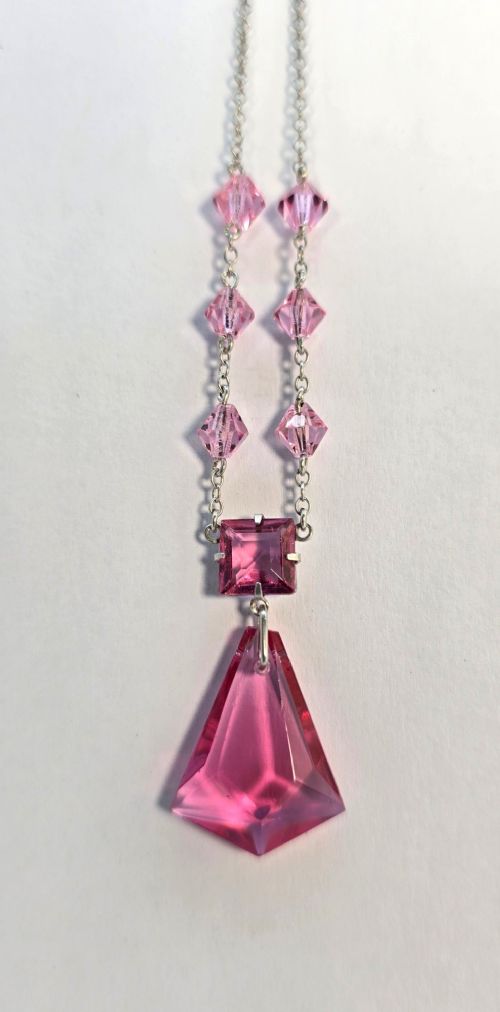
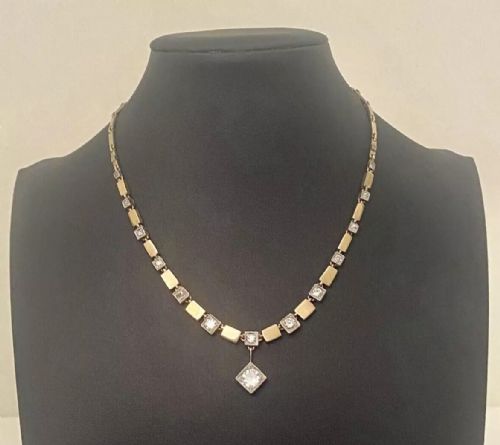
When you search for a 1930s geometric pendant necklace, you are looking at pieces defined by linear precision, symmetrical arrangements, and angular motifs that reject traditional Victorian curves. The examples you are most likely to meet on this page span the Art Deco and Art Deco Modernist styles, often taking the form of a central pendant suspended from a fine chain or integrated directly into a statement necklace.
The materials used across these listings range from precious metals and gemstones to industrial synthetics, reflecting a period of immense design transition. You will encounter pieces from the 1930s alongside items catalogued under the 1920s, 1940s, Victorian era, and 19th century, all sharing that unmistakable architectural silhouette.
Materials and construction
The construction relies heavily on contrasting textures, pairing precious elements like platinum, white gold, and silver with diamonds, rock crystal, aquamarine, onyx, and pink hand-cut crystal. Gemstones are typically old-cut to catch the light within strict geometric bezel or channel settings.
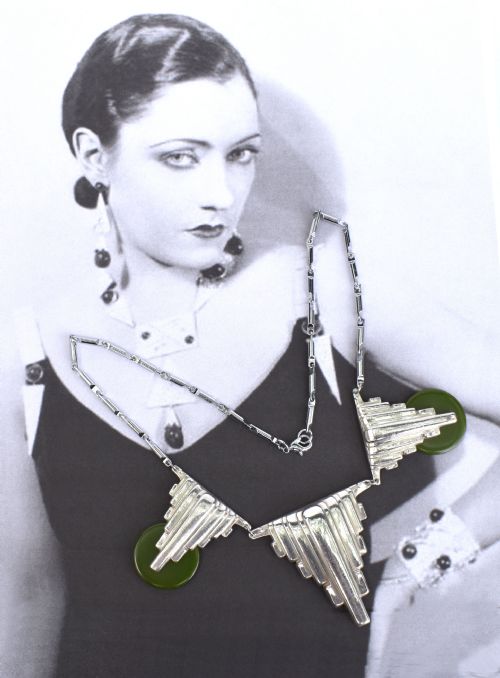
Industrial innovation also shaped these items, with makers utilising chrome, silver plating, and enamel alongside early plastics such as bakelite, galalith, and green glass. This blend of precious and utilitarian substances gives the necklaces their characteristic industrial weight and modern finish.
Listings feature items spanning the 19th century, Victorian period, 1920s, 1930s, and 1940s.
Judging quality in interwar jewellery
Quality rests primarily on the architectural harmony of the design and the precision with which the materials are joined. Superior pieces demonstrate crisp angles, secure stone settings, and a balanced weight that allows the pendant to lie flat against the wearer.
The choice of materials also dictates the tier of the piece, distinguishing high-end diamond and platinum works from inventive chrome, galalith, and glass creations. Both categories command attention, but the distinction lies in the refinement of the fabrication and the purity of the metal.
Jakob Bengel
The 1930s Geometric Pendant Necklace Glossary
- Art Deco
- A design style characterised by sleek lines, geometric shapes, and a streamlined aesthetic that dominated the interwar period. It emerged in France before spreading globally across architecture, fashion, and jewellery.
- Bakelite
- An early form of synthetic plastic prized for its durability and adaptability to vibrant colouration. In jewellery, it provides bold, solid blocks of tone that contrast sharply with metallic elements.
- Galalith
- A semi-synthetic plastic derived from milk casein, widely utilised in modernist interwar accessories. It takes a high polish and mimics the appearance of natural horn or ivory.
- Old cut
- A traditional diamond cutting style featuring a smaller table, higher crown, and deep pavilion designed to sparkle under candlelight. It gives stones a softer, warmer luminescence than modern brilliant cuts.
- Platinum
- A dense, durable, and naturally white precious metal favoured in fine jewellery for its strength. It allows for delicate yet secure settings that hold diamonds and gemstones firmly in place.
1930s Geometric Pendant Necklace: Frequently Asked Questions
What defines a geometric pendant necklace?
These pieces rely on straight lines, repeating angles, and architectural symmetry rather than floral or organic motifs.
They draw visual inspiration from machine age industrialisation and modernist art movements.
Are these necklaces made of solid platinum?
Some high-end examples utilise platinum or white gold to secure diamonds and fine gemstones.
Other versions employ silver, silver plating, or chrome combined with glass and plastics.
How do I care for bakelite elements?
Bakelite and galalith require gentle cleaning with a soft, damp cloth and should be kept away from harsh chemicals and prolonged direct sunlight.
Storing them separately prevents scratching from metal chains and gemstone settings.
Can I wear these everyday?
Most sturdy metal and synthetic constructions tolerate regular wear provided you handle clasps and delicate chains with care.
Pieces set with old-cut diamonds or softer crystals benefit from slightly more mindful handling.