


1930s Furniture
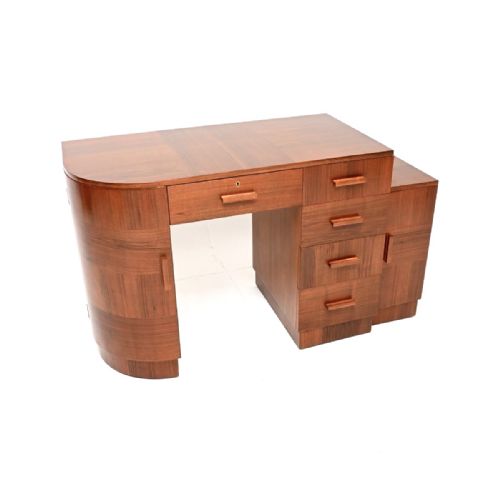
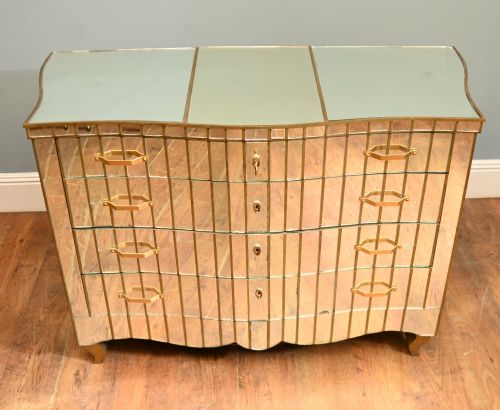
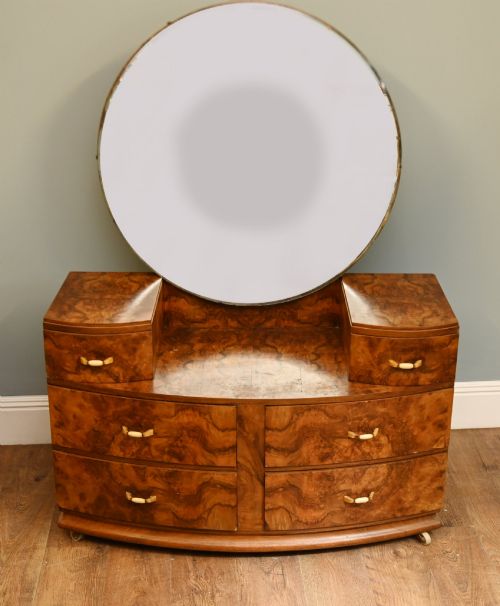
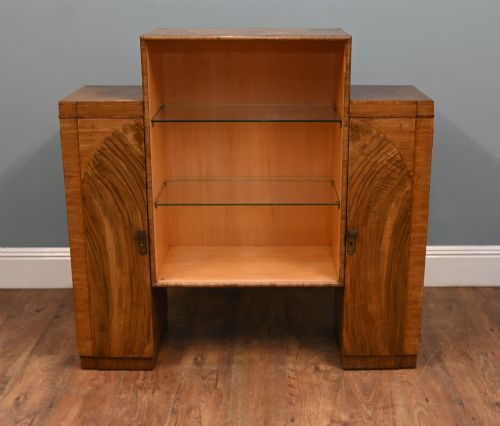
These pieces of 1930s furniture bring bold geometric lines and rich figured woods into a modern room.
1930s Furniture
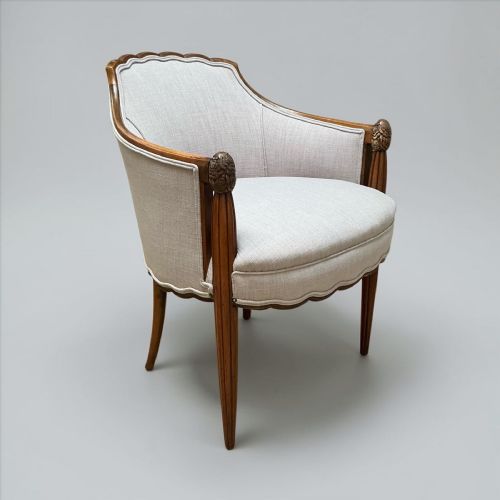
When you search for 1930s furniture, you encounter practical items made for domestic spaces, spanning armchairs, desks, chests of drawers, and display cabinets. The predominant style is Art Deco, appearing alongside Swedish Grace, Arts and Crafts, and Dutch Renaissance Revival elements.
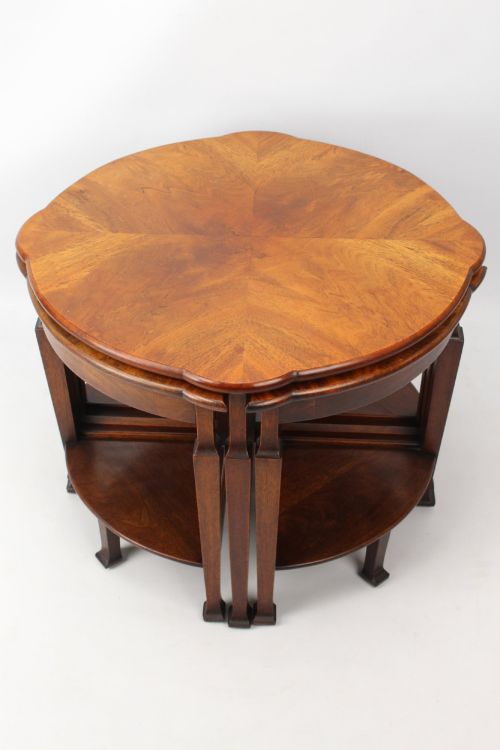
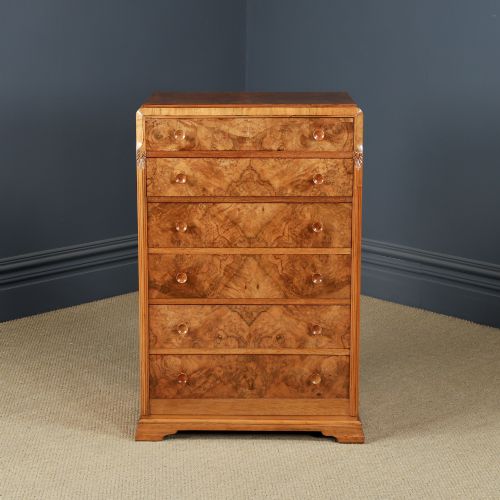
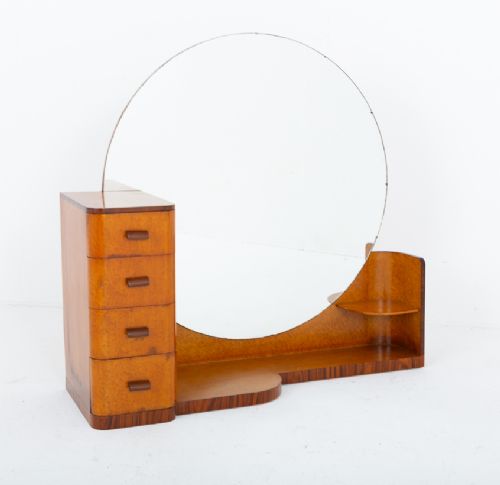
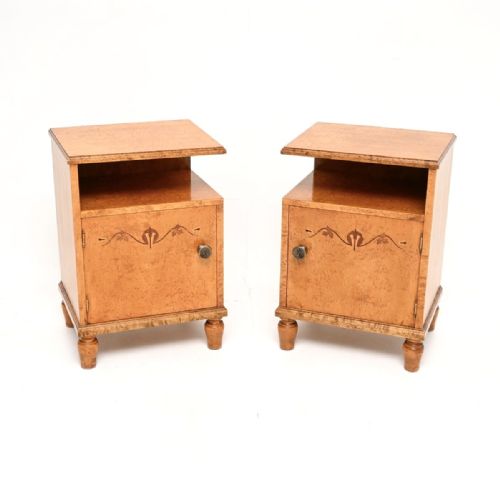
The material palette draws heavily on walnut, burr walnut, oak, and exotic veneers such as amboyna and birds-eye maple, often shaped into nests of tables, bedside cabinets, and dressing tables. French and Swedish interpretations sit alongside English pieces, creating a varied selection of seating and storage forms.
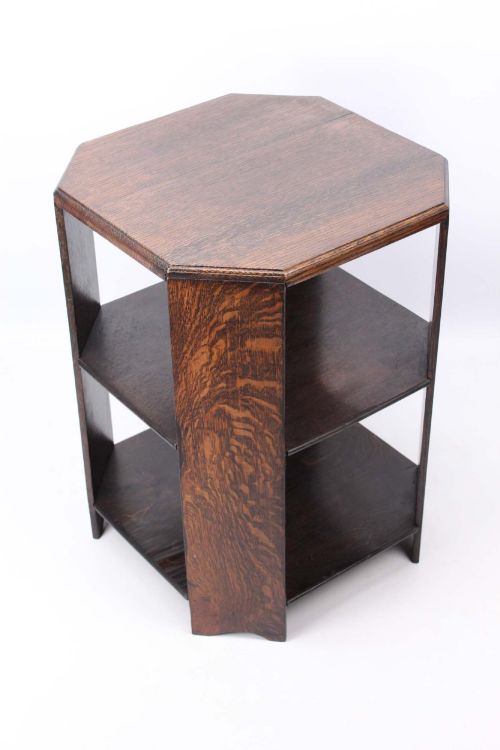
Most items on this page cluster around the nineteen-thirties, with occasional pieces from the nineteen-twenties or Edwardian period reflecting earlier traditions. These domestic items range from fitted cocktail cabinets to solid oak bookcases and specialist seating like elephant footstools.
Materials and construction
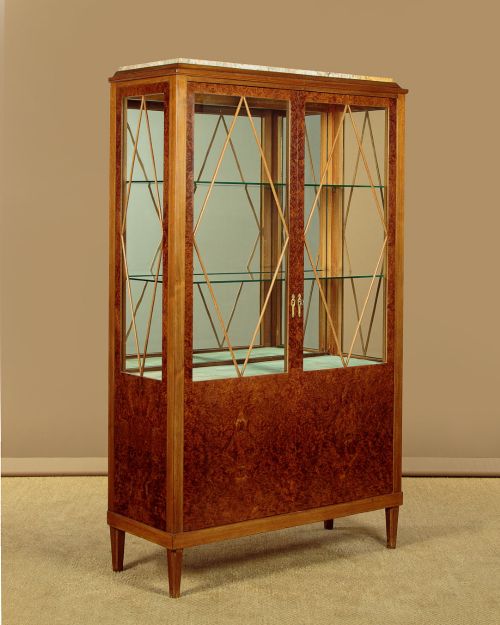
Makers utilised timber frames overlaid with decorative veneers, selecting burr walnut, rosewood, and satin birch to create striking grain patterns across flat drawer fronts and curved cabinet doors. Solid oak and fruitwood also form the structural carcasses for desks, tables, and sideboards.
Liberty offered unusual domestic seating fashioned from genuine elephant feet during the nineteen-thirties.
Judging the range
The standard of 1930s furniture depends upon the choice and matching of veneers, where book-matched burr walnut or exotic amboyna demonstrates superior craftsmanship over plain timbers. Cabinetwork showing seamless joins and purposeful grain continuity across multiple drawers marks out finer pieces.
Attribution to known makers and distinctive regional interpretations, such as Swedish satin birch or French rosewood designs, elevate items beyond standard mass production. The integration of original hardware, glass, and specialised elements like mirrored commode fronts separates simpler utilitarian objects from works of high design.
Maurice Adams·Liberty·Oliver Morel·Hille
The 1930s Furniture Glossary
- Art Deco
- A design style characterised by sleek geometric shapes, streamlined forms, and stylised ornamentation popular during the interwar period. It dominates the aesthetic of dining sets, cabinets, and seating.
- Burr Walnut
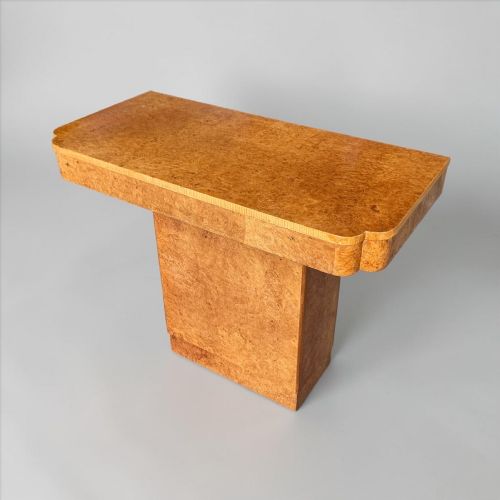
- Wood harvested from the knotted growths of walnut trees, producing swirling, highly decorative grain patterns. Furniture makers applied it as a veneer to drawer fronts and tabletops.
- Veneer
- A thin slice of figured wood applied over a secondary timber carcass to provide an ornamental surface without the structural instability of solid exotic wood. It defines the appearance of many thirties cabinets and desks.
- Klismos
- An ancient Greek chair design revived during the twentieth century with curved legs and a concave backrest. Swedish makers applied this classical form to dining chairs.
- Satin Birch
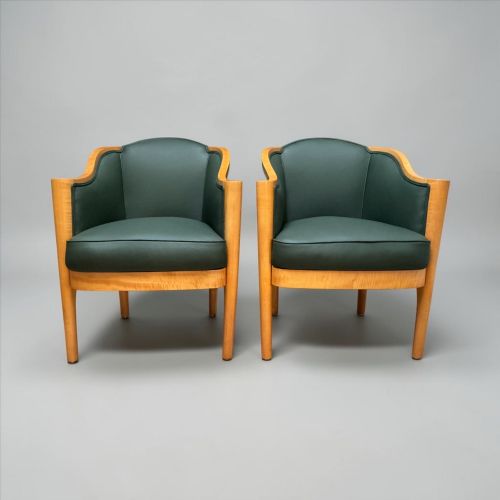
- A pale, lustrous timber native to northern Europe, utilised by Swedish designers to impart brightness and smooth texture to armchairs and bedside cabinets.
1930s Furniture: Frequently Asked Questions
How do I identify Art Deco furniture?
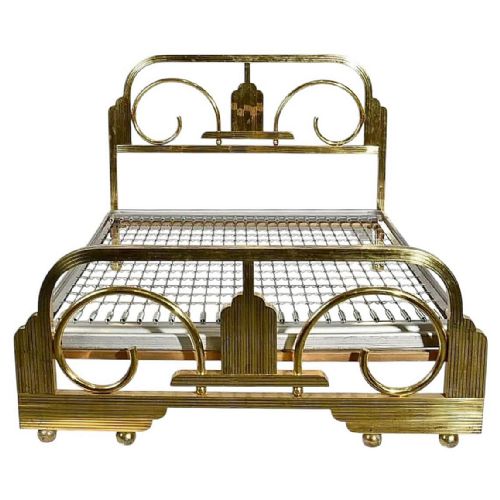
Art Deco furniture relies on symmetrical geometric shapes, stepped outlines, and smooth, polished surfaces without excessive carving. Look for streamlined silhouettes on wardrobes, dressing tables, and bed frames.
The use of contrasting veneers like burr walnut and amboyna further signals the style. Designers often incorporated mirrored glass and metal details to complete the look.
What woods were popular in the thirties?
Walnut was the dominant timber of the decade, especially in its highly figured burr form for decorative cabinet fronts. Oak also remained common for sturdy tables, bookcases, and desks.
Exotic imports like satin birch, rosewood, and birds-eye maple appear on continental pieces, particularly from French and Swedish workshops.
Where should I place a display cabinet?
A display cabinet works well in a living room or dining area where glass shelves and mirrored backs can reflect natural light. These pieces suit spaces designed to showcase ceramics, glassware, or books.
Ensure the cabinet sits away from direct sunlight to protect delicate wood veneers and interior linings from fading.
Can I use a vanity table as a desk?
Pedestal dressing tables and vanity units from this period often feature kneeholes and functional drawers that accommodate light writing work. Their mirrored superstructure can sometimes be detached if necessary.
Check the height and legroom beneath the central drawer to ensure comfortable seating for daily desk use.