



1930s French Lalique Plate
A 1930s French Lalique plate brings exceptional Art Deco glass design into the home, prized for its distinctive moulded forms and luminous surfaces.
1930s French Lalique Plate
A 1930s French Lalique plate represents the height of interwar glass design, taking the form of shallow bowls, chargers, and decorative dishes. These pieces showcase the distinct aesthetic of the period, executed with characteristic modernist flair.
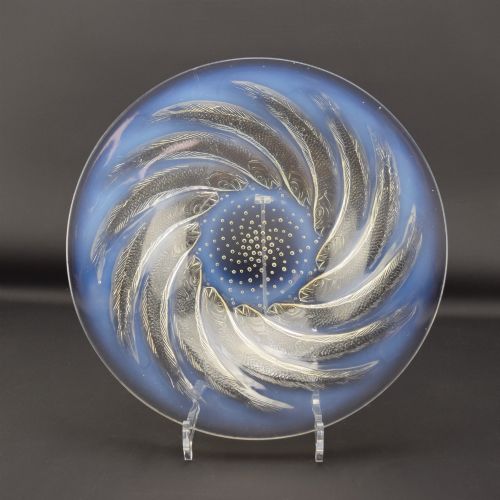
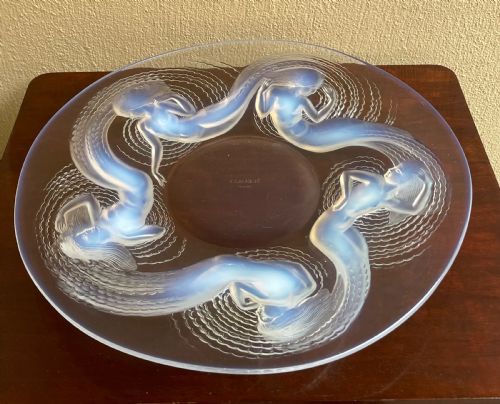
Buyers seeking a 1930s French Lalique plate encounter specific named models such as Poissons, Oeillets, Calypso, Actinia, Campanules, Plume de Paon, Volutes, and Bulbes. These items function primarily as decorative bowls and plates rather than everyday tableware.
How they were made
Production relies on glass and opalescent glass, shaped through pressing and moulding techniques typical of the period. The skilled manipulation of the medium allows the glass to catch and diffuse light across the relief surface.
The characteristic opalescent finish requires precise thermal control during the cooling process to achieve the shifting blue and amber tones seen across the surface of each charger and shallow bowl.
Fish and peacock feathers make an unexpected pairing in 1930s glass, yet both swim and strut across these plates.
What varies in quality
Quality depends upon the depth and clarity of the moulded relief, where sharper details create a more striking play of light across the glass. The strength and consistency of the opalescence also determine the visual impact of the piece.
The complexity of the chosen design, from simple geometric volutes to intricate floral and aquatic motifs like Oeillets and Poissons, dictates the sophistication of the finished plate.
Rene Lalique
The 1930s French Lalique Plate Glossary
- Opalescent glass
- Glass that milky or translucent appearance which displays varying tones of blue in transmitted light and warm amber in reflected light. This optical effect is achieved through the addition of specific minerals to the batch.
- Coupe ouverte
- An open bowl or coupe form with wide, sloping sides designed to display moulded decoration. These pieces often function as large decorative dishes or shallow bowls.
- Charger
- A large ornamental plate used for display rather than for serving food. In this category, chargers feature prominent relief designs across a wide surface.
- Art Deco
- The dominant design style of the 1930s characterised by stylised motifs, symmetrical patterns, and sleek modern forms. It heavily influenced the decorative arts of the period.
1930s French Lalique Plate: Frequently Asked Questions
What are 1930s French Lalique plates used for?
These items serve primarily as decorative objects, displayed on tables, shelves, or wall mounts to highlight their intricate glasswork.
Because of their delicate opalescent surfaces and moulded forms, collectors treat them as display pieces rather than functional tableware.
How do I identify a 1930s Lalique plate?
Look for characteristic Art Deco motifs such as fish, flowers, or geometric swirls rendered in heavy pressed glass. The presence of opalescence and specific named patterns helps confirm the period and origin.
Examining the depth of the relief work and the quality of the glass provides further clues to its authenticity.
Are these plates meant for daily dining?
They were produced as decorative items and art glass rather than practical dishes for everyday meals. Using them for serving food risks damaging the delicate surfaces.
Collectors generally keep them away from heavy use to preserve the original finish of the glass.
How should I display a Lalique glass plate?
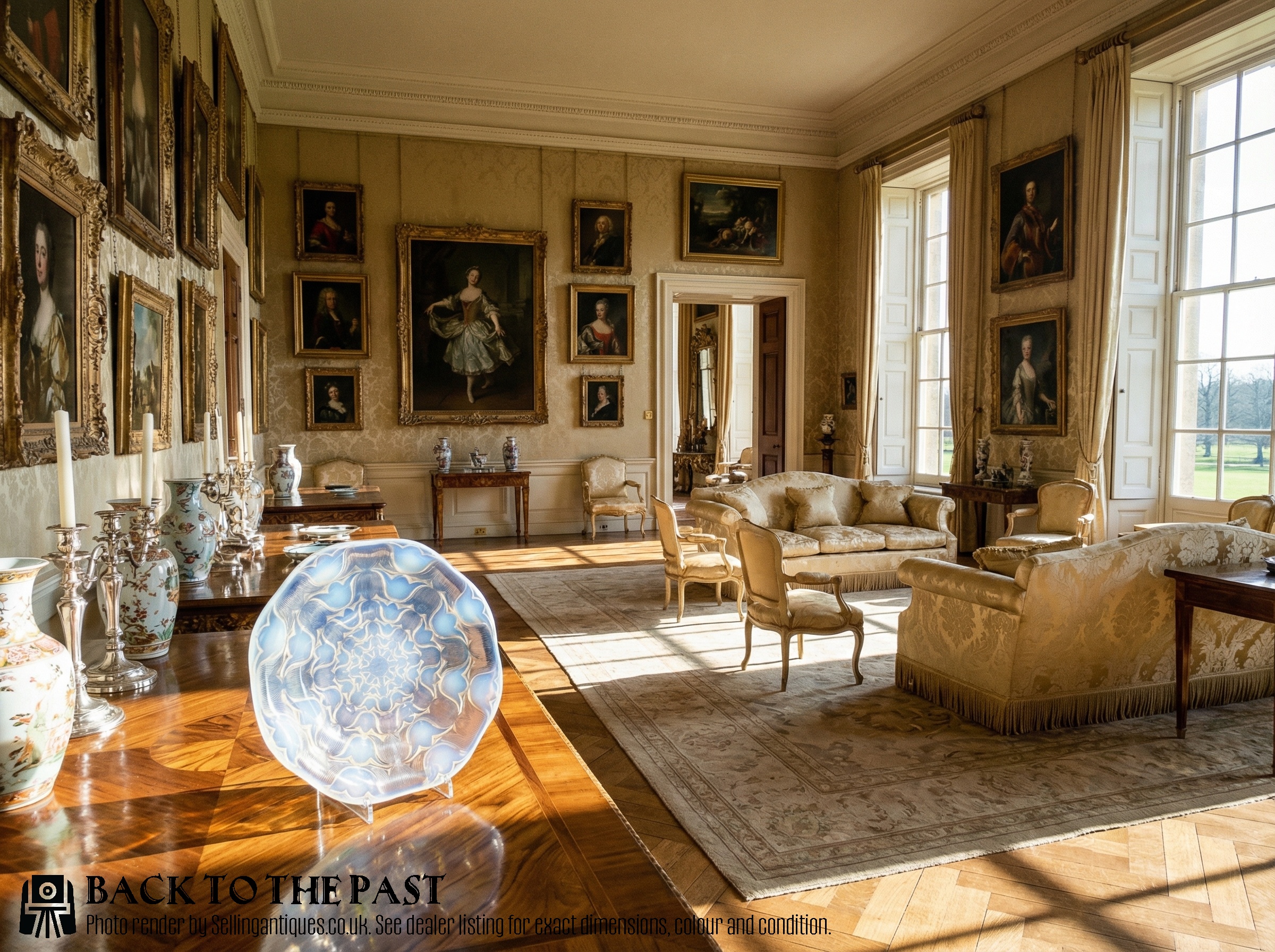
Placement near a natural light source allows the opalescent glass to display its characteristic play of blue and amber tones. Using stable plate stands ensures the piece remains secure.
Proper lighting transforms the flat surface into a luminous display of Art Deco design.