

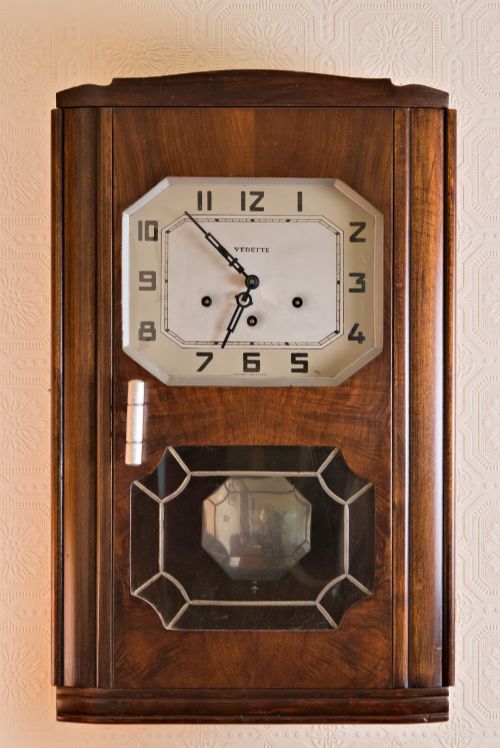
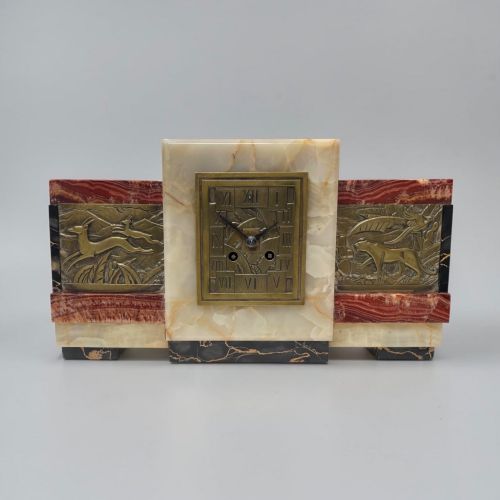
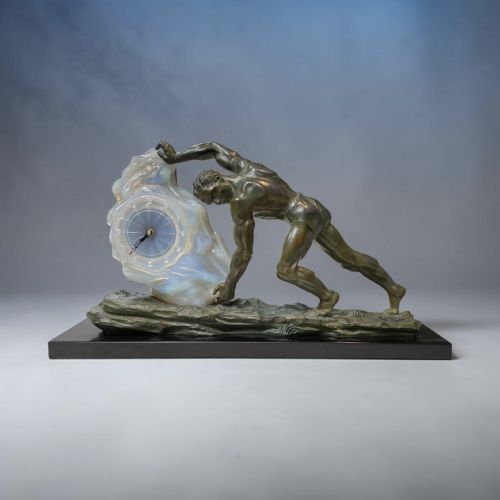
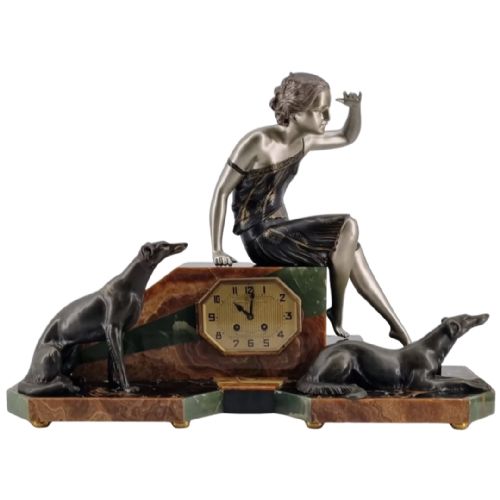




1930s French Clock
A 1930s French clock brings geometric rhythm and sculptural presence to a room, driven by the clean lines of Art Deco design.
1930s French Clock
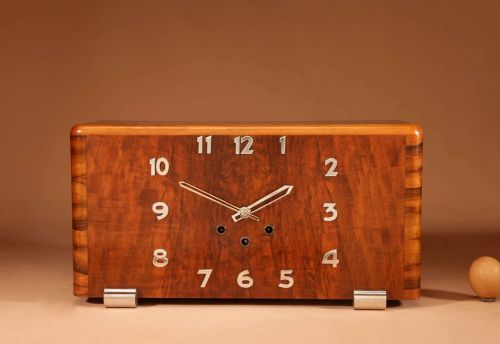
A 1930s French clock spans mantel clocks, desk clocks, and larger garniture sets paired with matching side ornaments. These pieces emerge predominantly from the Art Deco period, capturing the dynamic modernist spirit of the early twentieth century.
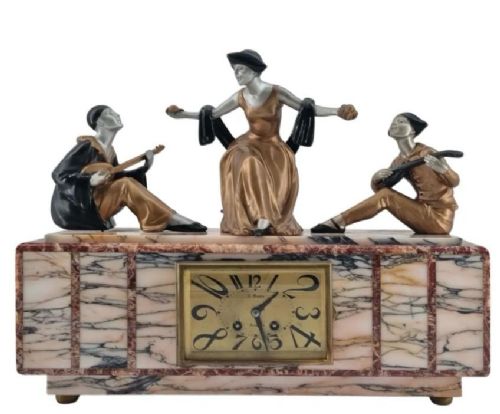
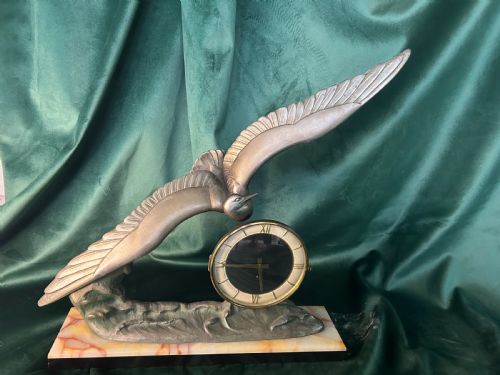
Buyers encounter forms ranging from simple geometric marble cases to elaborate figural sculptures involving dogs, dancers, and stylized animals. Many pieces integrate alarms, glass dials, or specialised movements into compact table and desk formats.
Materials and construction
Makers utilised a contrast of heavy natural stone and industrial metals, pairing polished marble and onyx with gleaming chrome, brass, and spelter. Bakelite appears frequently for cases and dials, showcasing early synthetic moulding techniques alongside traditional walnut woodwork.
Specialised clockmakers incorporated mechanical movements, electric Bulle systems, and mystery mechanisms into these varied housings. The construction relies on securely mounting sculpted figures and metal bezels directly onto stone plinths or wood bodies.
1930s French Clock Retail Price Guide 2026
Typical asking prices for 1930s french clock among the pieces listed under this phrase on Sellingantiques today, from the lower quarter to the upper quarter. They describe what is for sale here now, not the wider market.
Greyhounds, elephants, pierrots, and German shepherds keep eternal watch over these ticking monuments.
Distinctions in quality
The distinction between standard production and finer work rests on the ambition of the design and the integrity of the materials. Superior pieces feature named sculptures, complex multi-piece garniture sets, or advanced movements by recognised makers.
Balance and proportion define the finer examples, where metal plating remains crisp and stone bases show careful polishing. The integration of sculptural elements, such as detailed spelter figures or cast animals, separates mass production from masterwork.
Uriano·Jaz·Sega·Jaeger·P.M.Favre·DEP·Blangy Clockmakers·Michel Decoux·Jaeger-LeCoultre·Bayard
The 1930s French Clock Glossary
- Art Deco
- A style of visual arts, design and architecture that began in France just before World War I, marked by sleek geometric shapes and streamlined forms. It dominates the design language of these pieces.
- Garniture set
- A matching centrepiece clock accompanied by flanking decorative ornaments, designed to sit together on a mantelpiece. These sets unify the decorative scheme of a room.
- Bakelite
- An early form of plastic made from phenol and formaldehyde, valued for its durability and rich colour range in twentieth-century dials and cases. It offers a smooth, glossy finish.
- Spelter
- An alloy of zinc used as a cost-effective substitute for bronze in decorative figures and sculptures. It is typically painted or bronzed to resemble heavier metal.
1930s French Clock: Frequently Asked Questions
What is a garniture set?
A garniture set consists of a central mantel clock paired with two matching side pieces, designed to be displayed together on a fireplace. They create a balanced, symmetrical arrangement typical of period interiors.
These matching elements share identical materials, such as marble or brass, and echo the decorative motifs found on the clock face and case.
How do I wind a mechanical clock?
Mechanical models require a key or manual twist to tension the mainspring inside the movement. Care must be taken not to over-wind the mechanism.
Keeping the clock on a level surface ensures the pendulum or balance wheel beats evenly and maintains accurate time.
Where should I place a desk clock?
Desk clocks suit stable wooden surfaces in studies, libraries, or living rooms where their metal and glass components are protected from knocks. Their compact size makes them ideal for smaller ledges and side tables.
Avoid placing them in direct sunlight or damp areas to preserve the integrity of the bakelite and metal finishes.
How do I identify the period?
The period is identified through distinct design traits, such as stepped geometric cases, stylised numeric fonts, and the use of chrome and bakelite. Markings from the original makers also help date the piece.
Most items reflect the modernist aesthetic popular between the nineteen-tens and nineteen-thirties.