

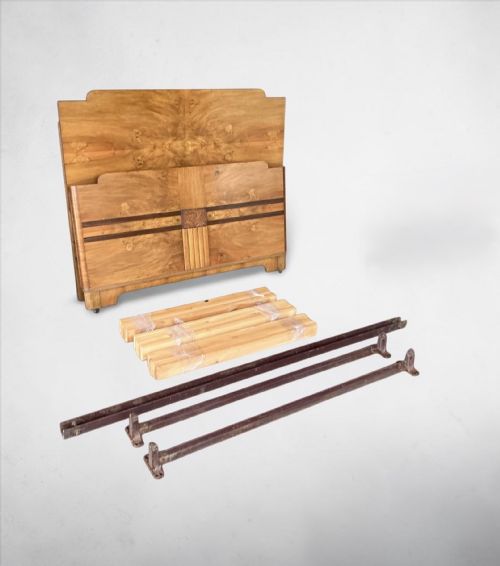


1930s Double Bedstead
A 1930s double bedstead brings the bold, clean geometry of the interwar bedroom straight into a modern home.
1930s Double Bedstead
A 1930s double bedstead typically arrives in the form of a striking Art Deco frame designed to anchor the sleeping quarters with architectural presence. The pieces on this page span the 1920 and 1930 periods, capturing an era of ambitious domestic design.
Most examples appear in walnut, burr walnut, and figured walnut, often paired with maple, satinwood, and macassar for high-contrast grain patterns. Alongside standard double beds, buyers encounter specialised layouts featuring integral cabinets and attached bedside tables.
The dominant style is firmly rooted in Art Deco, alongside occasional Arts & Crafts influences seen in rarer timbers such as sweet chestnut. These frames move away from Victorian clutter in favour of sweeping curves, fan shapes, and skyscraper silhouettes.
Materials and construction
Cabinetmakers of the period utilised dense timber bases overlaid with decorative veneers including burr walnut, birds eye maple, and satinwood to create symmetrical grain patterns across large headboards. This technique allowed workshops to showcase exotic woods while maintaining structural stability.
Iron and metal components often reinforce the internal frames and side rails, providing hidden support beneath the decorative wooden facades. Selected pieces incorporate built-in cabinetry and bedside tables as single cohesive units constructed from the same figured timber.
1930s Double Bedstead Retail Price Guide 2026
Typical asking prices for 1930s double bedstead among the pieces listed under this phrase on Sellingantiques today, from the lower quarter to the upper quarter. They describe what is for sale here now, not the wider market.
Listings feature walnut, burr walnut, satinwood, maple, and iron spanning the 1920 and 1930 periods.
Distinctions in quality
The superiority of a bedstead rests upon the ambition of its veneer work and the complexity of its silhouette, from simple rectangular forms to complex skyscraper and fan shapes. Highly figured walnut and contrasting maple inlays demand greater skill from the cabinetmaker.
Utility pieces offer straightforward sleeping quarters, whereas deluxe editions integrate matching bedside tables and cabinets into a unified architectural ensemble. The crispness of carved details and the preservation of the original polished surfaces determine the standing of each piece.
Stanley Webb Davies·H.L. Epstein Brothers
The 1930s Double Bedstead Glossary
- Veneer
- A thin slice of figured timber applied over a stable secondary wood to create decorative surfaces. This method prevents heavy solid boards from warping while displaying striking grain patterns.
- Art Deco
- A design style from the interwar decades characterised by streamlined shapes, geometric motifs, and sleek modernism. It replaced traditional ornamentation with bold curves and vertical lines.
- Burr Walnut
- A specialised wood growth yielding intricate, swirling grain patterns highly prized by cabinetmakers. It forms the focal point of many high-end headboards from the period.
- Skyscraper
- An architectural furniture silhouette inspired by American urban architecture, featuring stepped vertical setbacks. This style defines the most dramatic bedframes of the era.
1930s Double Bedstead: Frequently Asked Questions
Will a standard mattress fit?
Many period frames were constructed to historical dimensions rather than modern standard sizes, meaning contemporary mattresses may require careful measurement against the internal rails.
Some bedsteads accommodate standard modern widths, but checking the exact clearance between the headboard and footboard prevents sizing conflicts upon delivery.
How do attached cabinets work?
Attached bedside tables and integral cabinets are built directly into the headboard framework, creating a single continuous piece of furniture that spans the wall.
This design removes the need for standalone nightstands and maintains a unified geometric aesthetic across the entire bedroom suite.
How do I care for walnut veneer?
Polished wood surfaces require protection from direct sunlight and excessive humidity to prevent the underlying veneer from lifting or fading over decades of daily use.
Regular dusting with a soft, dry cloth maintains the lustre without stripping the historic finish applied during the interwar period.
How do I spot an Arts & Crafts piece?
An Arts & Crafts frame relies on visible honest construction and unusual native timbers like sweet chestnut rather than high-gloss exotic veneers.
These pieces emphasise the natural grain and solid craftsmanship over the glossy, machine-influenced geometry of later Art Deco designs.