


Blonde Satinwood Furniture
Blonde satinwood furniture brings luminous, pale golden grain to rooms, offering tactile warmth through pieces designed for daily utility across several distinct historical periods.
Blonde Satinwood Furniture
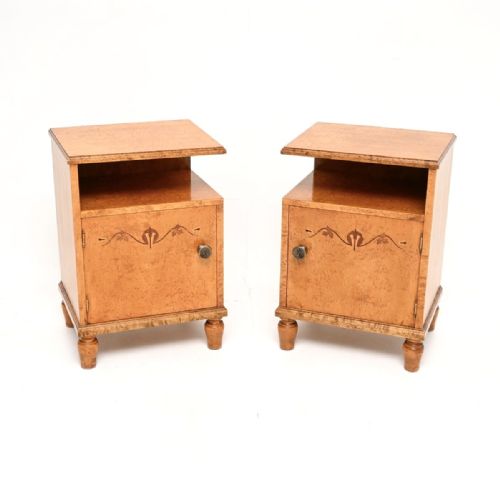
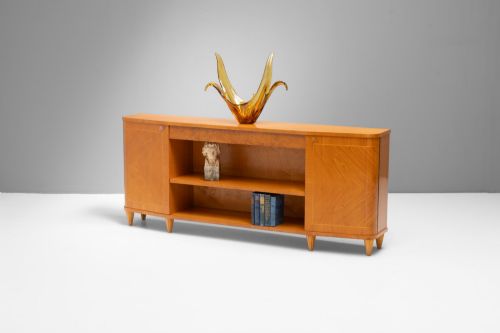
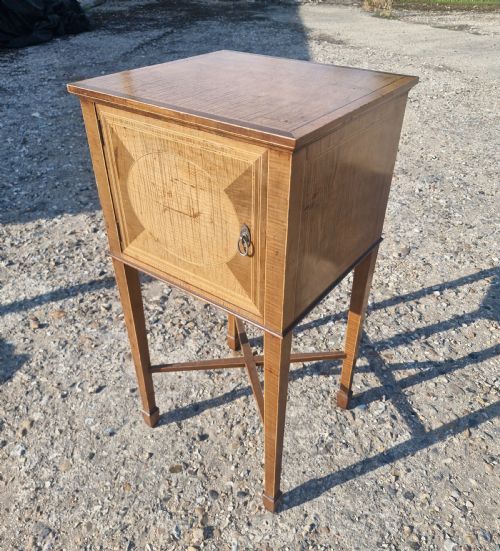
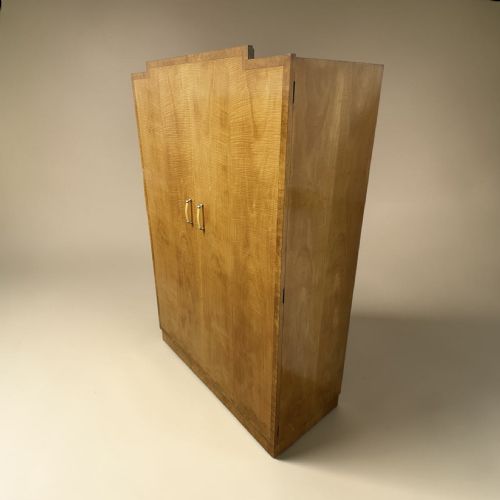
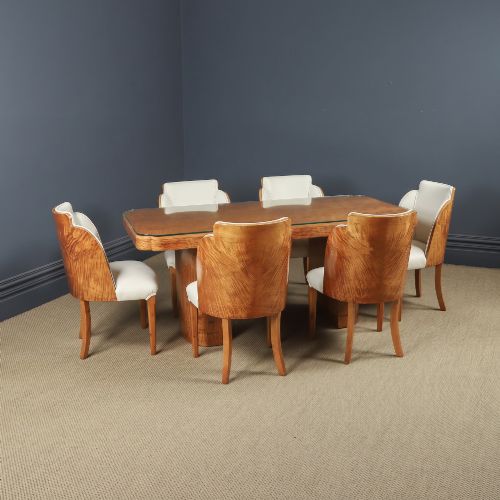
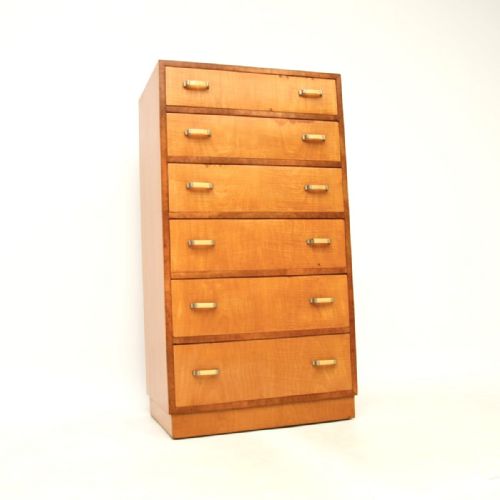
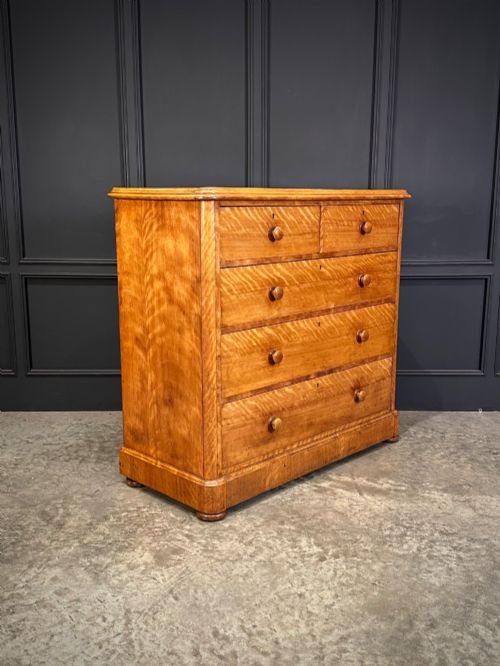
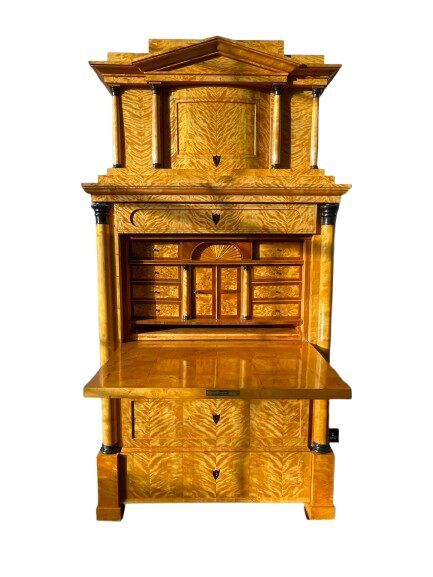
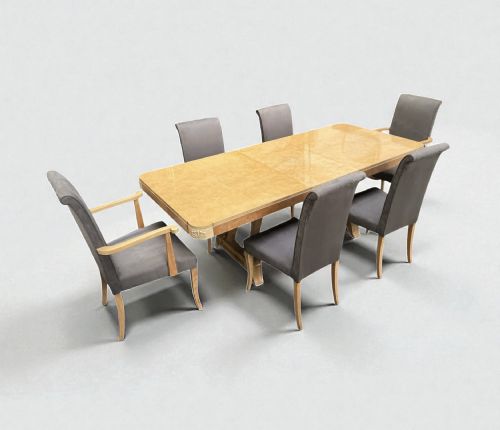
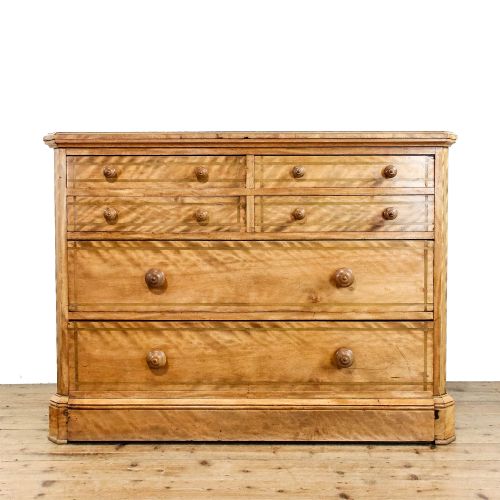
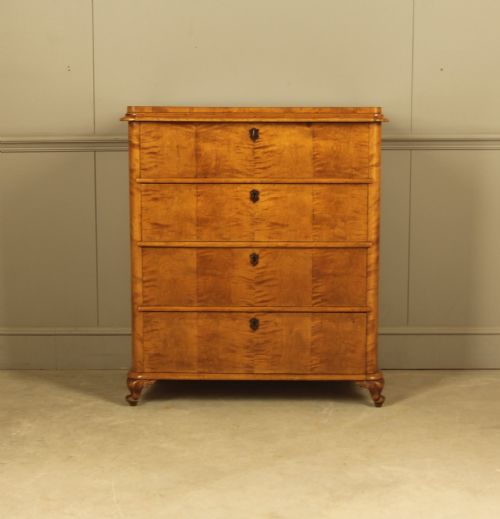
The selection on this page leans heavily towards twentieth-century output, particularly pieces from the Art Deco era of nineteen-thirty, alongside Victorian, Edwardian, and nineteenth-century Biedermeier or Swedish examples. Forms include dressing tables, bedside cabinets, and chairs alongside larger architectural suites, reflecting the shifting domestic requirements of their respective eras.
Victorian and nineteenth-century pieces offer traditional proportions and substantial timber construction, often incorporating mahogany, pine, or birch alongside the primary satinwood veneer. Twentieth-century iterations introduce streamlined silhouettes, geometric arrangements, and contrasting accents of walnut, macassar, or maple.
Materials and Construction
Cabinet makers utilised satinwood veneers over secondary woods such as pine and birch, taking advantage of the timber's naturally reflective, mottled grain. Constructive stability was achieved by applying these fine veneers to solid carcases, paired with secondary timbers for internal drawer linings and structural framing.
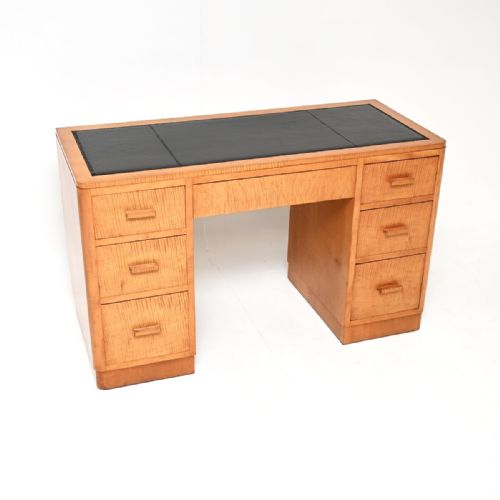
Makers integrated contrasting elements such as brass hardware, leather writing inserts, and glass panels to complement the pale golden surfaces. Twentieth-century pieces frequently combined satinwood with walnut, macassar ebony, or maple to accentuate the natural tone of the primary wood through geometric banding and contrasting borders.
Listings feature nineteenth-century and twentieth-century pieces, spanning Victorian, Edwardian, Art Deco, and Biedermeier styles.
Assessing Quality and Execution
Quality rests in the selection and matching of the veneer, where skilful cabinet makers ensured continuous figure patterns across drawer fronts and large cabinet doors. The uniformity of the golden hue and the precision of the grain alignment dictate the visual harmony of each piece.
Structural integrity depends on the joinery within drawer construction and the seamless application of secondary timbers like birch and maple. Finer pieces demonstrate careful attention to hardware integration, such as stamped maker details and smoothly operating drawers that maintain structural stability over decades of use.
Morant And Co London·Heals·Betty Joel·Harry And Lou Epstein·John Taylor Of Edinburgh·Hille
The Blonde Satinwood Furniture Glossary
- Satinwood
- A hard, durable timber known for its yellowish-brown colour and lustrous, reflective surface resembling satin. It was widely utilised by cabinet makers for high-status eighteenth and nineteenth-century furniture veneers.
- Biedermeier
- A influential Central European style popular during the nineteenth century, focusing on utilitarian comfort and clean lines rather than ornate ornamentation. It frequently employed local fruitwoods and light-coloured veneers such as birch and satinwood.
- Veneer
- A thin slice of superior timber applied to a base of a less expensive wood to provide an even surface and decorative grain pattern. This technique allowed makers to utilise expensive exotic timbers efficiently.
- Art Deco
- A design movement of the nineteen-thirties characterised by streamlined forms, geometric symmetry, and modern industrial materials. Furniture from this period often combined pale satinwood with dark contrasting veneers like walnut or macassar.
- Kneehole desk
- A compact writing table featuring a central recess for the user's legs, flanked by pedestals of small drawers. This form became popular during the nineteenth century for domestic studies and private chambers.
Blonde Satinwood Furniture: Frequently Asked Questions
How do I clean satinwood furniture?
Dust surfaces regularly with a soft, dry cloth to prevent the accumulation of abrasive particles. Avoid harsh chemical cleaners or excessive moisture, which can damage the delicate veneer and finish.
Apply a traditional beeswax polish sparingly to nourish the timber and maintain its natural lustre. Buff gently with a clean cloth to enhance the golden sheen without creating a greasy build-up.
Where should I place these pieces?
Position satinwood items away from direct sunlight and heat sources to prevent the pale timber from darkening or the veneer from drying out and lifting. Consistent indoor humidity levels help preserve the structural stability of older carcases.
Allow sufficient clearance around drawers and doors to ensure they operate smoothly without binding. Placing pieces in well-lit rooms allows the reflective grain to catch natural light effectively.
How do I date a satinwood chest?
Examine the construction methods of the internal drawers, noting the presence of hand-cut dovetails versus machine-made joints. Secondary woods like pine or solid oak linings often indicate nineteenth-century origins, while birch veneers point towards Scandinavian or Art Deco production.
Look for maker stamps, retailer plaques, or paper labels pasted inside drawer interiors or on the backboards. Stylistic clues such as geometric banding or brass hardware styles further narrow down the manufacturing decade.
What is Swedish Biedermeier furniture?
Swedish Biedermeier represents a distinct regional interpretation of nineteenth-century Central European design, favouring minimalist forms and pale timbers. Makers frequently utilised local flame birch and satinwood to create pieces with smooth, unadorned surfaces.
These items emphasise the natural beauty of the wood grain through expert veneering rather than applied ornamentation. Their restrained proportions suit contemporary interiors while retaining historical authenticity.