

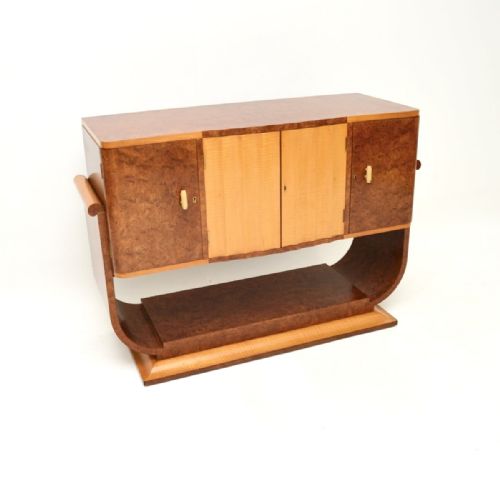
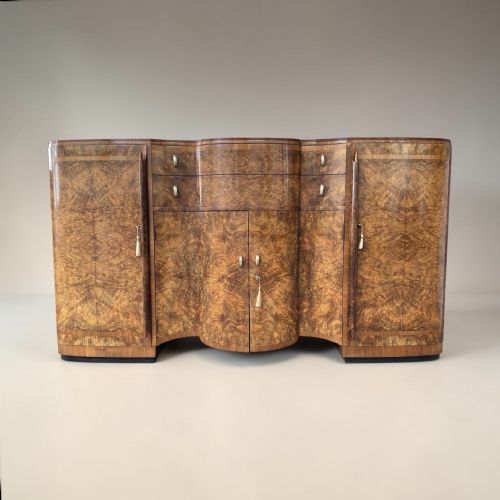
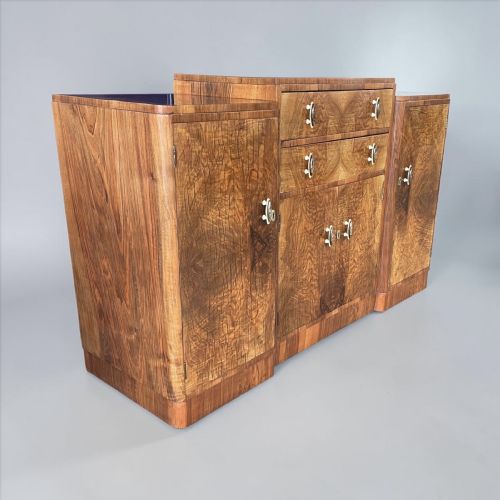

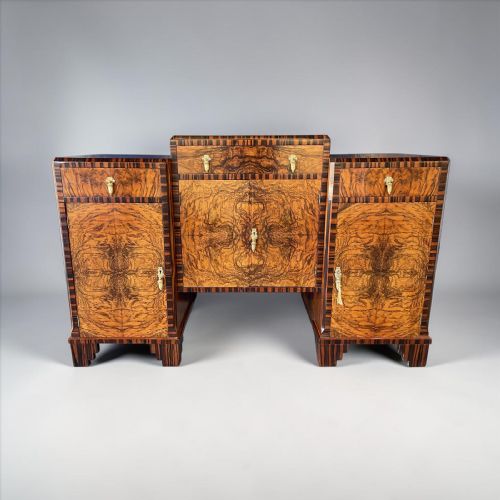
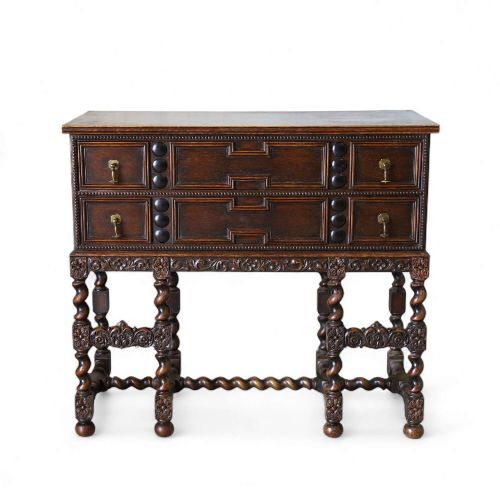
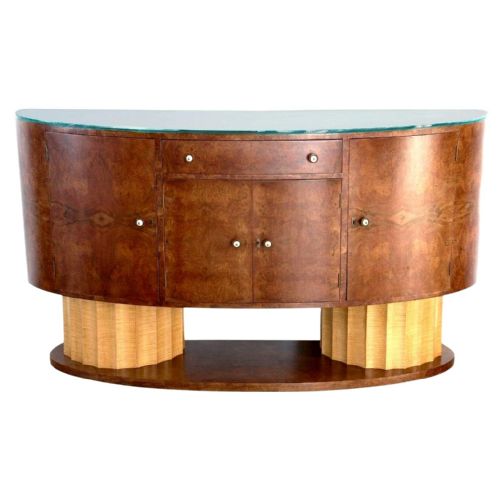

1930s Dining Sideboard
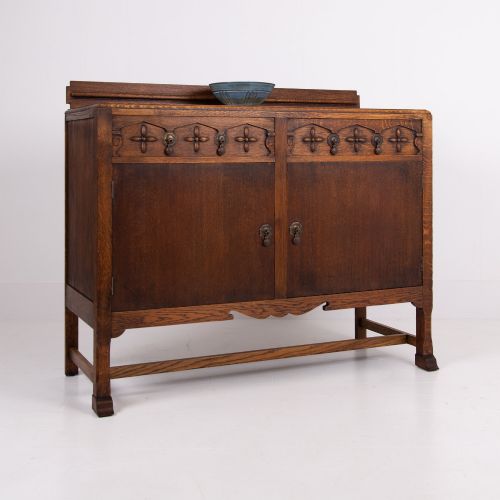
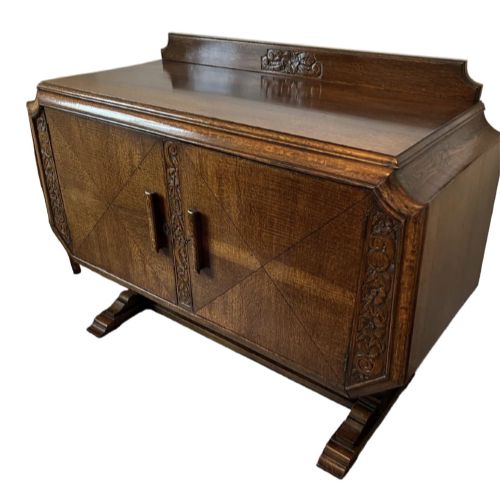
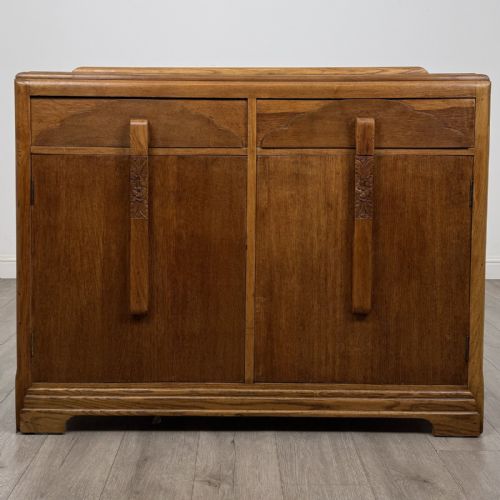
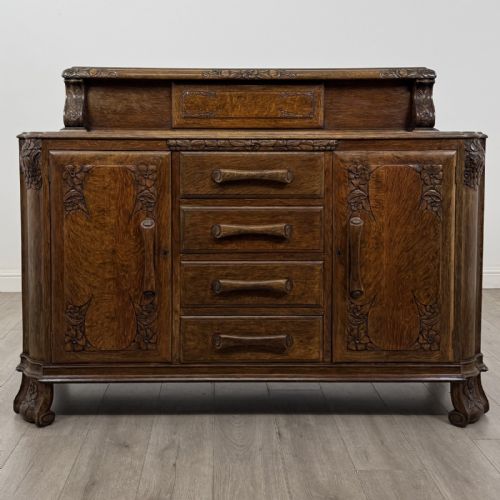
These 1930s dining sideboard designs combine substantial storage with striking geometric lines, offering the bold character every dining room needs.
1930s Dining Sideboard
A 1930s dining sideboard provides essential storage and a surface for serving food during meals. These pieces are anchored primarily in the Art Deco style, though revivalist designs also appear.
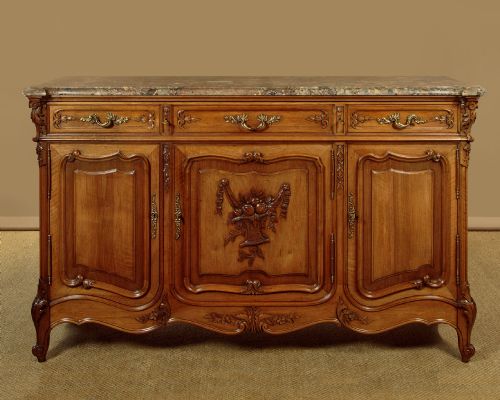
You will most commonly meet oak and walnut sideboards from this era, often detailed with raised galleries or specialised cutlery compartments. Forms range from English cabinets to French serpentine shapes.
The objects serve as functional dining room furniture built to anchor a room while holding tableware, linen, and serving dishes.
How they were made
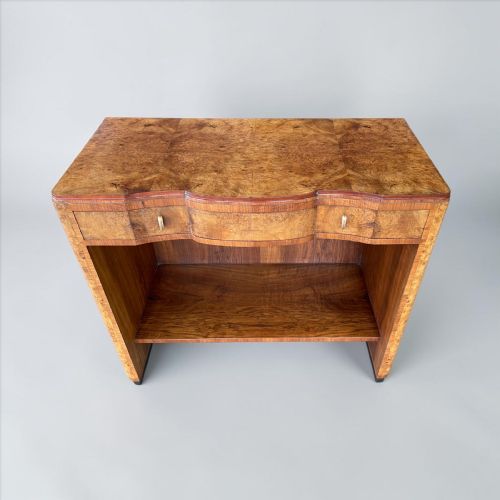
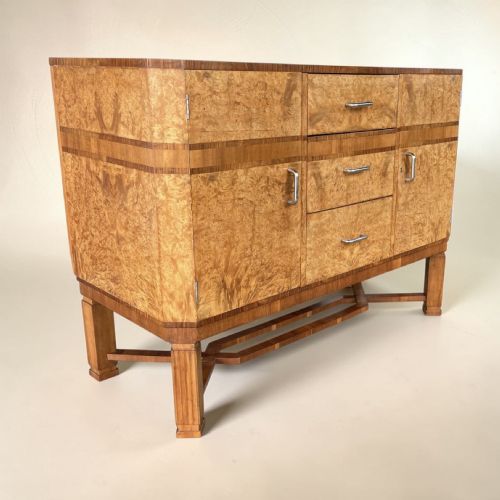
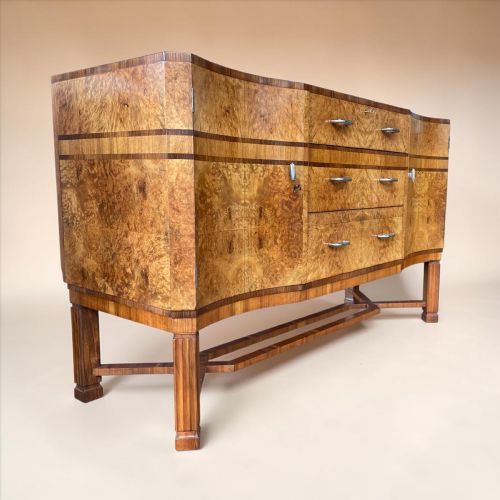
Cabinet makers utilised solid timbers alongside decorative veneers such as burr walnut, sycamore, calamander, and macassar ebony. These veneers were applied over sturdy carcases of oak or walnut to create dramatic grain patterns across the front doors and top surfaces.
Metal hardware, including brass fittings and glass elements, complemented the woodwork. Carved details appeared on revival pieces, while Art Deco examples relied on clean geometric forms and parquetry tops.
1930s Dining Sideboard Retail Price Guide 2026
Typical asking prices for 1930s dining sideboard among the pieces listed under this phrase on Sellingantiques today, from the lower quarter to the upper quarter. They describe what is for sale here now, not the wider market.
The listings show pieces spanning from the nineteen-twenties through to nineteen-thirty-nine, dominated by oak, walnut, and exotic veneers.
What varies in quality
The sophistication of the veneer selection and timber matching dictates the visual impact of each cabinet. Master workshops handled grain placement with immense precision, ensuring symmetrical patterns across large cupboard doors.
Hardware choice and interior configuration also separate standard production from high-end cabinet making. Dedicated cutlery drawers and specialised internal fittings indicate superior original commission work.
Maurice Adams·Gomme·Hille·Epstein·Harry and Lou Epstein·Hamptons of Pall Mall London
The 1930s Dining Sideboard Glossary
- Art Deco
- A design style characterised by sleek geometric shapes, streamlined forms, and rich materials. It dominated international design through the nineteen-twenties and nineteen-thirties.
- Veneer
- A thin layer of finely figured wood applied over a stable secondary timber base. This technique allowed makers to display expensive grain patterns economically.
- Gallery
- A raised border along the back or sides of a furniture top. It prevents serving items from sliding off during use.
- Parquetry
- Geometric wood mosaic work used for decorative floors and table or sideboard tops. Small tiles of contrasting timbers form intricate patterns.
- Serpentine
- A furniture front or edge shaped with a central convex curve flanked by concave sweeps. This flowing line requires skilled carpentry to execute.
1930s Dining Sideboard: Frequently Asked Questions
How do I clean walnut veneer?
Use a soft, dry cloth to remove dust regularly. Avoid silicone sprays or harsh chemical polishes that can damage the historical finish.
Keep the timber away from direct sunlight and steady moisture to prevent the veneer from lifting over time.
Where were these sideboards placed?
These cabinets stood against the main dining room wall, functioning as a station for carving meats and holding dishes before service. They anchored the room visually alongside matching dining tables and chairs.
Today, they perform a similar role in dining spaces or serve as media consoles in living areas.
How do I identify Art Deco pieces?
Look for symmetrical geometric patterns, stepped outlines, and contrasting wood veneers like burr walnut and sycamore. These cabinets often feature curved ends and minimal carved ornamentation compared to earlier revival styles.
Hardware is typically streamlined, utilising brass or glass elements that reflect the modernist ethos of the period.