
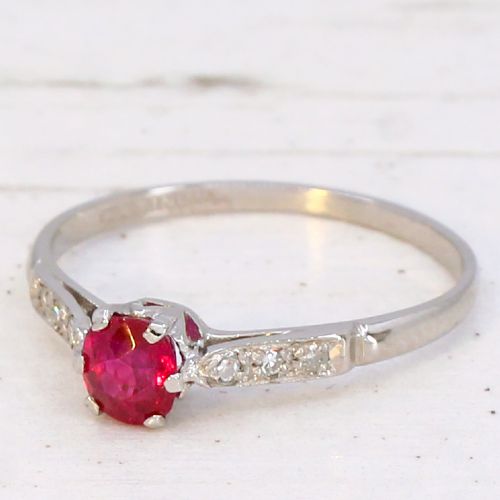
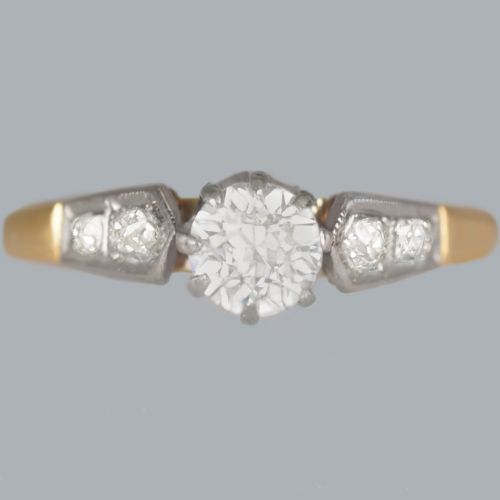


1930s Diamond Shoulder Ring
A 1930s diamond shoulder ring brings the bold geometry of Art Deco design and the distinctive charm of old cut diamonds to the hand.
1930s Diamond Shoulder Ring
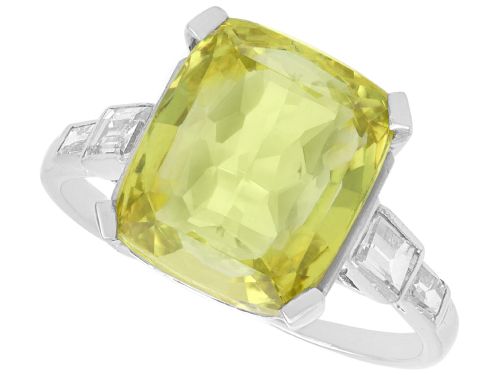
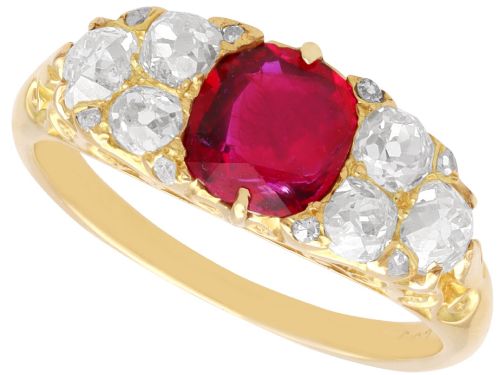
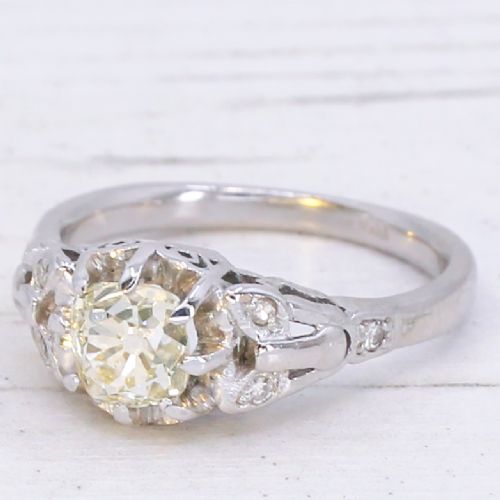
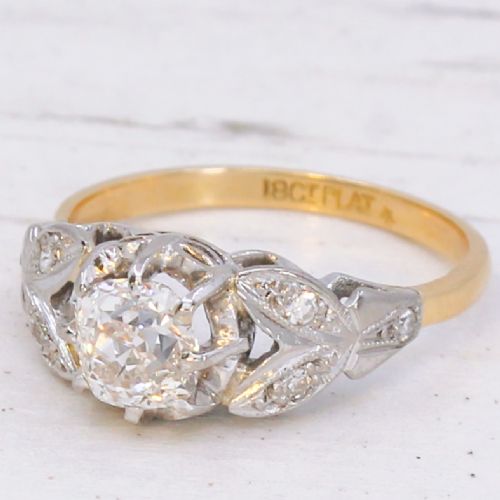
A 1930s diamond shoulder ring centres on a principal stone, often an old cut diamond, solitaire or accompanied by coloured gems like ruby, sapphire, emerald, aquamarine, moonstone, or pearl. The defining feature lies in the shoulders, where secondary diamonds or decorative metalwork extend down the band from the main setting.
Most examples found in this selection originate from the Art Deco period, spanning the 1920s to the 1940s. These pieces function primarily as engagement rings or dress rings, expressing the distinct aesthetic of their era through geometric layouts and refined detailing.
How they were made
Platinum serves as the predominant metal for mounting stones securely during this era, frequently paired with 18ct gold or white gold for the band. This combination allowed artisans to create delicate yet robust settings that maximised the brilliance of the stones.
Gems such as old European cut diamonds and baguette diamonds were hand-set into intricate geometric arrangements. The integration of accent stones along the shoulders required precise metalwork to maintain symmetry and balance across the ring.
What varies in quality
The distinction between tiers rests upon the proportions of the central stone and the intricacy of the shoulder embellishments. Superior examples exhibit harmonious scale between the principal gem and the surrounding diamond or platinum work.
Finishing quality reveals itself in the precision of the setting and the condition of the metalwork over time. Rings that retain crisp geometric lines and secure stone placements demonstrate superior original craftsmanship.
The 1930s Diamond Shoulder Ring Glossary
- Shoulder ring
- A ring featuring decorative elements, such as accent stones or engraved metal, on the sides of the band adjacent to the main setting.
- Old European cut
- An early style of round diamond cutting characterised by a small table, high crown, and large culet, designed under candlelight.
- Art Deco
- A design style from the 1920s and 1930s defined by geometric symmetry, clean lines, and stylised motifs.
- Solitaire
- A ring mounting designed to showcase a single central gemstone without accompanying side stones in the main setting.
- Baguette cut
- A step-cut diamond shape, typically rectangular, used primarily as a side stone or accent in geometric jewellery.
1930s Diamond Shoulder Ring: Frequently Asked Questions
What is a 1930s diamond shoulder ring?
It is a ring from the 1930s featuring a central stone with decorative diamond or metal details extending down the band shoulders.
These pieces typically showcase Art Deco design principles, combining platinum settings with old cut diamonds and occasional coloured gemstones.
How do I wear an antique ring daily?
Wearing a ring from this era daily requires basic care, such as removing it during strenuous physical activities.
Routine checks by a jeweller ensure the platinum prongs and settings remain secure around the old cut diamonds.
What metals were used in the 1930s?
Platinum was the preferred metal for securing stones during this period due to its strength and bright finish.
White gold and yellow gold were also commonly utilised for the shank and body of the ring.
What stones accompany the central diamond?
Secondary diamonds frequently line the shoulders, while other designs incorporate rubies, sapphires, emeralds, aquamarines, pearls, or moonstones.
These coloured gems provide striking contrast to the central white diamonds and platinum metalwork.