

1930s Clothes Armoire
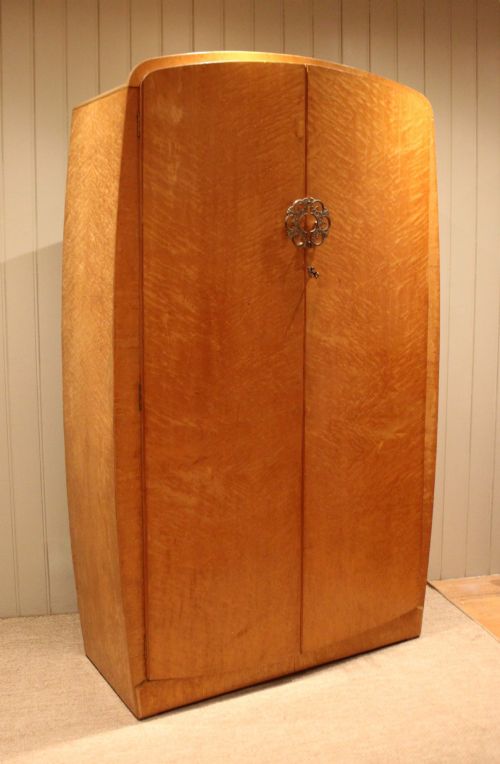
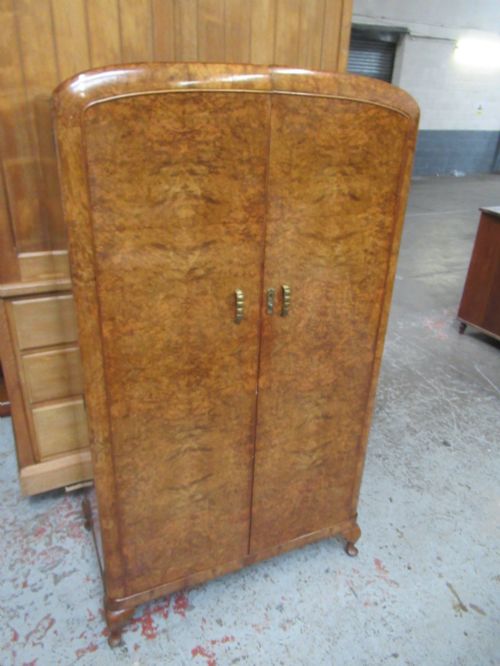
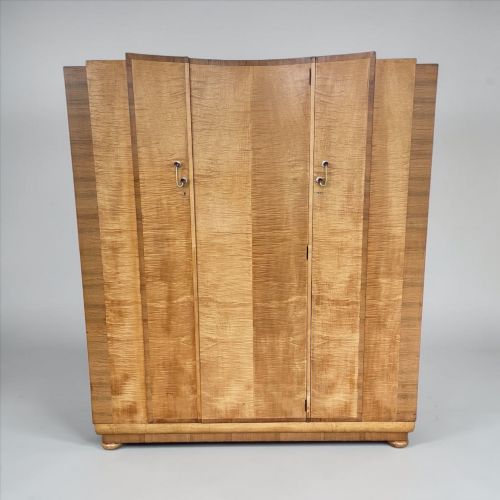
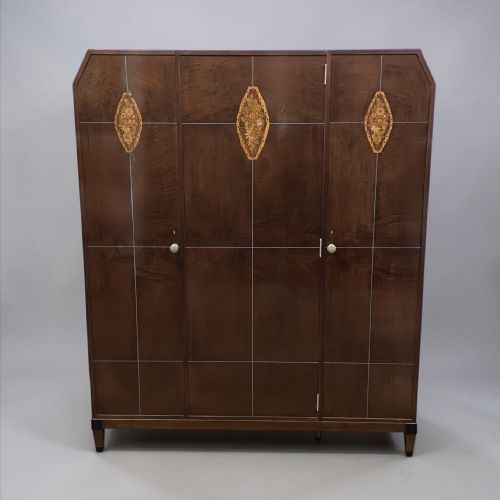
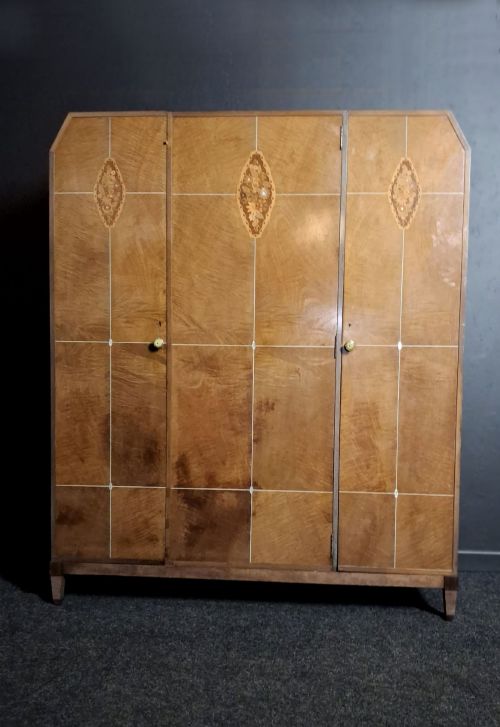
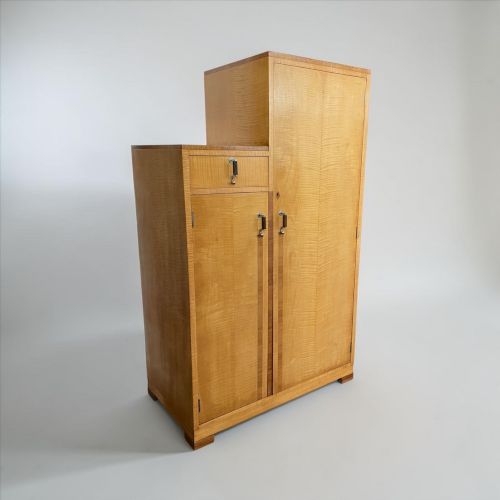
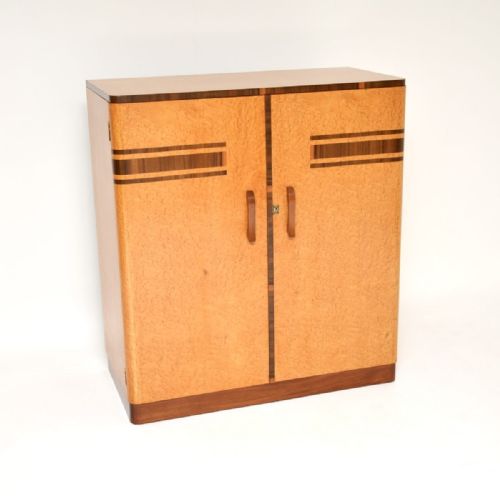
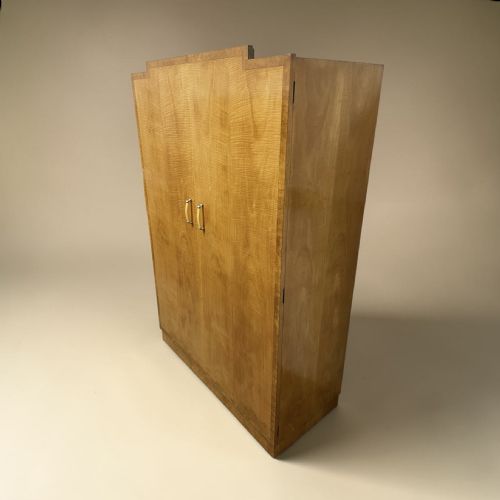
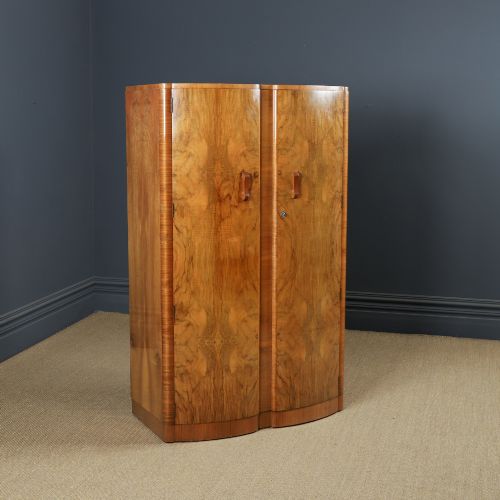
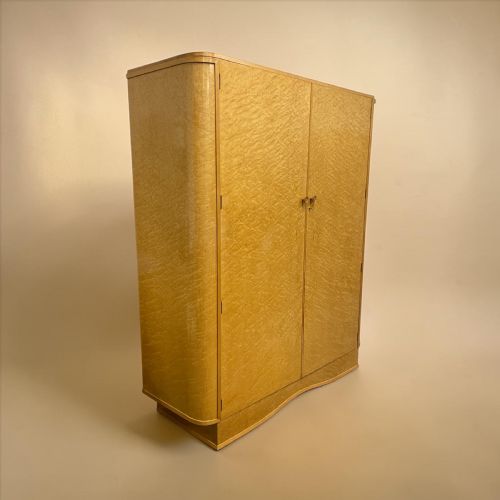
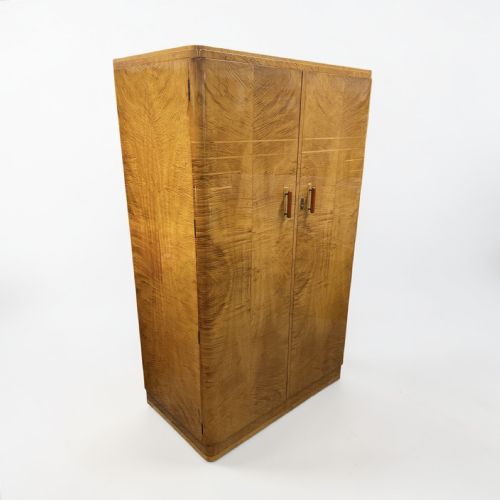
These 1930s clothes armoire pieces combine generous storage with striking wood figures, offering an immediate focal point for the bedroom.
1930s Clothes Armoire
A 1930s clothes armoire serves as a substantial bedroom cabinet designed to hold garments, with single, double, triple, and compactum formats appearing across the selection. The predominant aesthetic is Art Deco, frequently expressed through clean architectural lines and impressive scale.
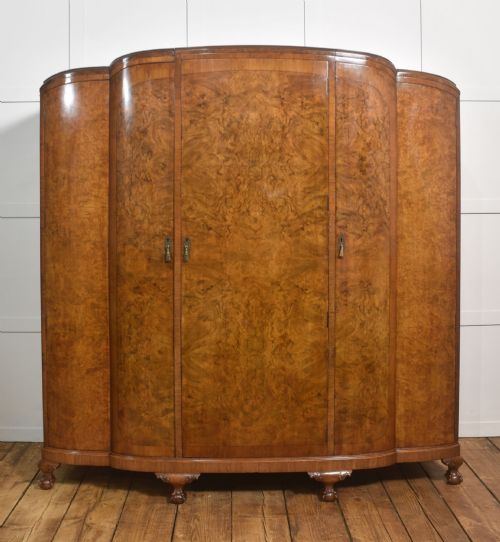
Buyers will most commonly encounter pieces rendered in walnut and burr walnut veneer, often structured with fitted interiors and bow front designs. Variations like the compactum wardrobe integrate internal drawers and compartments alongside hanging space for efficient storage.
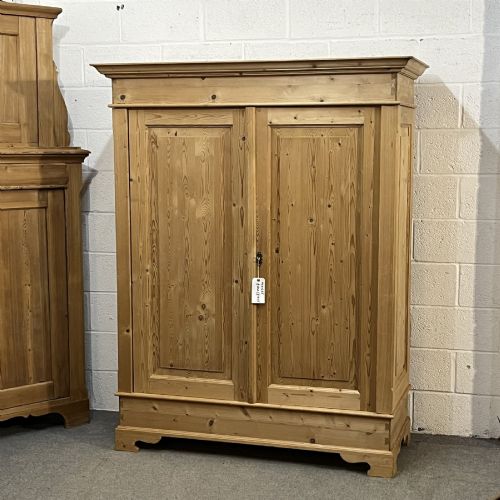
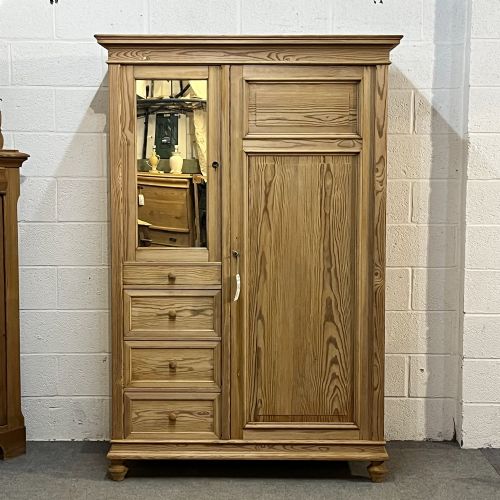
While many examples originate from the 1930 period in an Art Deco style, occasional pieces adopt a 1930s country aesthetic utilising pine. These large bedroom cabinets remain practical furniture items that double as decorative centrepieces.
How they were made
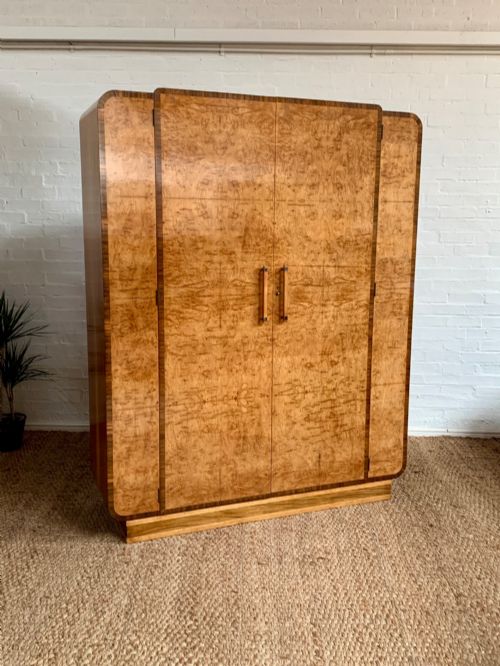
Cabinet makers of the period utilised timber veneers, notably burr walnut, birds eye maple, and standard walnut, laid over solid structural carcases to create dramatic grain patterns across large cabinet doors. The application of veneer required high skill to ensure symmetrical patterns, particularly on breakfront and bow front models.
Metal components such as brass hardware and occasional Bakelite details finish the cabinetry, providing functional handles and hinges that complement the dark wood tones. Fitted interiors inside the wardrobes often incorporate birch woodwork for drawers and sliding trays.
1930s Clothes Armoire Retail Price Guide 2026
Typical asking prices for 1930s clothes armoire among the pieces listed under this phrase on Sellingantiques today, from the lower quarter to the upper quarter. They describe what is for sale here now, not the wider market.
The predominant style across these clothes armoires is Art Deco, though 1930s country pine examples also appear.
What varies in quality
The sophistication of the veneer matching largely separates standard production from finer examples, especially on burr walnut and birds eye maple surfaces where grain symmetry creates the primary visual impact. Cabinet architecture also defines grade, with breakfront and compactum designs offering more complex internal configurations than simple two door wardrobes.
Attribution to known makers elevates a piece, as demonstrated by workshops like Waring & Gillow or Harry and Lou Epstein whose signed or labelled work displays superior internal carpentry and heavier brass detailing.
Waring and Gillow·Harry and Lou Epstein
The 1930s Clothes Armoire Glossary
- Compactum
- A multi-compartment wardrobe that incorporates internal drawers, hanging space, and shelving within a single cabinet. This form is common in 1930s furniture design.
- Veneer
- A thin layer of superior wood, such as burr walnut or birds eye maple, applied to a stable underlying timber base. It allows cabinet makers to display decorative grain patterns across wide doors.
- Breakfront
- A cabinet design where the central section projects forward from the flanking outer sections. This architectural feature adds depth to large wardrobes.
- Bow Front
- A convex curved front facade seen on certain cabinets and wardrobes from the period. The curve softens the otherwise rigid geometric lines of Art Deco furniture.
- Bakelite
- An early synthetic plastic material utilised for handles and decorative details on mid century and Art Deco pieces. It provides a distinct tactile contrast to wooden surfaces.
1930s Clothes Armoire: Frequently Asked Questions
What is a compactum wardrobe?
A compactum is a specialised wardrobe design that combines hanging space with internal drawers, shelves, and compartments in one unit. This layout maximises bedroom storage without requiring separate chests of drawers.
These pieces typically date from the 1930 period and feature fitted internal woodwork constructed from timbers like birch alongside walnut exterior finishes.
How do I identify Art Deco furniture?
Art Deco furniture relies on clean geometric forms, symmetrical designs, and the prominent use of decorative wood veneers like burr walnut. These wardrobes often incorporate stepped cornices and bow front shapes.
Hardware tends to be minimal, frequently utilising brass or Bakelite to accent the dark grain of the wood without overwhelming the overall architecture.
Can these wardrobes be dismantled for moving?
Many large wardrobes from this era were constructed as single solid units or heavy breakfront assemblies rather than modern flat pack furniture. Moving them requires careful measurement of stairwells and doorways before purchase.
Some triple or double formats may feature removable cornices or split carcases, but buyers should anticipate heavy walnut and burr walnut construction.
What is burr walnut?
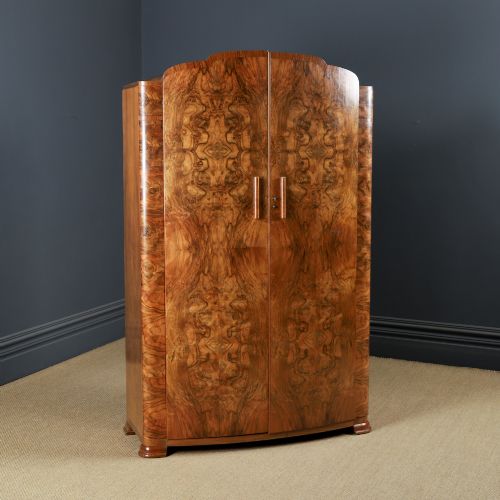
Burr walnut is taken from a tree growth or deformity that produces intricate, swirling grain patterns rather than straight lines. Cabinet makers prized this wood for its decorative qualities on wardrobe doors.
Because the veneer is visually striking, makers often matched the grain across two doors to create a mirrored butterfly effect.