


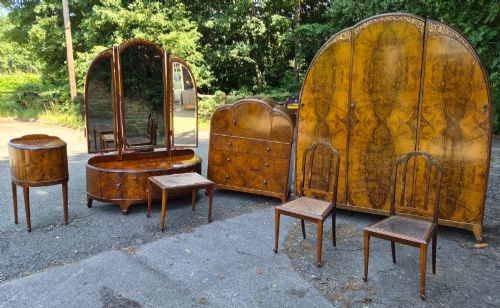


1930s Burr Walnut Wardrobe
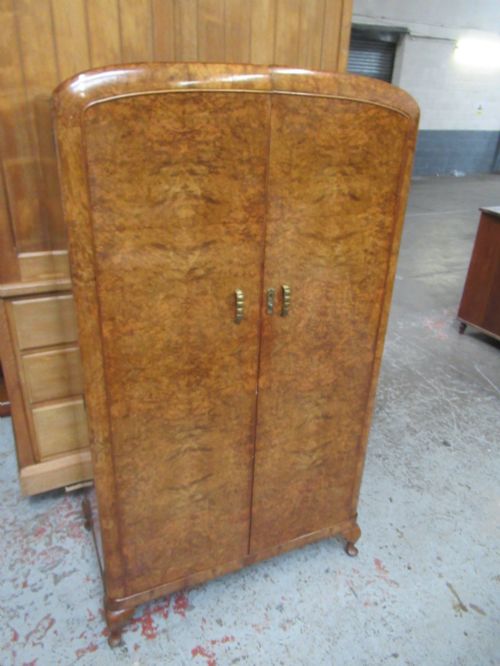
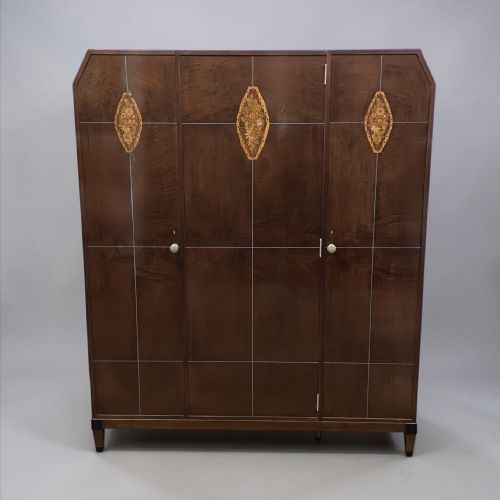
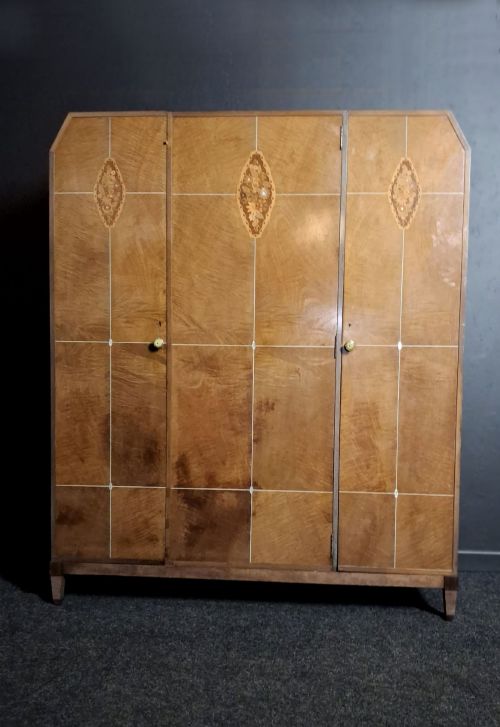
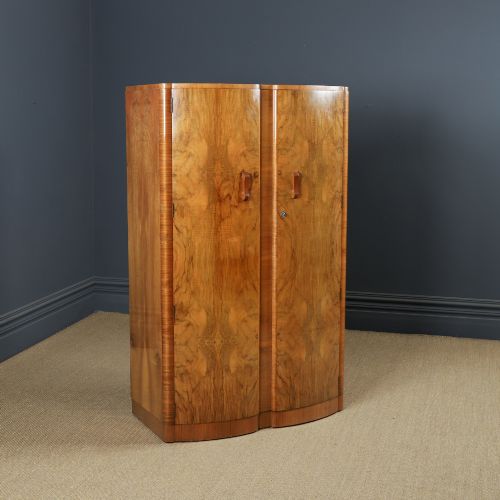
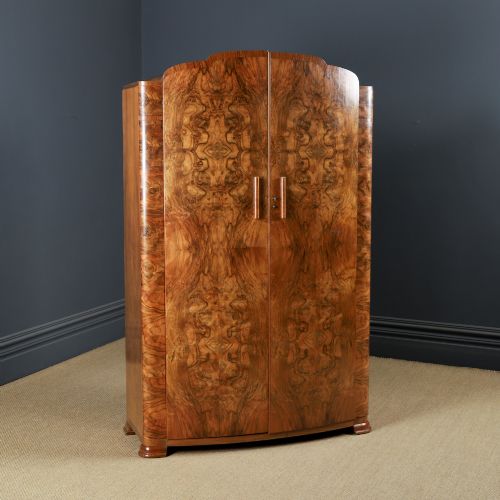
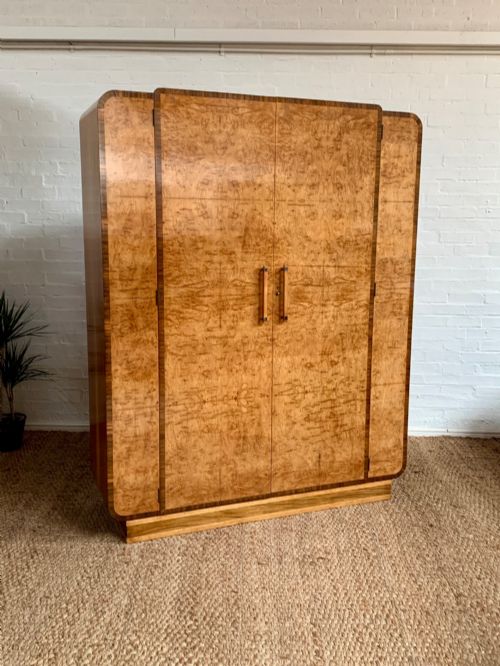
A 1930s burr walnut wardrobe brings striking grain and Art Deco geometry into the bedroom.
1930s Burr Walnut Wardrobe
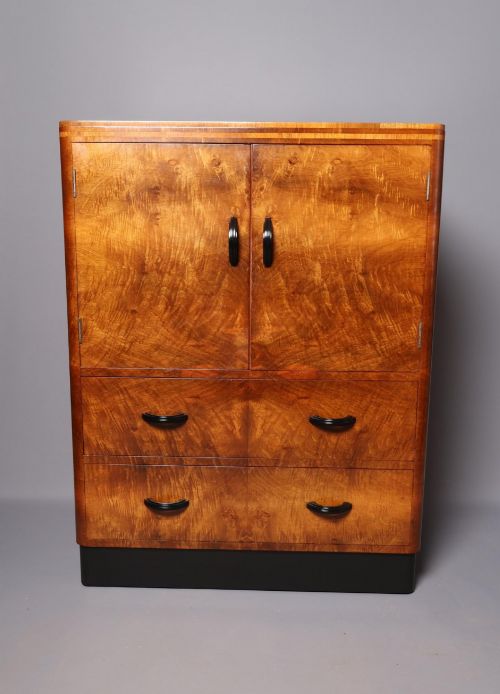
When you search for a 1930s burr walnut wardrobe, you are looking at large storage pieces that typically date from the 1930 period, with occasional examples from the 1920 and 1940 periods. These pieces include double wardrobes, triple wardrobes, compactums, and tallboys.
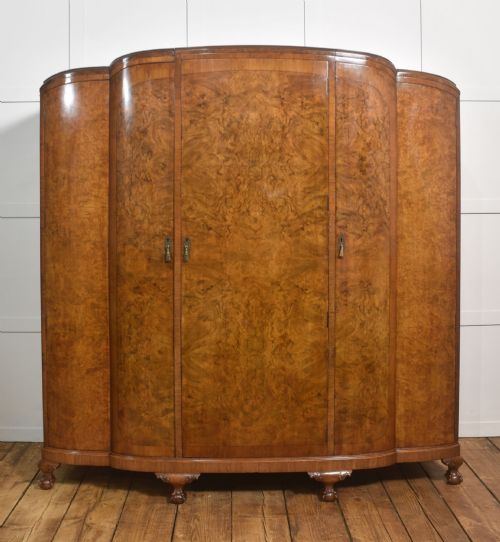
The version you are most likely to meet on this page is an Art Deco design shaped with bow fronts, breakfront silhouettes, or fitted interiors. They form part of broader bedroom furniture sets or stand alone as cabinets and cupboards.
Makers such as Frank Taylor & Co., Harry and Lou Epstein, and Waring & Gillow produced notable examples in burr walnut, walnut, and walnut veneer. Solid oak and brass details also appear among the materials used to construct these bedroom pieces.
How they were made
Cabinet makers utilised wood and solid oak to build the underlying carcase of each wardrobe. These sturdy frames provided the necessary structure for large doors and fitted interiors.
Craftsmen applied burr walnut and walnut veneer to the exterior surfaces to showcase the swirling, decorative grain patterns characteristic of Art Deco furniture. Brass hardware and occasional bakelite elements finished the handles and fittings.
1930s Burr Walnut Wardrobe Retail Price Guide 2026
Typical asking prices for 1930s burr walnut wardrobe among the pieces listed under this phrase on Sellingantiques today, from the lower quarter to the upper quarter. They describe what is for sale here now, not the wider market.
Bakelite handles occasionally make an appearance, proving that 1930s plastic was just as keen to dress up in walnut as the owners were.
What varies in quality
The selection and matching of the burr walnut veneer dictate much of the visual appeal. Cabinets with continuous, symmetrical grain wrapping across multiple doors sit at the upper end of the range.
The complexity of the interior fittings and the presence of makers such as Harry and Lou Epstein or Waring & Gillow elevate the standing of a piece. Simpler carcases with plain walnut or solid oak interiors represent the more utilitarian side of the period.
Frank Taylor & Co.·Harry and Lou Epstein·Waring & Gillow
The 1930s Burr Walnut Wardrobe Glossary
- Burr walnut
- A wood veneer taken from the wart-like growths on walnut trees, prized for its swirling patterns. It forms the primary decorative surface on these Art Deco pieces.
- Compactum
- A multi-functional wardrobe that combines hanging space with drawers and shelving. These tall storage units often feature split sides or fitted compartments.
- Tallboy
- A tall chest of drawers standing on a higher base or combined with a small cupboard section. They provide vertical storage in bedroom furniture sets.
- Breakfront
- A cabinet design where the central section projects forward from the wings. This architectural arrangement creates depth and shadow on large wardrobes.
1930s Burr Walnut Wardrobe: Frequently Asked Questions
What is a compactum wardrobe?
A compactum is a combined storage unit that integrates hanging space, shelving, and drawers within a single piece of furniture.
These pieces were designed to maximise bedroom storage without requiring multiple separate items.
How do I identify Art Deco furniture?
Art Deco pieces from this era rely on geometric symmetry, streamlined silhouettes, and striking wood veneers like burr walnut.
They often feature curved bow fronts or breakfront designs rather than ornate carving.
Are these wardrobes made of solid walnut?
Most pieces utilise a stable secondary wood like solid oak for the internal structure and carcase. Burr walnut veneer is then applied to the exterior surfaces to create the decorative grain patterns.
This technique prevented warping while displaying high-status timber.
How do tallboys differ from wardrobes?
Tallboys are taller, narrower storage units focused primarily on drawer space or compact cupboard storage rather than full-length hanging.
Wardrobes are dedicated primarily to hanging clothes behind one, two, or three doors.