





1930s Burr Walnut Vitrine
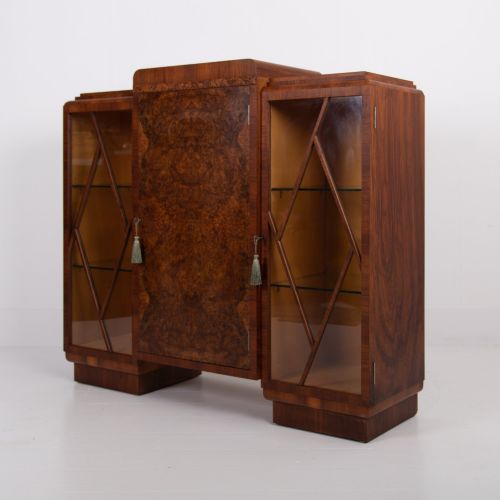
A 1930s burr walnut vitrine brings striking geometric grain and glazed display space to a room, offering both storage and a distinct period centrepiece.
1930s Burr Walnut Vitrine
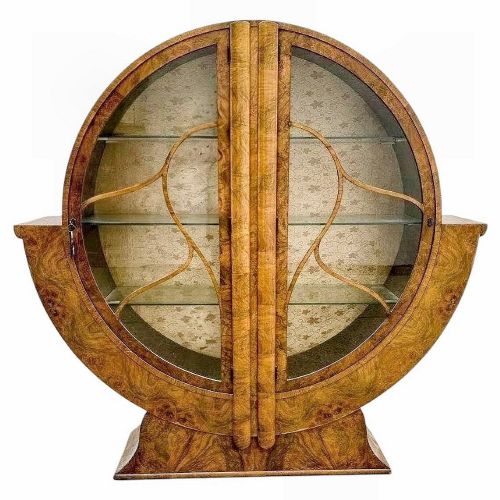
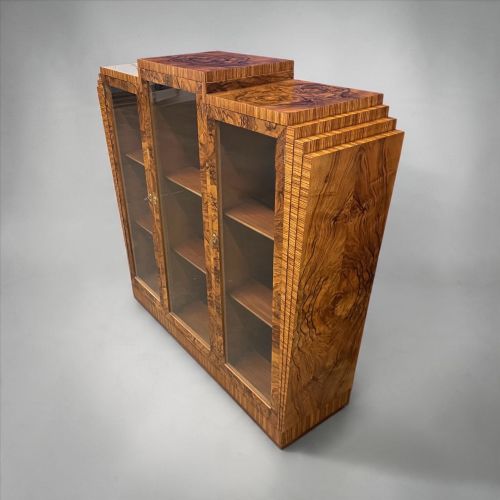
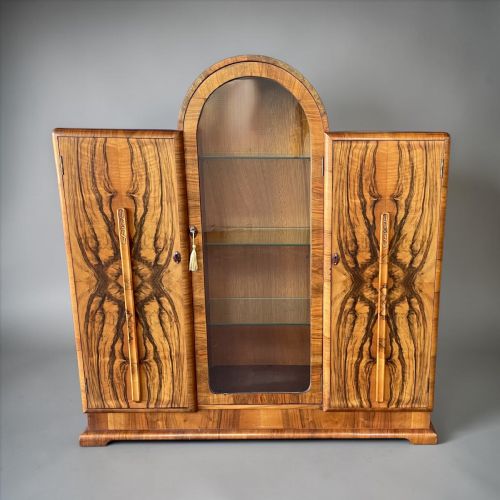
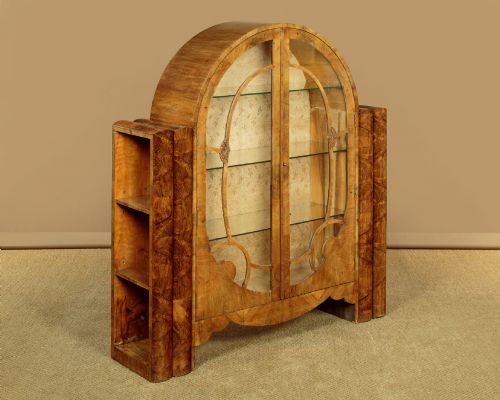
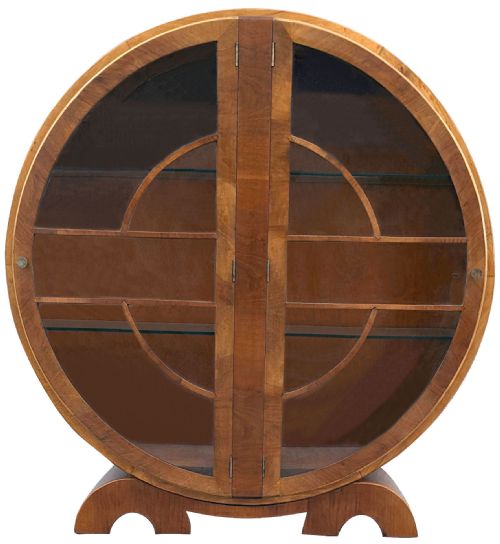
A 1930s burr walnut vitrine is primarily encountered as an Art Deco display cabinet, featuring glazed compartments designed to showcase objects of interest. These pieces take various geometric forms, including oval, circular, octagonal, and corner configurations, alongside standard rectangular display cabinets and sideboards.
The aesthetic is distinctly rooted in the 1930 period, drawing upon modern design movements that favoured clean lines contrasted with rich, swirling wood figures. Buyers exploring this category will find that circular and glazed cabinets dominate the selection, often incorporating matching bookcases or sideboards.
Materials and construction
Cabinetmakers of the era employed advanced veneering techniques to wrap curves and angles smoothly, particularly on circular and octagonal display cabinets. Fabric interiors occasionally line the display areas, providing a soft backdrop behind the glass panels.
1930s Burr Walnut Vitrine Retail Price Guide 2026
Typical asking prices for 1930s burr walnut vitrine among the pieces listed under this phrase on Sellingantiques today, from the lower quarter to the upper quarter. They describe what is for sale here now, not the wider market.
Materials appearing across these listings include standard walnut, burr walnut veneer, sycamore, brass, glass, marble, and fabric.
Judging quality in burr walnut cabinets
Quality in these cabinets rests upon the choice and placement of the burr walnut veneer, where symmetrical grain matching across doors and panels indicates superior craftsmanship. The handling of difficult curved and faceted shapes, such as circular and octagonal carcases, also separates standard production from finer workshop output.
Attribution to documented makers elevates a piece, distinguishing standard commercial cabinet work from the distinctive designs produced by named makers working in the Art Deco style.
Maurice Adams·Epstein
The 1930s Burr Walnut Vitrine Glossary
- Burr walnut
- A prized timber harvested from the irregular growths on walnut trees, yielding intricate, swirling grain patterns. It is almost exclusively sliced into veneers for cabinet fronts.
- Art Deco
- The dominant design style of the 1930 period, characterised by sleek geometric forms, stylised motifs, and luxurious materials. It represents a modern shift from earlier revivalist styles.
- Veneer
- A thin layer of finely figured wood applied over a stable secondary timber carcase. This technique allows cabinetmakers to display expensive grain patterns efficiently.
1930s Burr Walnut Vitrine: Frequently Asked Questions
What is a 1930s burr walnut vitrine?
A 1930s burr walnut vitrine is an Art Deco display cabinet built with figured walnut veneers and glass panels designed for showing china or decorative objects.
These cabinets reflect the modern geometric tastes of the 1930 period, appearing in circular, oval, octagonal, and corner shapes alongside standard rectangular forms.
How do I identify Art Deco furniture?
Art Deco furniture from this era is recognised through clean architectural lines, symmetrical geometric forms, and the prominent use of exotic wood veneers like burr walnut.
Unlike heavier Victorian or Edwardian furniture, these pieces favour streamlined silhouettes, circular or angular shapes, and minimal carved ornament in favour of celebrating natural grain patterns.
Where should I place a circular display cabinet?
A circular display cabinet works best where its curved glass and polished walnut surfaces can catch natural light without obstructing room flow. Many buyers position them in living rooms or studies as standalone focal points.
Because these cabinets often feature glass panels on multiple sides, placing them near the centre of a wall or in a corner configuration allows for optimal viewing from various angles.
What is the difference between a vitrine and a bookcase?
A vitrine specifically incorporates extensive glass panels to display ornamental items, whereas a bookcase is primarily constructed with open or glazed shelving intended for holding books.
In 1930s design, however, makers occasionally combined these functions into dual-purpose bookcase and cabinet forms that accommodated both reading material and display pieces.