
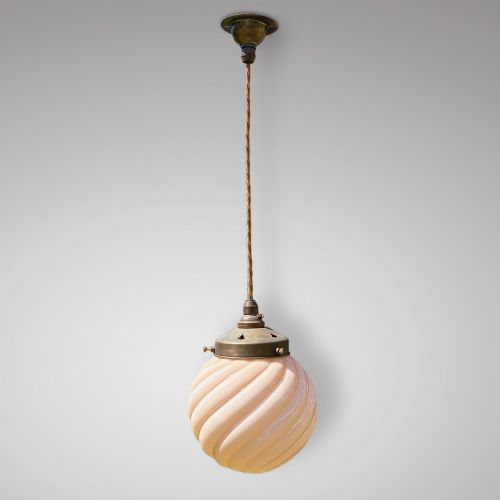
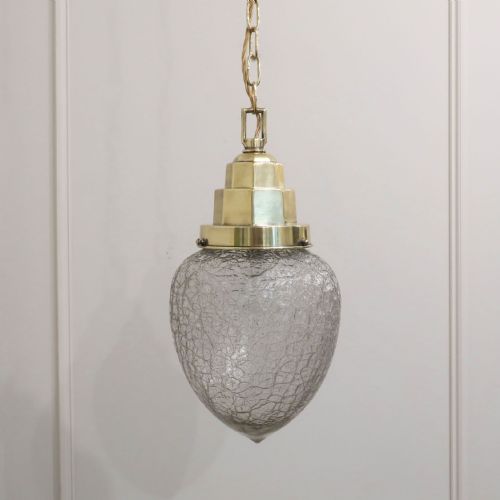


1930s Brass Ceiling Light
A 1930s brass ceiling light brings genuine period character to a room, offering warm illumination through brass frames and textured glass.
1930s Brass Ceiling Light
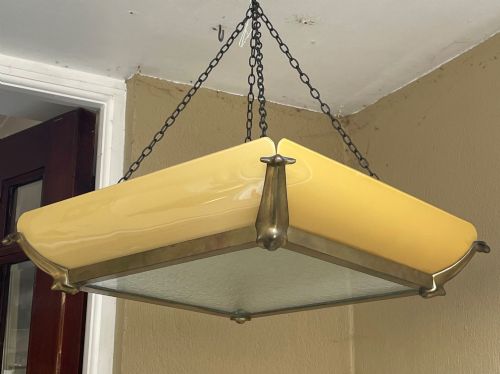
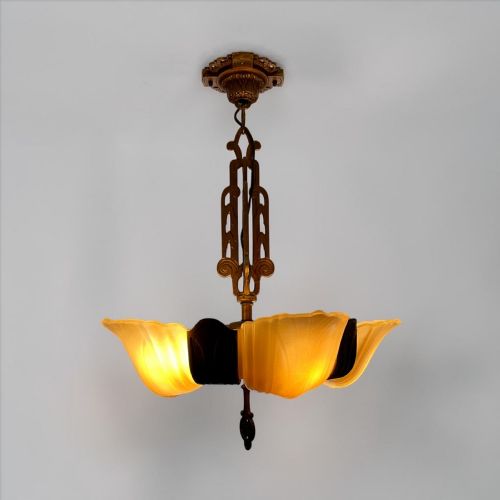
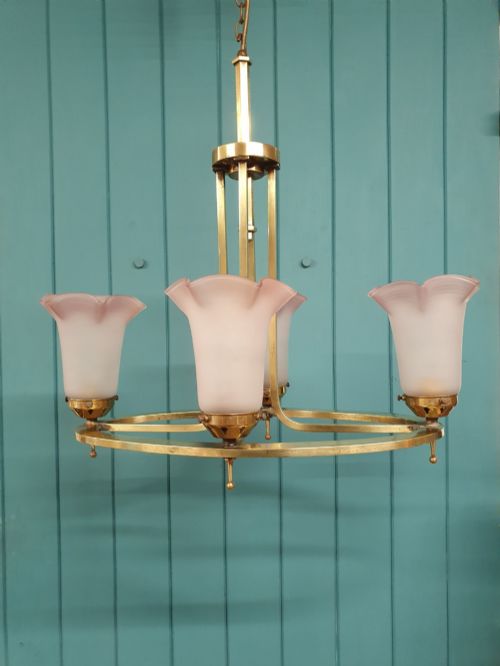
When you search for a 1930s brass ceiling light, you encounter a wide selection of pendant lights, chandeliers, and hall lanterns shaped by the Art Deco movement. These fixtures combine solid brass mounts with glass shades designed to distribute light evenly across a space.
The most common examples on this page are single pendant lights and multi-arm chandeliers utilising opaline, frosted, or crackle glass. Pieces often arrive paired with matching brass suspension chains, fabric flex, and occasionally specialised slip shades or alabaster dishes.
How they were made
Makers constructed these ceiling lights using solid brass and cast metal components, frequently incorporating patinated finishes to alter the sheen of the metalwork. Glass elements were mouth-blown, pressed, or moulded into distinct geometric and floral forms.
Lampshades utilised specialist glass techniques, resulting in opaque, opaline, pink, and crackle finishes that softened the output of early electric bulbs. Fixtures were suspended using robust chains or rigid stems paired with fabric flex wiring.
Materials recorded across the archive combine patinated brass and cast metal with opaline, crystal, and pink clam shell glass.
What varies in quality
Quality in a 1930s brass ceiling light rests on the weight of the metal casting and the thickness of the glass shade. Substantial brass components and heavy, moulded glass elements indicate a higher grade of production than thin pressed sheets and lightweight shades.
The sophistication of the design also separates standard lighting from exceptional pieces, particularly in elaborate chandeliers, French Empire influences, and monumental architectural commissions. Original matching glass shades and patinated brass surfaces further distinguish the finest examples.
The 1930s Brass Ceiling Light Glossary
- Pendant light
- A single light fixture suspended from the ceiling by a chain, cord, or metal rod. These units typically hang downwards to illuminate a specific area.
- Opaline glass
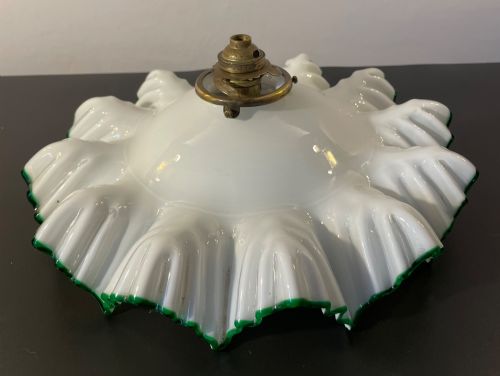
- A milky, semi-translucent glass developed to diffuse light gently without harsh glares. It appears frequently in shades and globes from this period.
- Plafonnier
- A shallow ceiling light designed to sit flush or very close to the ceiling surface. This French term describes bowls and domed shades mounted directly on brass hardware.
- Slip shade
- A moulded piece of glass that slides into a metal frame on a chandelier or sconce. These shades form distinctive geometric arrays around the central bulb.
- Alabaster
- A fine-grained, translucent stone carved into shallow dishes and bowls for hanging light fixtures. It diffuses a soft, natural glow when illuminated from above.
1930s Brass Ceiling Light: Frequently Asked Questions
Can I use modern LED bulbs in these lights?
Modern LED bulbs work well inside vintage glass shades, provided you select the correct wattage and physical size to fit the holder. Look for warm white LEDs to replicate the soft glow of historic tungsten lighting.
Check the lamp holder type and interior clearance before inserting modern replacements into enclosed glass pendants or lanterns.
How do I clean opaline and frosted glass shades?
Wash delicate glass shades in lukewarm water with a mild dish soap, using a soft cloth to remove dust and grime. Avoid harsh chemical cleaners or abrasive scouring pads that can damage historic textured surfaces.
Dry the glass thoroughly with a lint-free cloth before reattaching it to the brass mount.
What is the difference between a pendant and a plafonnier?
A pendant light hangs downward from the ceiling on a length of chain, flex, or rigid rod, placing the light source lower in the room. A plafonnier mounts directly against the ceiling surface as a flush or semi-flush bowl.
Pendants suit high rooms and dining tables, whereas plafonniers work best in hallways or spaces with lower ceiling heights.