
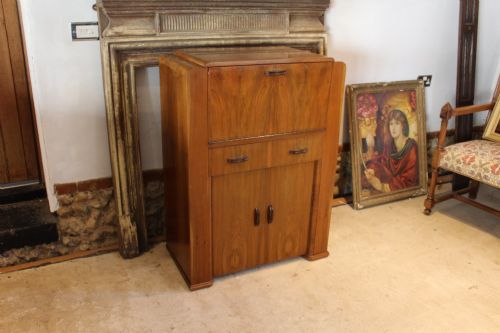
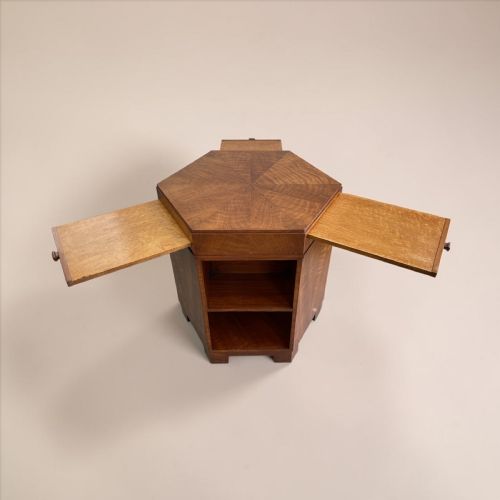
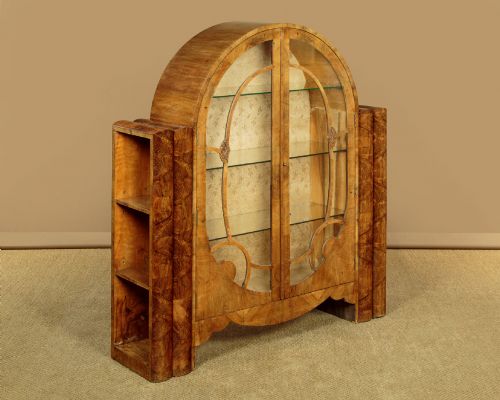

1930s Bookcase Cabinet
A 1930s bookcase cabinet combines library shelving and enclosed display, serving as a practical centrepiece for books and ornaments.
1930s Bookcase Cabinet
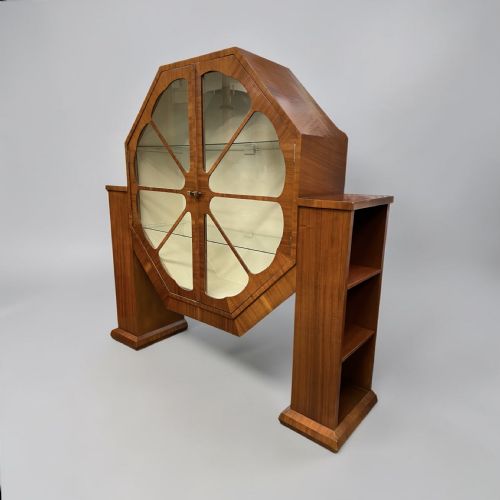
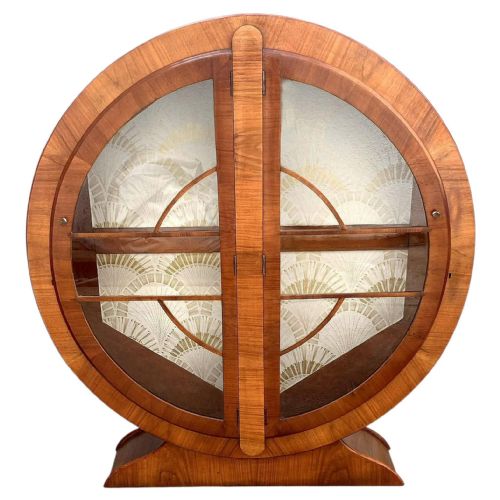
A 1930s bookcase cabinet serves dual purposes by combining open or glazed shelving for books with enclosed storage space. These pieces emerge predominantly from the interwar period and frequently reflect the geometric lines of Art Deco design.
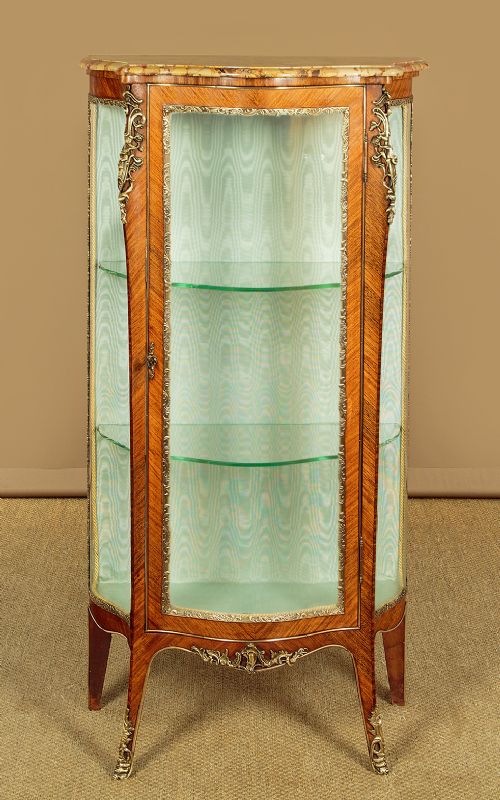
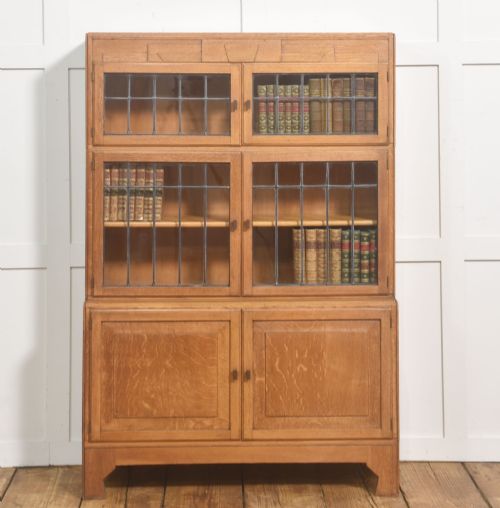
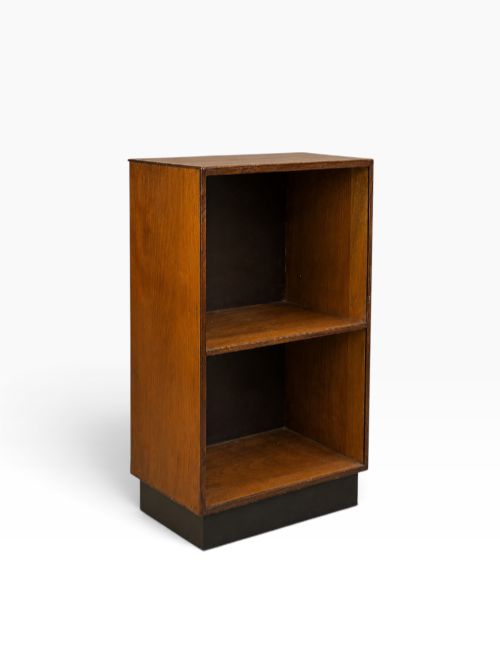
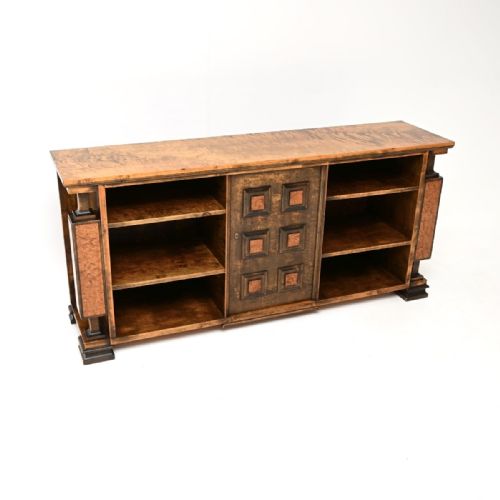
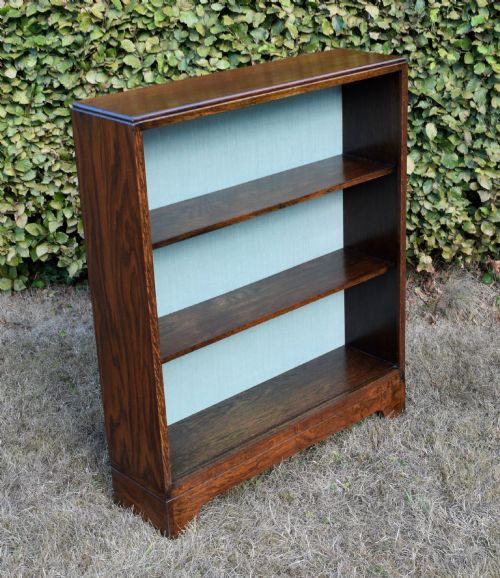
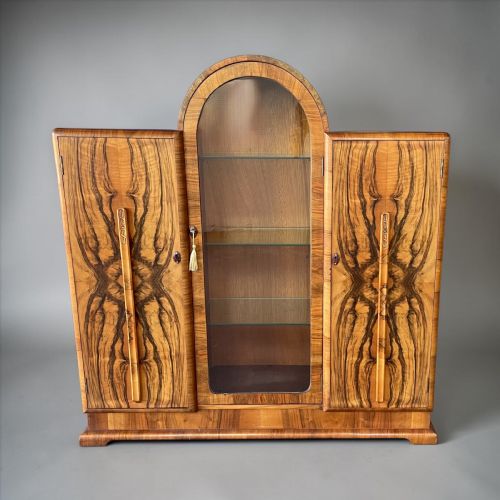
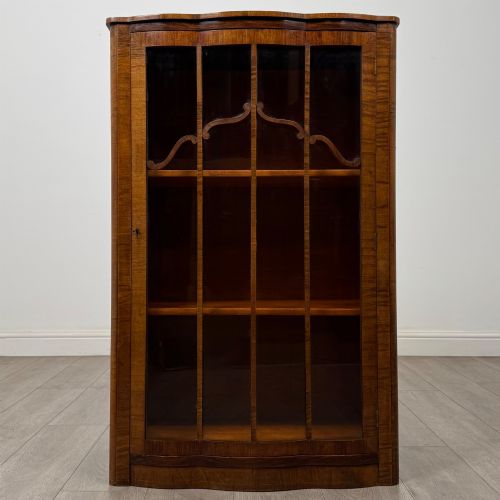
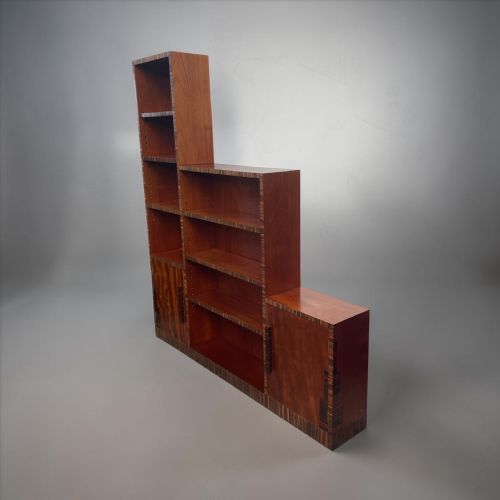
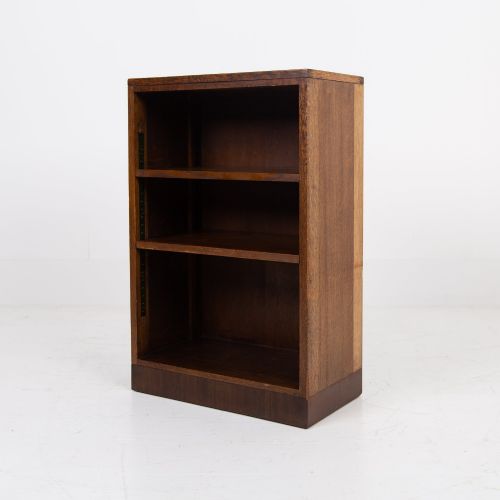
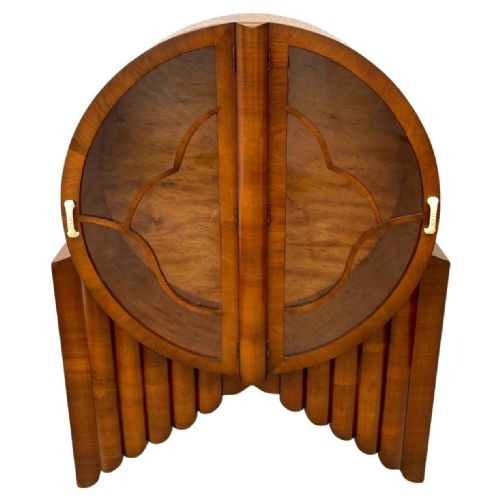
The versions most commonly met on this page span styles from streamlined Art Deco to revivalist oak and mahogany forms. They appear as circular display pieces, stepped bookcases, and glazed vitrines originating from English, Swedish, and Italian workshops.
Materials and construction
Cabinet makers utilised a rich palette of hardwoods and decorative veneers, notably walnut, burr walnut, oak, ash, and satin birch. These surfaces are frequently paired with contrasting sycamore or mounted with brass details and fitted glass panels.
Construction techniques combine solid timber framing with expert veneering, allowing makers to create curved shapes like circular display cabinets and stepped profiles. Glazing ranges from plain glass panels to leaded designs suited to both display cabinets and libraries.
Some interwar oak cabinetry arrives bearing the corporate logo of Associated Television, linking domestic furniture directly to early broadcast history.
What separates the finest examples
Quality rests in the selection of wood grains, where symmetrical burr walnut or figured walnut veneers elevate the visual impact of the piece. The skill involved in forming curved shapes, circular bodies, and stepped profiles distinguishes master cabinet work from standard production.
Integration of maker identity and hardware execution separates notable studio output from anonymous manufacture. The cohesion of auxiliary materials, such as brass mounts and leaded glass, completes the distinction between ordinary storage and exceptional design.
F.H. Marshall & Co Glasgow·Betty Joel·Maurice Adams·Rurka·Epstein
The 1930s Bookcase Cabinet Glossary
- Veneer
- A thin layer of choice wood applied over a secondary timber base to provide decorative patterns. Figured and burr walnut are common examples found on interwar cabinets.
- Vitrine
- A glass-fronted cabinet designed specifically for the display of porcelain, books, or curiosities. These pieces often feature glazed sides to maximise light penetration.
- Leaded glass
- Individual panes of glass joined together by narrow strips of lead into decorative geometric patterns. This technique appears frequently on interwar oak and walnut bookcases.
- Stepped bookcase
- A shelving unit featuring ascending or descending horizontal tiers that create a distinct geometric silhouette. The form is characteristic of interwar design.
- Burr walnut
- A prized wood growth forming intricate swirling grain patterns used on high-grade cabinet doors and panels. It provides intense visual texture.
1930s Bookcase Cabinet: Frequently Asked Questions
What is a 1930s bookcase cabinet?
A 1930s bookcase cabinet is a dual-purpose furniture form that combines shelving for books with enclosed or glazed display space for decorative objects.
These pieces typically date from the interwar period and are strongly associated with Art Deco design, though revivalist oak styles also appear in the period evidence.
How do I identify an Art Deco bookcase cabinet?
Art Deco bookcase cabinets are identified by geometric forms, stepped profiles, and circular silhouettes rather than traditional carved ornamentation.
They frequently utilise figured walnut, burr walnut, or exotic veneers paired with glass doors and occasional brass mounts.
Where were these cabinets made?
The evidence shows production originating primarily in England, alongside examples from Swedish and Italian workshops.
Maker attribution includes notable London and regional studios, as well as specialised cabinet makers operating during the interwar years.
How do I care for walnut veneer?
Walnut veneer requires protection from direct sunlight and excessive humidity to prevent fading and lifting of the thin wood layer.
Polishing should be done sparingly with appropriate traditional wax to maintain the natural sheen of the figured wood surfaces.