



1930s Bedside Lockers
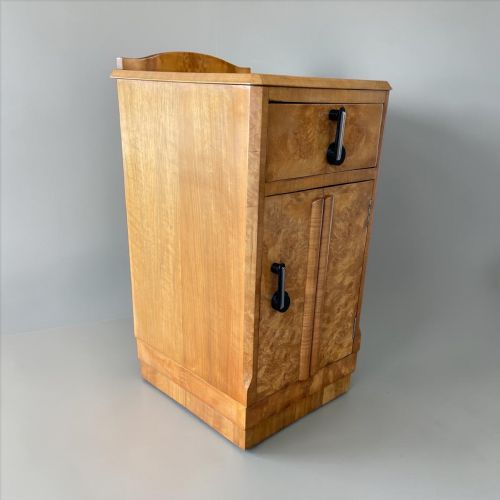
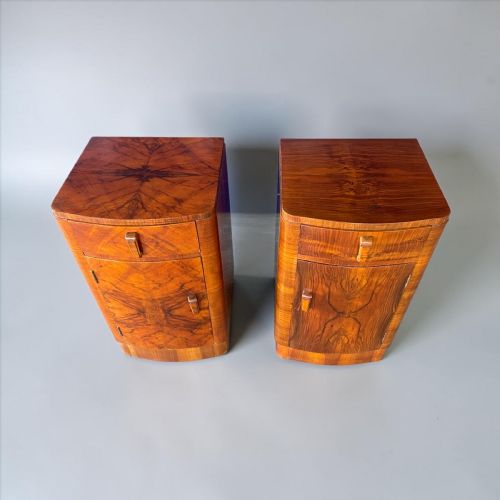
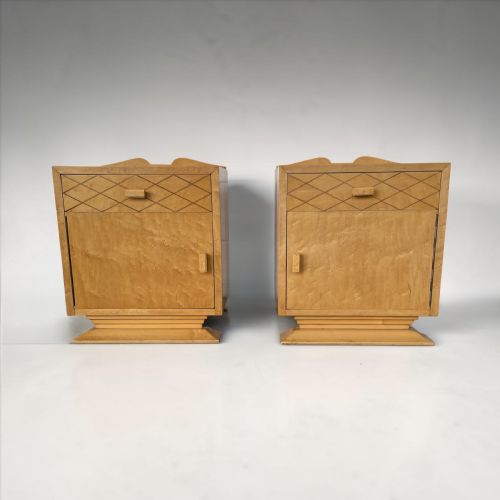
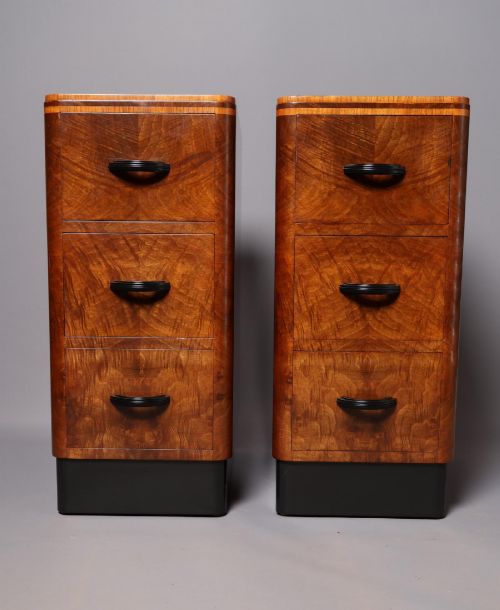
These 1930s bedside lockers deliver clean geometric lines and rich wood grains, offering essential bedside storage with genuine period character.
1930s Bedside Lockers
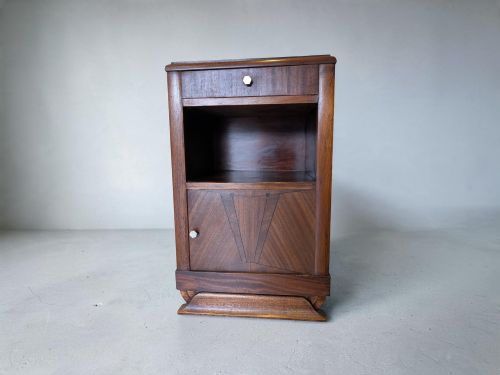
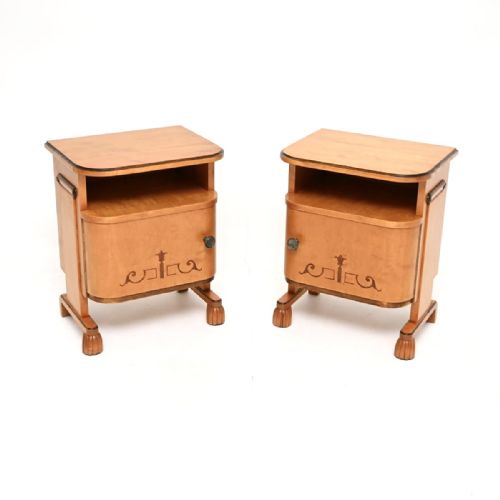
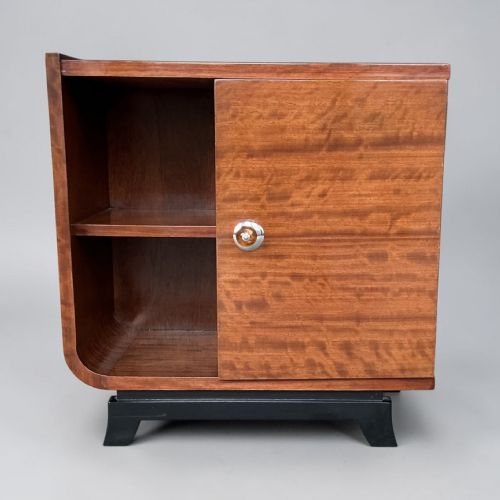
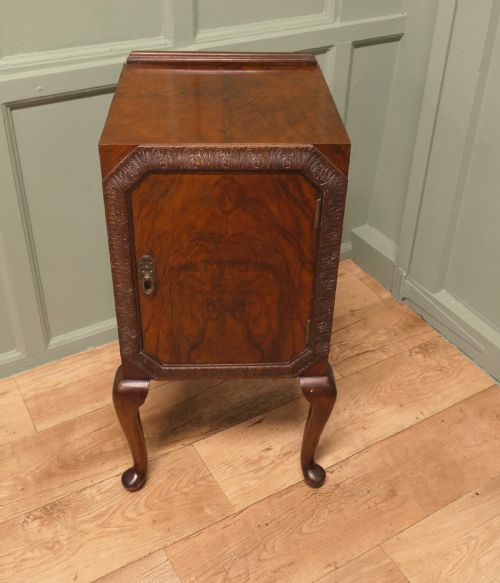
When searching for 1930s bedside lockers, you encounter compact cabinets and small tables designed to sit beside a bed. The selection includes single items alongside matched pairs in various wood finishes.
Most examples date firmly to the 1930 decade, though pieces spanning the 1920 to 1940 period also appear. Formats range from standard rectangular bedside cabinets to drum-shaped tables and side cabinets.
Origins represented in the stock include French and Scandinavian interpretations of the prevailing design idioms. These pieces function primarily as enclosed storage beside a bed rather than simple open tables.
How they were made
Cabinetmakers utilised timber carcasses overlaid with decorative veneers such as walnut, burr walnut, burr elm, and kingwood. Mahogany and ebonised wood also provide the foundational structure for many cabinets.
Metal hardware plays a distinct functional and decorative role, featuring brass and chrome handles or mounts. Bakelite details occasionally appear on these mid-century sleeping-chamber furnishings, alongside traditional cabriole legs on earlier variants.
1930s Bedside Lockers Retail Price Guide 2026
Typical asking prices for 1930s bedside lockers among the pieces listed under this phrase on Sellingantiques today, from the lower quarter to the upper quarter. They describe what is for sale here now, not the wider market.
Walnut and burr walnut veneer dominate the wood selections across these interwar bedside cabinet listings.
What varies in quality
The choice and application of veneer dictate much of the visual appeal, with figured burr timbers or matched grains elevating a piece. Superior execution shows in the seamless wrapping of wood patterns around curved cabinet fronts and drum shapes.
Construction integrity separates standard production from finer cabinetwork, particularly in the fit of doors and drawers. Pairs that match identically in timber selection and scale command greater appreciation than assembled groups.
Betty Joel
The 1930s Bedside Lockers Glossary
- Art Deco
- A design style characterised by sleek geometric shapes, streamlined forms, and modern materials. It dominates the aesthetic of interwar furniture.
- Burr Walnut
- A timber cut from walnut tree growths that produces intricate, swirling grain patterns. It provides a highly decorative surface on cabinet doors.
- Cabriole Leg
- A furniture leg that bends outward and then tapers inward with an arched form. This shape appears on pieces influenced by earlier stylistic traditions.
- Kingwood
- A dense, richly coloured exotic timber often utilised for fine French cabinetmaking. It brings deep tones and subtle striping to the surface.
- Bakelite
- An early form of synthetic plastic used for handles and decorative accents. It introduces contrasting tactile elements to wooden furniture.
1930s Bedside Lockers: Frequently Asked Questions
Are these lockers sold as pairs?
Many listings feature matching pairs designed to sit symmetrically on either side of a double bed. Single cabinets also appear frequently for individual use.
Buyers seeking uniformity should check titles for specific indications of pairs or matching sets before proceeding.
How do I distinguish French styles?
French examples often lean towards refined cabinetmaking traditions, utilising kingwood or incorporating specific regional proportions. They maintain the period aesthetic while displaying distinct continental craftsmanship.
Design influences range from streamlined modernism to subtle continuations of older decorative forms like the Louis XV style.
What storage do they provide?
These pieces function primarily as closed bedside storage units with internal shelving or cupboard space. Some formats incorporate small drawers above the main cabinet compartment.
Drum-shaped tables and side cabinets offer alternative configurations for keeping nighttime essentials neatly tucked away.
How do I care for veneered wood?
Veneered surfaces require gentle treatment with soft cloths and protection from direct sunlight to prevent fading. Maintaining stable room humidity preserves the underlying timber and prevents warping.
Avoid excessive moisture and harsh chemical polishes that can damage the historical finish of walnut or mahogany.