

1930s Bedroom Wardrobe
A 1930s bedroom wardrobe brings striking geometry and rich timber figures to domestic storage, offering substantial hanging space and drawers within classic Art Deco forms.
1930s Bedroom Wardrobe
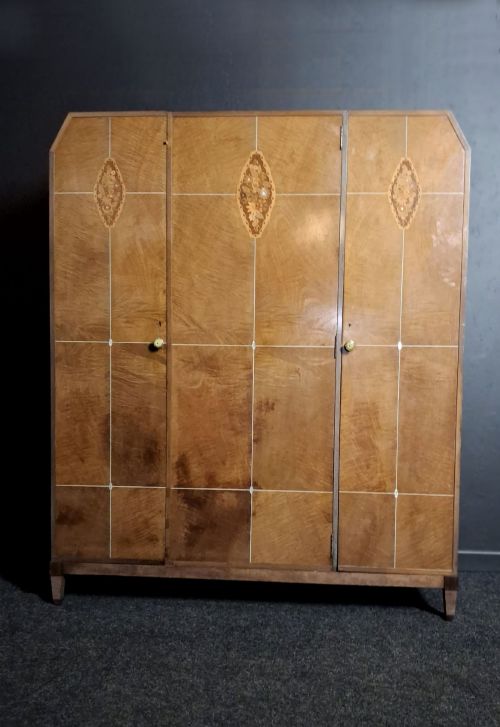
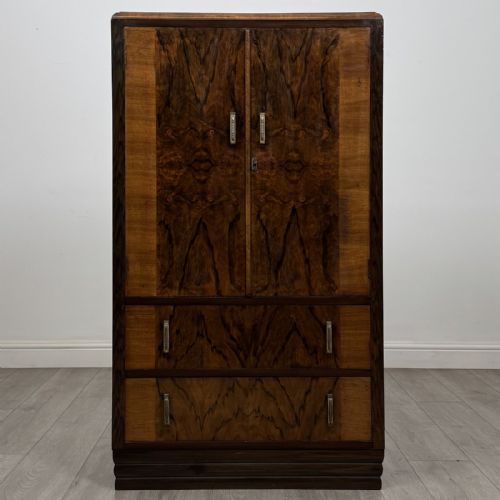
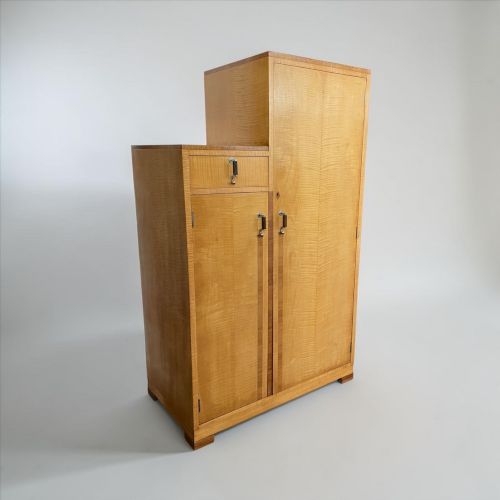
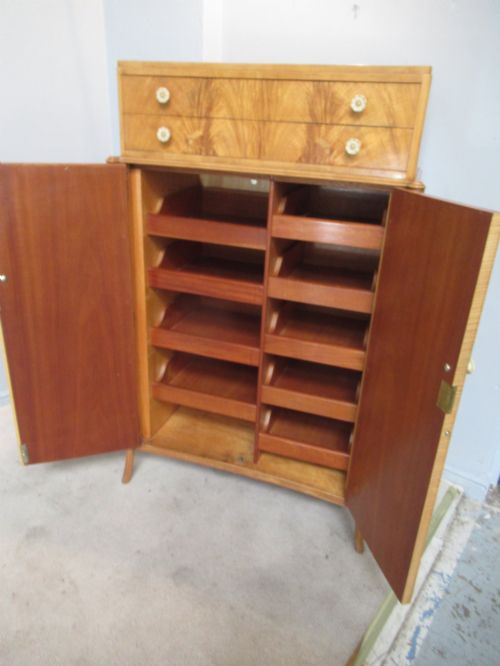
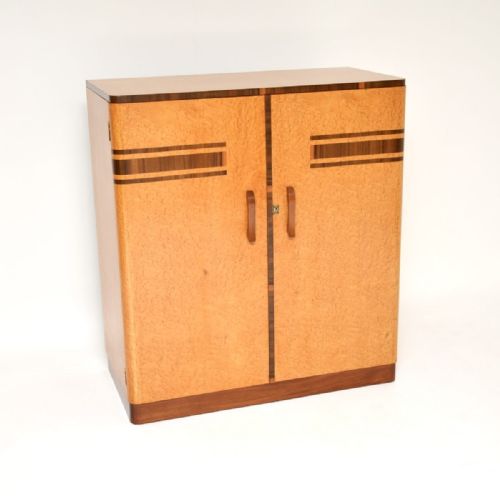
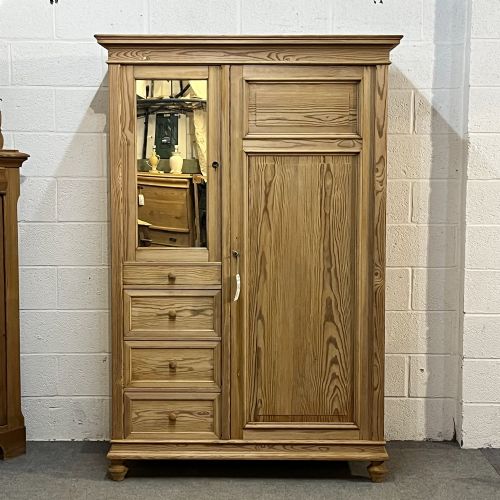
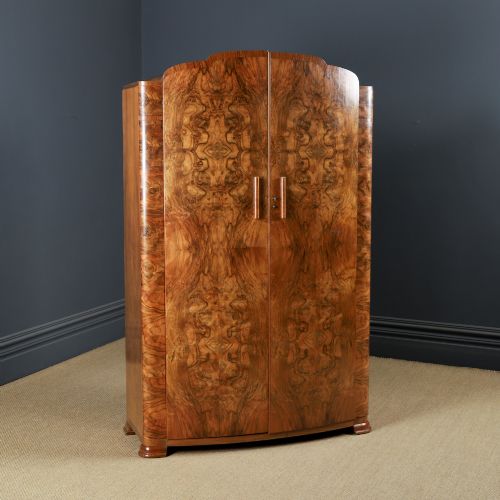
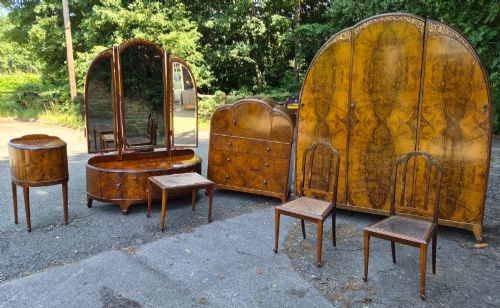
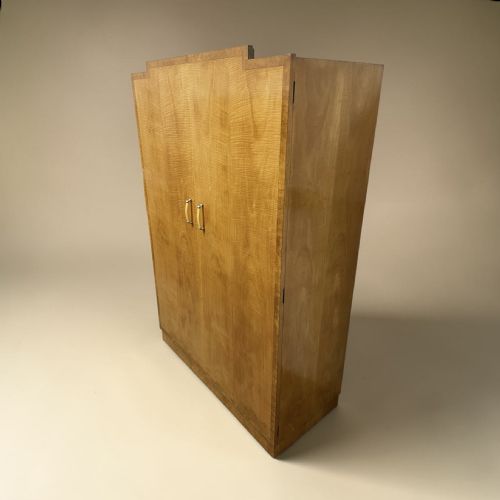
A 1930s bedroom wardrobe typically presents as a tall double or triple storage piece, often accompanied by compactums, tallboys, or complete bedroom furniture suites. These pieces reflect the dominant Art Deco style of the era, alongside occasional country interpretations, providing deep hanging compartments and internal drawers.
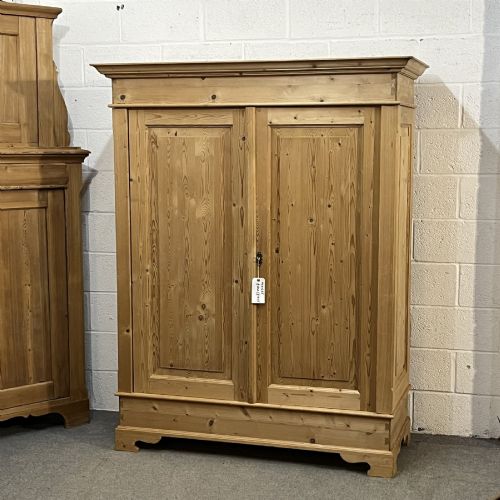
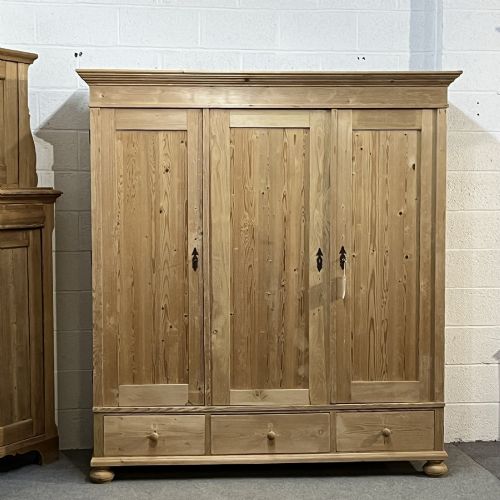
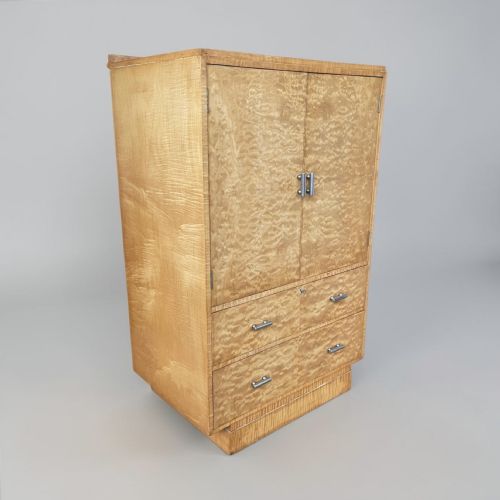
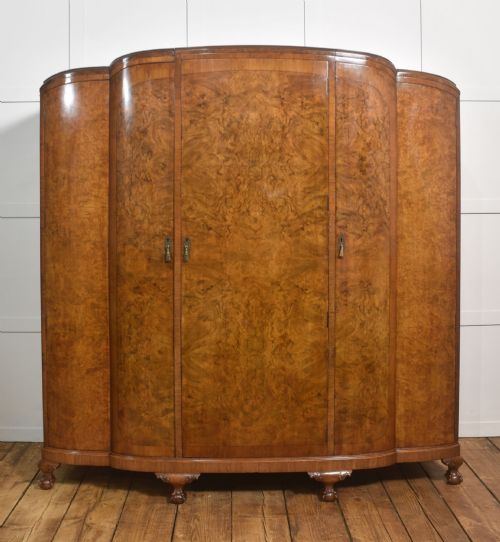
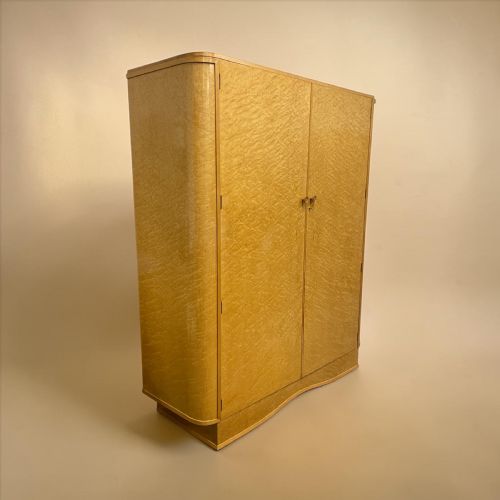
Buyers will encounter various configurations on this page, ranging from bow-front designs and breakfront wardrobes to smaller compactum cabinets. Materials such as walnut, burr walnut, maple, oak, and pine appear frequently, paired with distinctive handles and mirrored doors.
The objects stem predominantly from the 1930 period, with surrounding examples dating from the 1920s and 1940s. Makers and designers such as Heal's, Harry and Lou Epstein, and Frank Taylor & Co. shape the upper tier of these offerings.
What varies in quality
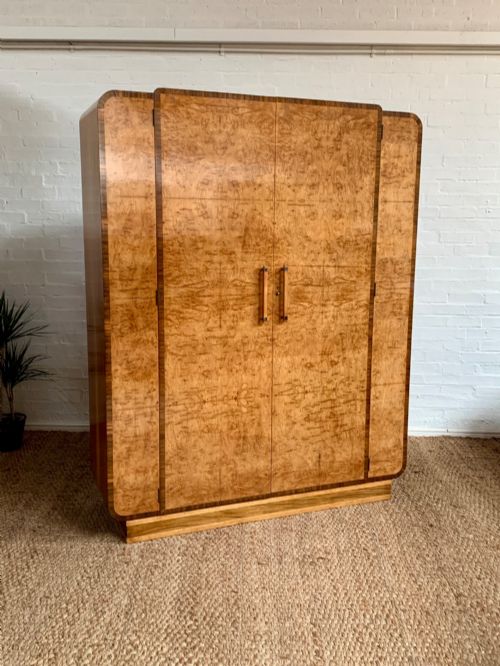
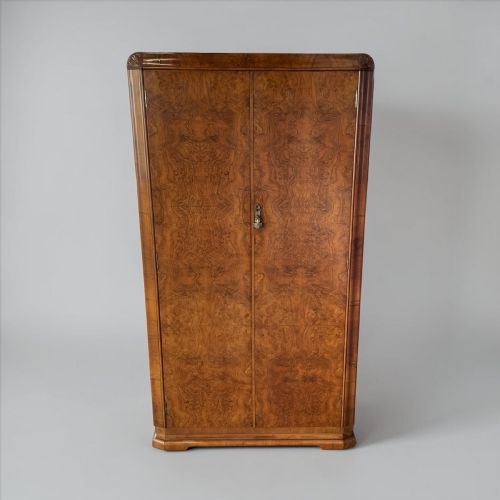
Quality rests upon the choice and matching of timber veneers, particularly how figured walnut or bird's eye maple wraps symmetrically across the main doors. Pieces designed by notable firms or workshops exhibit superior internal planning, finer hardware selection, and more substantial carcase timbers.
The sophistication of the overall silhouette distinguishes standard items from exceptional examples, seen in curved bow-front structures, breakfront proportions, and integrated matching bedroom suites. Structural integrity in the doors and drawers ensures smooth operation across heavy timber housings.
1930s Bedroom Wardrobe Retail Price Guide 2026
Typical asking prices for 1930s bedroom wardrobe among the pieces listed under this phrase on Sellingantiques today, from the lower quarter to the upper quarter. They describe what is for sale here now, not the wider market.
Materials recorded across the inventory include brass, walnut, burr walnut, metal, bakelite, walnut veneer, glass, and solid wood.
Frank Taylor & Co.·Heal's·Gaylayde·B Cohen & Sons·Harry and Lou Epstein
The 1930s Bedroom Wardrobe Glossary
- Compactum
- A multi-function wardrobe combining hanging space with internal drawers, shelves, and sometimes a writing desk or shoe compartments. This form maximises vertical storage in a single footprint.
- Tallboy
- A tall chest of drawers, often topped by a small cupboard cabinet, designed for bedroom use. It provides significant vertical storage without requiring the floor space of a full wardrobe.
- Burr Walnut
- A veneer taken from the gnarled growth on a walnut tree, producing swirling, intricate grain patterns. It was heavily utilised by cabinet makers on prominent door panels.
- Breakfront
- A cabinet design where the central section projects forward from the flanking outer sections. This architectural arrangement adds depth and visual rhythm to larger wardrobes.
- Art Deco
- The prevailing design movement of the interwar period characterised by geometric symmetry, stylised motifs, and sleek vertical lines. It heavily influences the hardware and silhouettes of these pieces.
1930s Bedroom Wardrobe: Frequently Asked Questions
What is a compactum wardrobe?
A compactum is a specialised wardrobe that integrates hanging space alongside multiple internal drawers and shelving within one unit.
This layout allowed users to store folded garments, linen, and coats in a single piece of bedroom furniture.
How do tallboys differ from wardrobes?
Tallboys are tall storage units primarily composed of stacked drawers, occasionally topped by a small enclosed cupboard.
Wardrobes are deeper and wider structures designed primarily for hanging long garments on internal rails.
What woods were used in 1930s wardrobes?
Cabinet makers utilised walnut, burr walnut, oak, mahogany, maple, satin birch, and pine across various designs.
Veneers were frequently applied to large surfaces to create striking symmetrical patterns.
Are these wardrobes part of larger sets?
Many listings form part of complete bedroom furniture suites that include matching tallboys, dressing cabinets, and bedside pieces.
These suites share identical timber veneers, handles, and stylistic geometric details.