

1930s Bedroom Chest
A 1930s bedroom chest brings distinct period character and practical storage to a room through geometric forms and rich veneers.
1930s Bedroom Chest
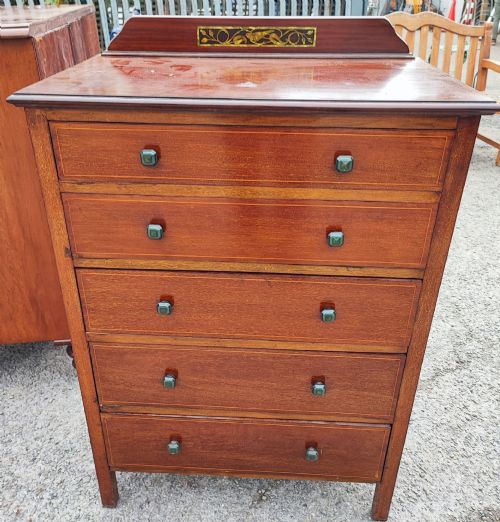
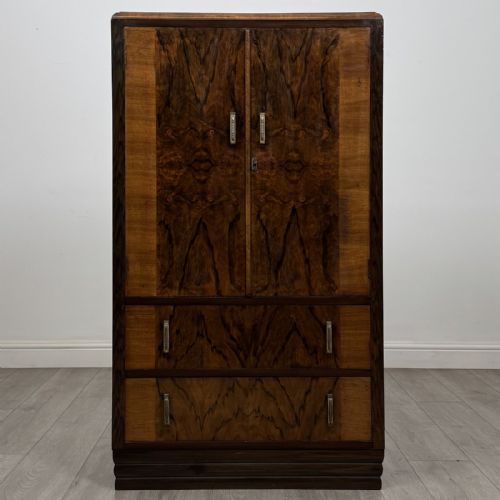
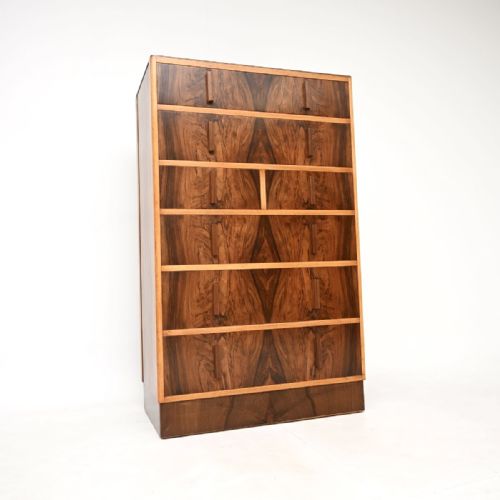
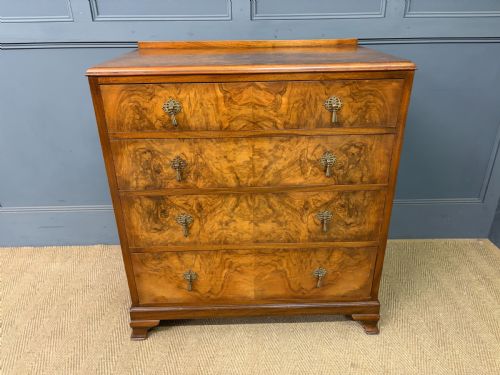
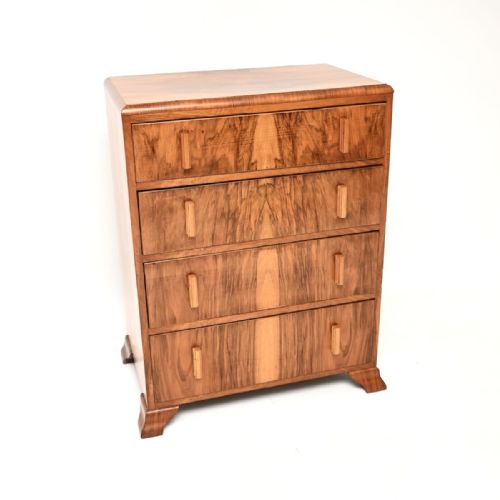
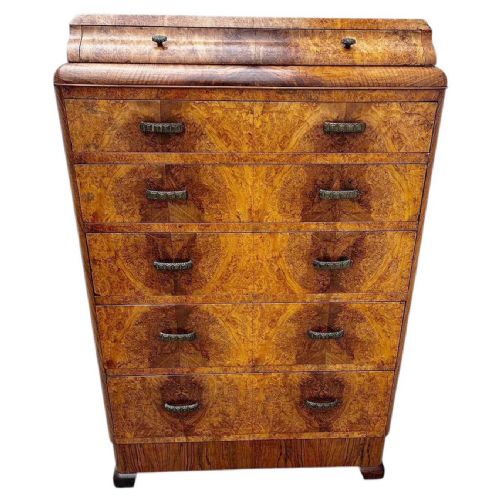
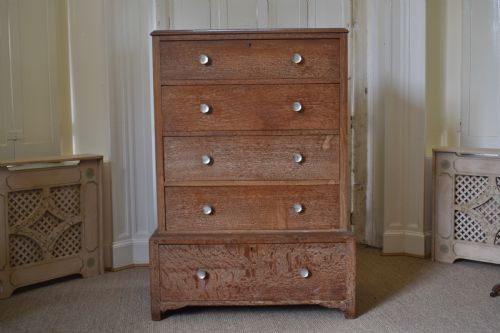
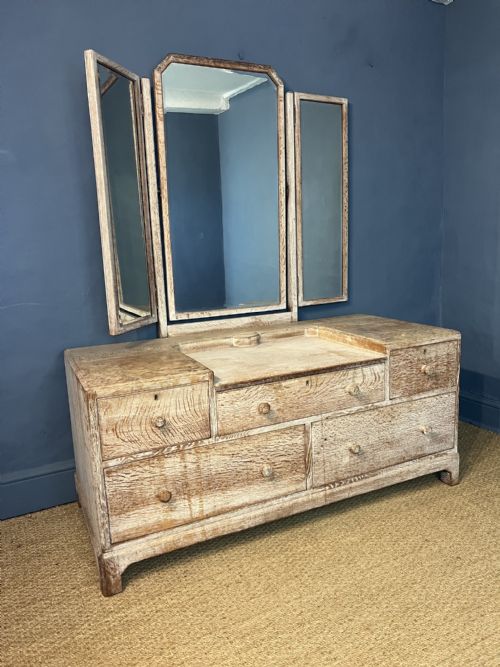
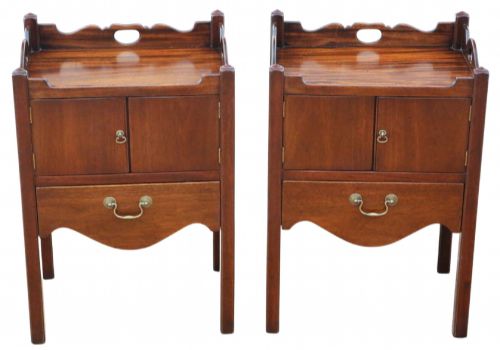
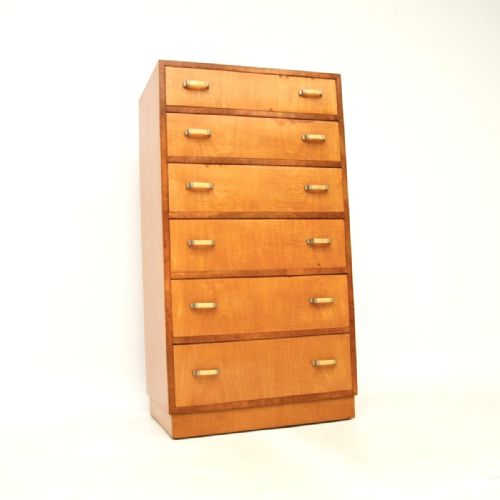
When you search for a 1930s bedroom chest, you encounter pieces designed primarily during the Art Deco era alongside occasional examples rooted in the Arts and Crafts, Cotswold School, or Georgian Revival styles. These items encompass standard chests of drawers, tallboys, bedside cabinets, and dressing tables that served domestic spaces during the interwar years. Walnut, oak, and maple dominate the offerings, frequently enhanced by figured or burr veneers.
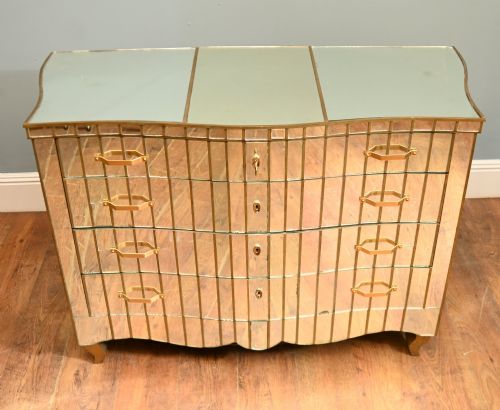
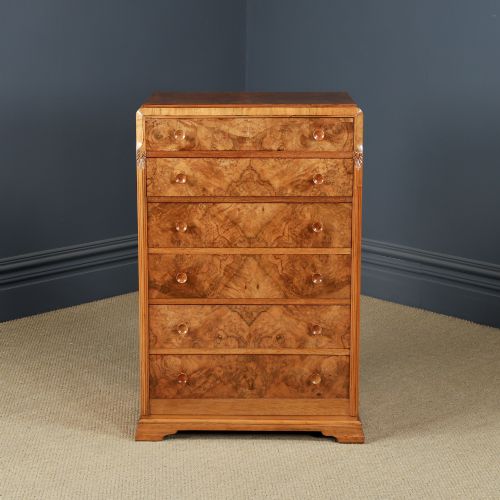
The version you are most likely to meet on this page is the Art Deco walnut chest of drawers, often constructed with multiple drawers and paired with matching bedside tables or dressing units. English and French workshops produced many of these surviving examples, utilising contrasting wood grains and original metal or wooden handles. Tallboys and pedestal dressing tables with integrated mirrors also appear regularly within this selection.
Materials and Construction
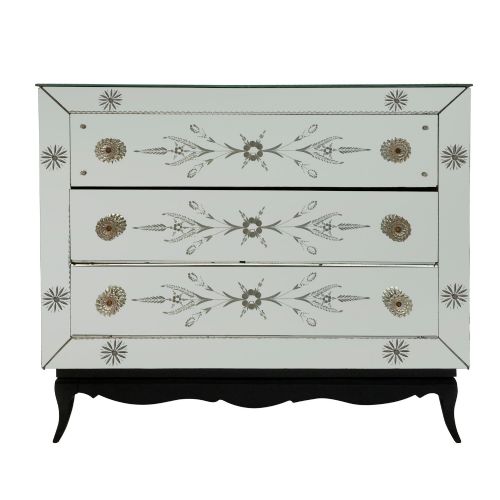
Cabinet makers of this period relied heavily on walnut, burr walnut, oak, and maple, often applying choice veneers over solid secondary timbers to create striking grain patterns. The selection includes limed oak, bleached blonde walnut, and ebonised finishes that reflect the changing interior tastes of the 1920s, 1930s, and 1940s. Glass, brass, and marble elements appear on specific French commodes and mirrored dressing tables, adding surface variation and functional utility.
Construction techniques combined traditional cabinet-making joints with modern decorative treatments such as contrasting stringing, geometric veneer layouts, and carved details. Pieces associated with makers like Heal's or the Cotswold School demonstrate careful attention to timber selection and structural integrity. Original hardware, including wooden handles and brass fittings, remains intact on many surviving examples.
1930s Bedroom Chest Retail Price Guide 2026
Typical asking prices for 1930s bedroom chest among the pieces listed under this phrase on Sellingantiques today, from the lower quarter to the upper quarter. They describe what is for sale here now, not the wider market.
Materials utilised across the furniture items include walnut, burr walnut, walnut veneer, oak, limed oak, maple, birds-eye maple, satinwood, sycamore, brass, metal, glass, and marble.
Assessing Quality and Execution
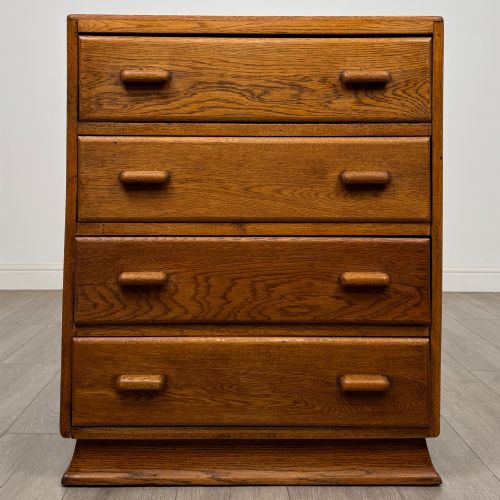
The distinction between standard commercial pieces and finer items rests upon the selection and matching of wood veneers, particularly burr walnut, birds-eye maple, and figured satinwood. Superior examples display continuous grain patterns across multiple drawer fronts and balanced proportions that reflect thoughtful design by established firms. Simpler oak chests rely on solid timber construction rather than decorative veneers, prioritising utility over elaborate surface patterning.
Execution of detail further separates workshop output, seen in the precision of inlaid borders, the integration of bevelled mirrors, and the finish applied to the wood. Pieces produced by recognised makers often exhibit more refined handling of proportion and material than anonymous factory production. The survival of original handles, working locks, and clean interior drawer linings contributes to the standing of any individual chest.
Hille·Frank Taylor & Co·Maurice Adams·Heal's
The 1930s Bedroom Chest Glossary
- Tallboy
- A tall chest of drawers, often combining a wardrobe section or multiple smaller drawers above deeper compartments, designed to maximise vertical storage.
- Burr Walnut
- Wood cut from a tree growth or burl, yielding swirling, highly decorative grain patterns utilised extensively for cabinet drawer fronts.
- Commode
- A low chest of drawers or cabinet, a term frequently applied to French furniture designs of the period.
- Limed Oak
- Oak treated with a white pigment or lime finish to lighten the timber colour and highlight the open grain structure.
- Pedestal Dressing Table
- A vanity unit featuring banks of drawers on one or both sides supporting a central tabletop and mirror.
1930s Bedroom Chest: Frequently Asked Questions
What defines a 1930s bedroom chest?
These pieces are characterised by Art Deco styling, geometric lines, and the extensive use of figured walnut, oak, and maple veneers. They provide functional storage through configurations like tallboys, bedside cabinets, and multi-drawer chests.
Many examples feature original wooden or metal handles and coordinated dressing tables or mirror attachments, reflecting the bedroom suite designs popular during that decade.
How do I identify a tallboy?
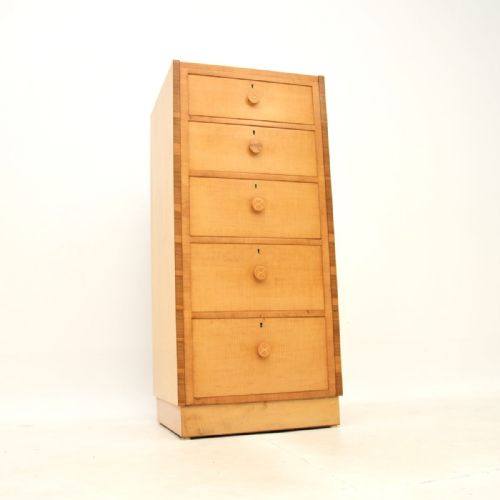
A tallboy is taller and narrower than a standard chest of drawers, designed to provide substantial storage while occupying a smaller floor footprint. They often incorporate a configuration of upper and lower drawers within a single vertical carcase.
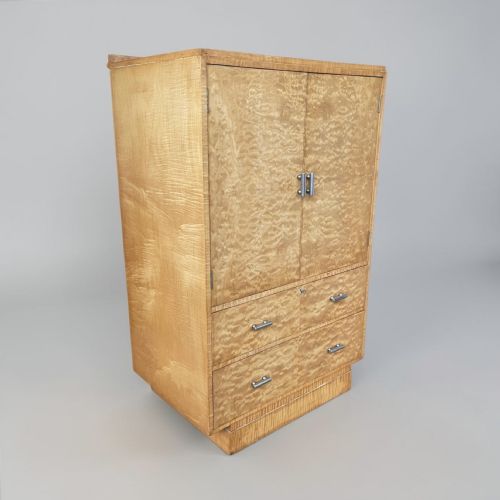
In this selection, tallboys frequently appear in walnut, oak, and birds-eye maple, sometimes featuring the stepped top lines typical of the Art Deco period.
Where were these pieces made?
The listings include pieces produced by English workshops and continental makers, with particular representation from French studios. Domestic department stores and specialist cabinet makers contributed significantly to the output.
Regional variations appear between English walnut designs, French ebonised commodes, and the solid oak constructions associated with the Cotswold School.
How do I care for walnut veneer?
Walnut veneer surfaces require gentle cleaning with a soft, dry cloth to remove dust without harming the polished finish. Avoid placing furniture in direct sunlight or near heat sources to prevent the wood from drying out.
Applying a suitable furniture wax occasionally helps nourish the timber and maintain the sheen on figured and burr walnut grain.