

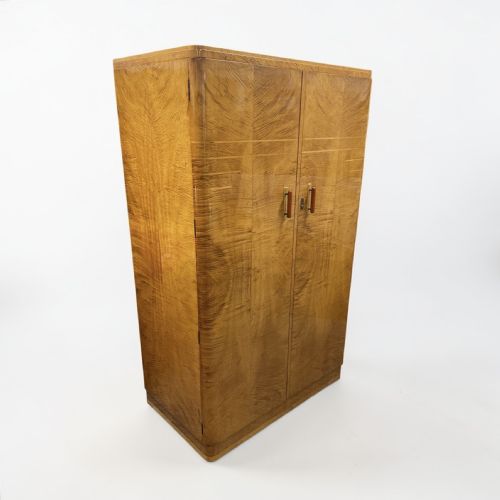


1930s Bedroom Armoire
These 1930s bedroom armoires offer generous storage with striking wood grains and clean architectural lines that anchor a bedroom.
1930s Bedroom Armoire
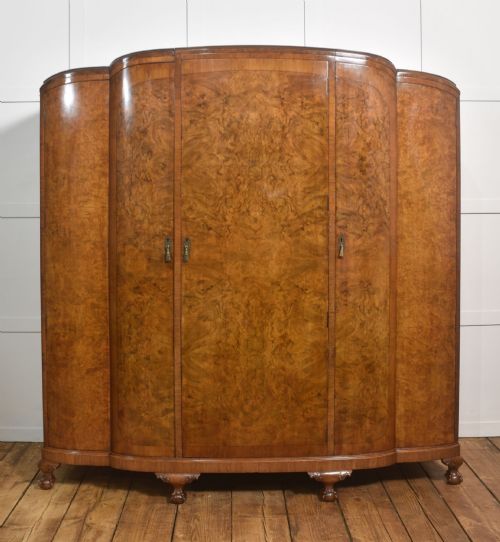
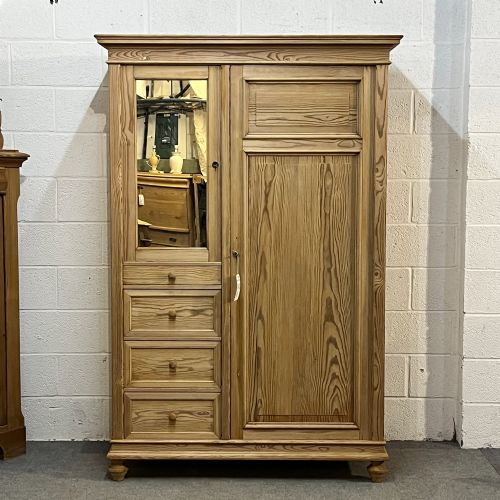
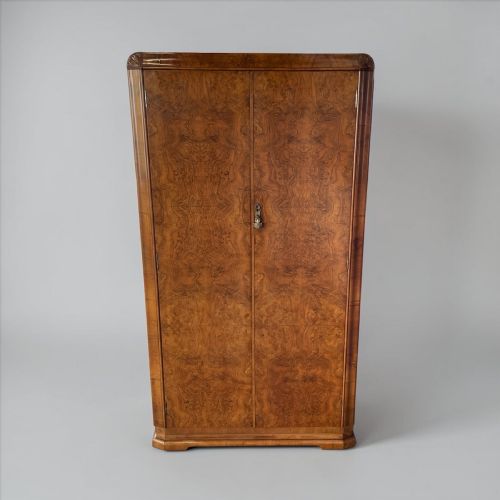
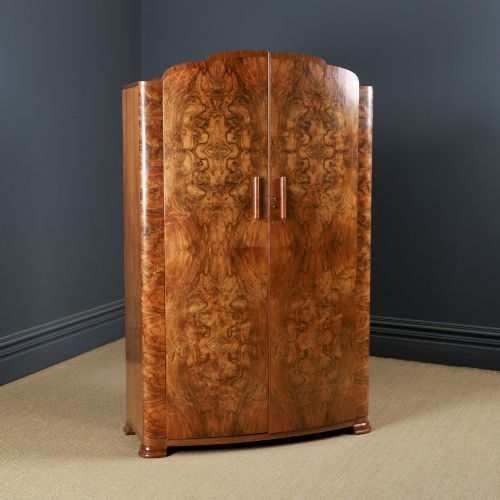
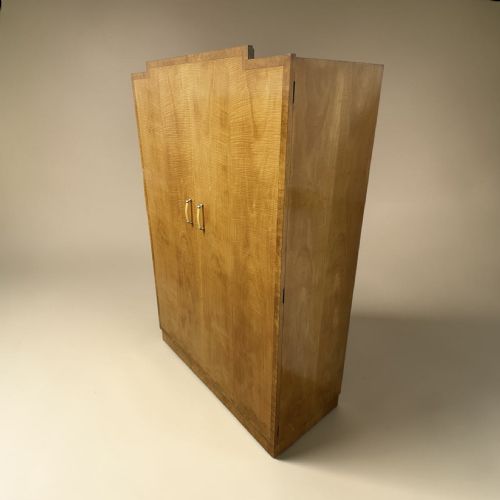
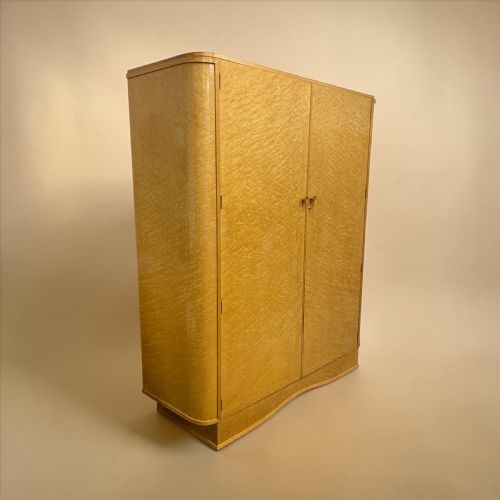
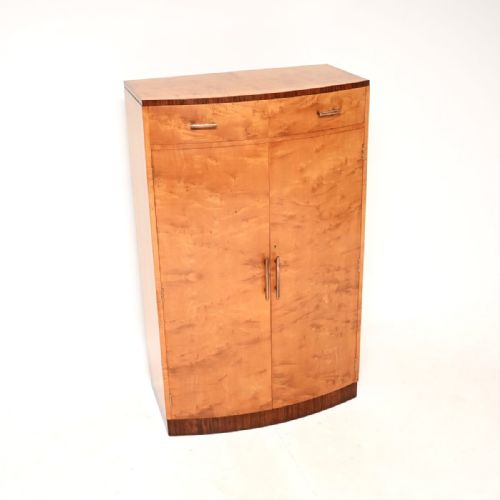
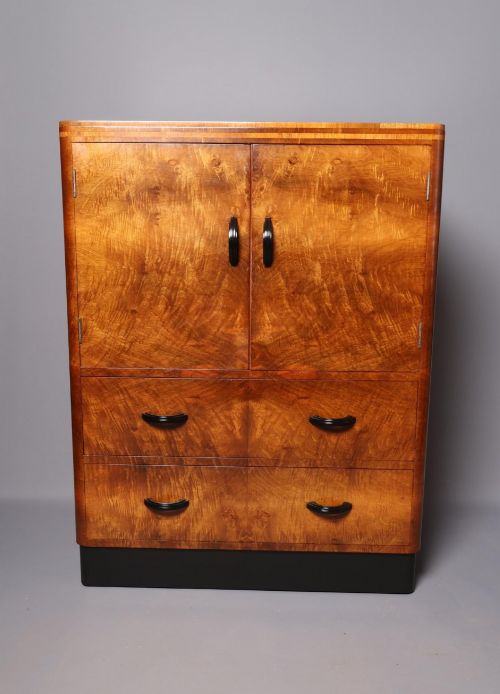
A 1930s bedroom armoire represents the large-scale clothes storage of the inter-war period, most frequently encountered in this selection as an Art Deco wardrobe. These pieces arrive in various configurations, from double and triple door designs to specialised compactums fitted with internal drawers and compartments. Alongside traditional full-length hanging spaces, many examples combine shelving and drawer units into a single substantial piece of furniture.
The dominant aesthetic across these listings is Art Deco, though examples also appear in 1930s country styles alongside occasional pieces spanning from the 1920s into the 1940s. Woods such as walnut, burr walnut, maple, satin birch, and oak form the primary carcass structures, often enhanced by decorative veneers. Buyers seeking these wardrobes find both streamlined modern forms and more traditional country interpretations of the era.
How they were made
Cabinet makers of this period utilised solid timber frames overlaid with figured wood veneers, particularly burr walnut, cloud walnut, and standard walnut veneer. Marquetry inlay, marquetry detailing, and contrasting timber elements like satin birch or maple were frequently applied to enrich the exterior surfaces. These veneered panels allowed workshops to create symmetrical grain patterns across large double and triple door facades.
Functional hardware played a structural and decorative role, with brass handles, hinges, and occasional bakelite or metal accents fitted to doors and internal drawers. Mirrored door panels were integrated into specific compactum designs, requiring precise rebate framing within the heavy timber doors. Structural integrity relied on solid secondary woods for internal framing, supporting the substantial weight of large breakfront and bow front carcasses.
Wardrobe forms on this page range from simple single and double door cupboards to complex multi-piece bedroom suites and compactums.
What varies in quality
The sophistication of the timber selection and veneer matching defines the upper tier of these wardrobes. Pieces featuring continuous burr walnut or cloud walnut grain across multiple doors demonstrate superior craftsmanship compared to simpler single-timber constructions. The integration of specialised internal fittings, such as custom drawers and division panels in compactums, also separates standard production items from finer workshop pieces.
Design complexity and joinery execution separate the categories further, evident in breakfront or bow front carcass shapes that demand advanced woodworking skill. The presence of secondary decorative details, such as marquetry work or contrasting timbers like satin birch and maple, indicates a higher grade of manufacture. Condition of the veneer surface and stability of the large doors remain central to the overall integrity of each piece.
Gaylayde·B Cohen and Sons·Harry and Lou Epstein
The 1930s Bedroom Armoire Glossary
- Compactum
- A multi-functional wardrobe that combines hanging space with internal drawers, shelves, and small compartments. This format provides comprehensive storage within a single footprint.
- Burr Walnut
- A figured wood grain derived from the warted growths on walnut trees, prized for its swirling, organic patterns. It was frequently used for veneering prominent door panels.
- Breakfront
- A cabinet design where the central section projects forward from the flanking outer sections. This architectural form creates depth and shadow across large wardrobe facades.
- Marquetry
- The art of applying pieces of veneer to a structure to form decorative patterns and pictures. Craftsmen used contrasting timbers to create geometric designs on the cabinet surface.
- Bow Front
- A convex, outwardly curved front elevation characteristic of certain stylish cabinet designs. This curved profile softens the linear geometry typical of many period pieces.
1930s Bedroom Armoire: Frequently Asked Questions
How do I fit a large wardrobe in a modern bedroom?
These wardrobes are substantial furniture pieces that require careful measurement of both floor space and ceiling height before placement. Most larger multi-door models are designed to be dismantled into manageable sections for transport and installation.
Positioning the wardrobe away from direct heat sources helps protect the historical wood veneers and polished finishes over time. Ensuring the floor surface is level prevents the large doors from dropping out of alignment during daily use.
How do I care for walnut veneer surfaces?
Walnut veneers benefit from regular dusting with a soft, dry cloth to prevent particulate buildup on the polished surface. Avoiding direct sunlight preserves the rich tones of the wood and prevents uneven fading across the grain.
Application of appropriate furniture wax or polish should be done sparingly and only when the wood appears dry. Maintaining stable room humidity protects the underlying timber and prevents the veneer from lifting at the edges.
How can I tell a 1930s wardrobe from an earlier antique?
Wardrobes from this decade often display the geometric lines and streamlined curves characteristic of the Art Deco movement. The prominent use of figured veneers like burr walnut, set against contrasting timbers such as maple, points directly to inter-war design preferences.
Construction methods also shift in this period, incorporating modern hardware alongside traditional joinery techniques. The presence of bakelite fittings or specific compactum layouts further distinguishes these pieces from Victorian or Edwardian equivalents.