




1930s Bar Accessories
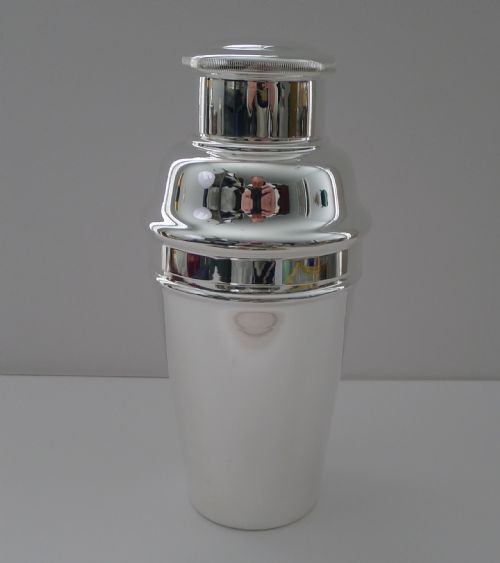
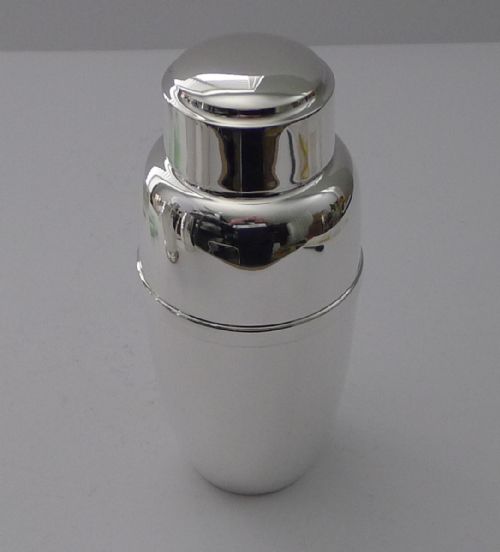
These 1930s bar accessories bring undeniable geometric flair to home entertaining through practical vessels and novel details.
1930s Bar Accessories
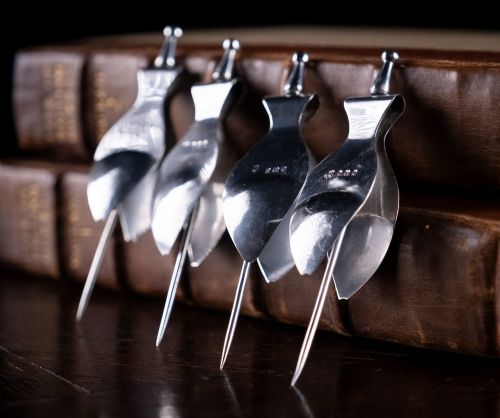
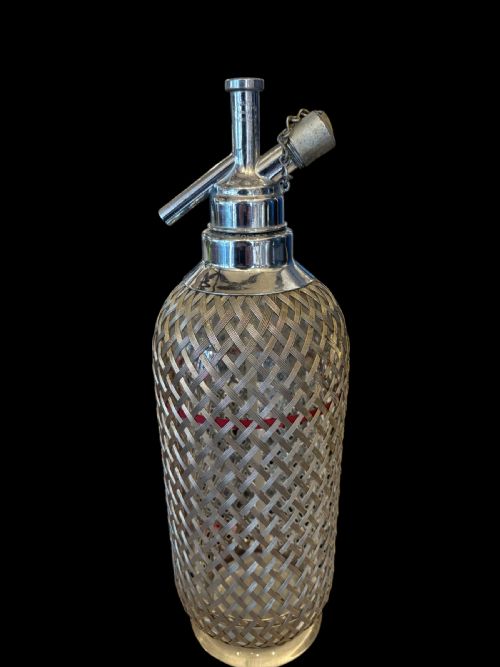
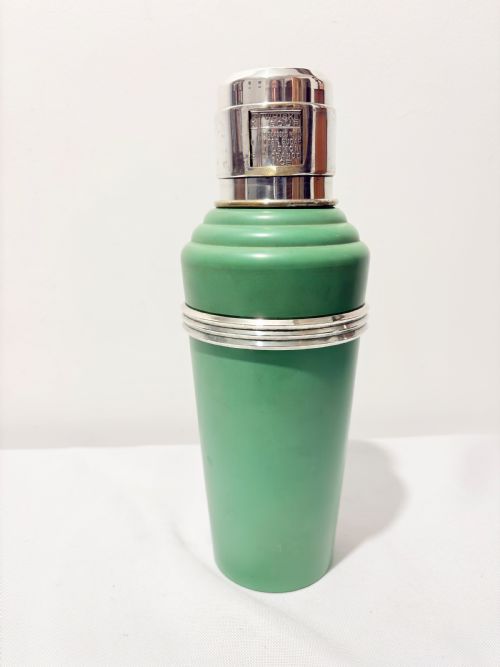
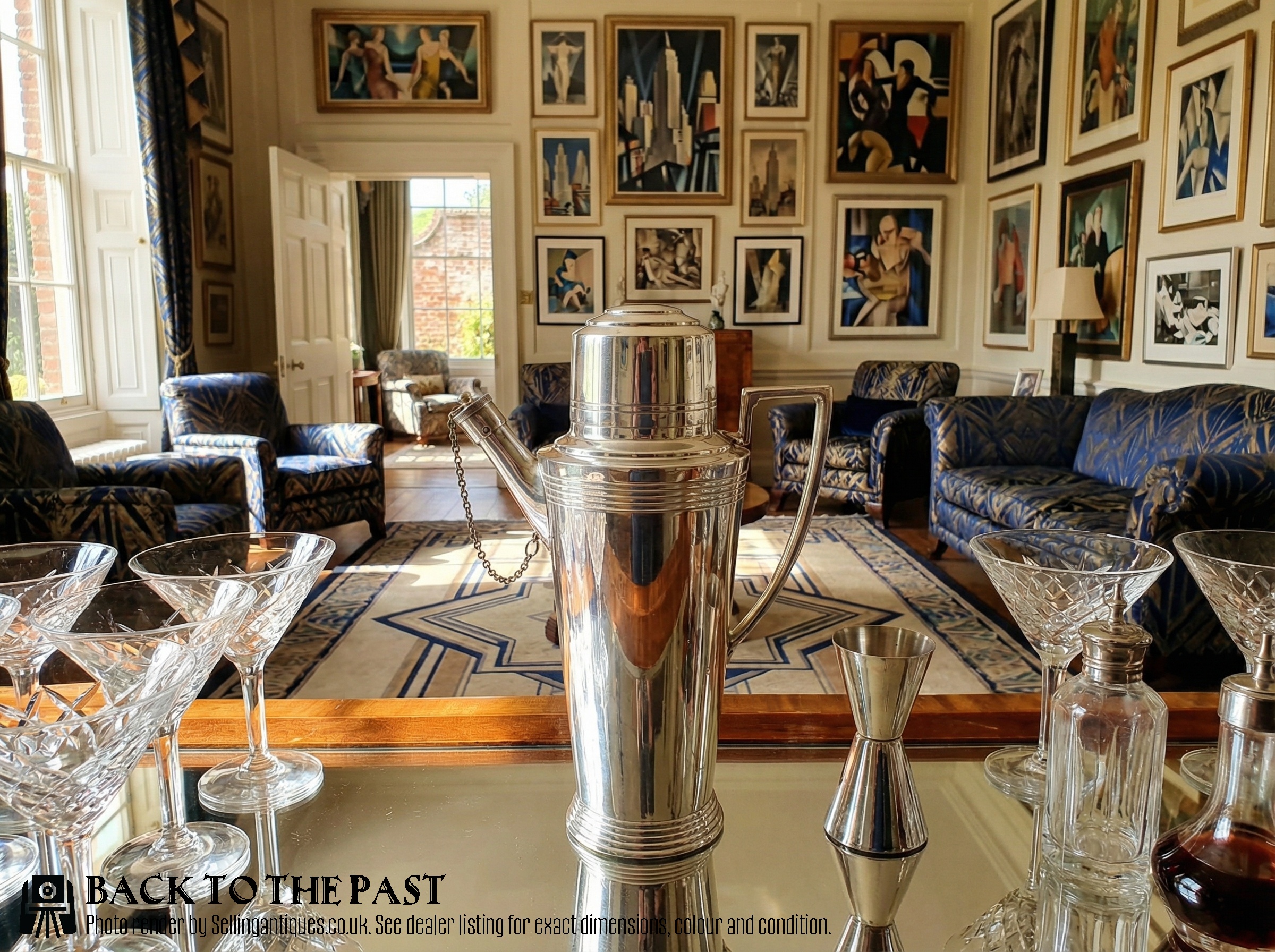
When searching for 1930s bar accessories, buyers encounter everything from cocktail shakers and ice buckets to trays, soda syphons, and novelty cocktail stick sets. The most common finds are silver-plated shakers and ice buckets defined by the sharp geometry of the Art Deco style.
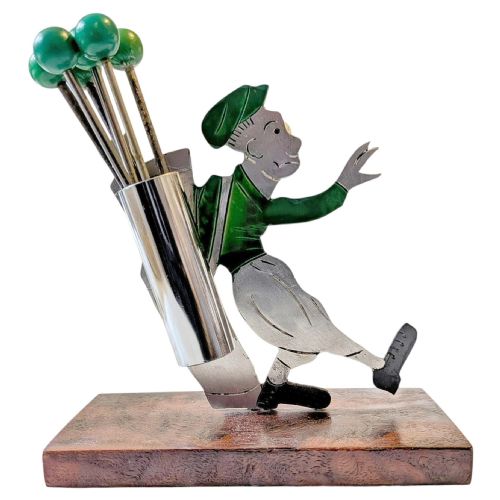
The selection ranges from functional serving trays and lemon wedge squeezers to playful novelty items depicting golfers, figures, and characters like Charlie Chaplin. Pieces originate predominantly from English, French, German, and Swiss makers spanning the interwar period.
Beyond standard barware, the category occasionally includes related metal and enamel items such as gents tie pins. Most surviving examples from this era focus heavily on the ritual of mixing and serving drinks.
How they were made
Manufacturers relied heavily on silver plate and electroplated nickel silver over base metal, combined with polished chrome for sleek, reflective surfaces. These metallic elements were frequently paired with coloured glass and early plastics such as Bakelite.
Enamel provided bright flashes of colour on novelty pieces and small accessories, while cut glass added texture to ice buckets and shakers. Construction methods balanced sturdy metal fabrication with detailed casting for figural cocktail sticks and novelty trays.
Nothing says 1930s hospitality quite like mixing a cocktail under the watchful eye of a comical golfer.
What varies in quality
Quality rests primarily on the prestige of the maker and the crispness of execution in handles, lids, and figural details. Pieces bearing recognised designer attributions or firm hallmarks generally display superior weight and balance.
The integration of contrasting materials, such as cleanly fitted Bakelite handles or precisely cut glass bodies, separates standard utility items from finer decorative examples.
Sudre·Richard Comyns·Keith Murray·Asprey·William Suckling·C S Green and Co·Carl Deffner
The 1930s Bar Accessories Glossary
- Silver plate
- A thin layer of silver applied to a base metal core such as copper or nickel brass. This technique allowed makers to achieve the luxurious look of solid silver at a lower production cost.
- Bakelite
- An early form of synthetic plastic prized in this era for its durability and vibrant colours. It appears frequently on shaker handles, lids, and cocktail stick stands.
- Soda syphon
- A pressurized bottle used to dispense carbonated water directly into drinks. These often feature distinctive wire mesh or metal housings.
- Electroplated nickel silver
- A base alloy of copper, nickel, and zinc coated with a layer of silver through an electrolytic process. It provided a resilient surface for frequently handled barware.
- Art Deco
- The dominant design movement of the interwar period characterised by streamlined forms, geometric symmetry, and modern industrial materials.
1930s Bar Accessories: Frequently Asked Questions
How do I clean silver-plated cocktail shakers?
Use a soft cloth and a gentle, non-abrasive silver polish formulated to protect plated surfaces without wearing away the finish. Avoid submerging pieces with fitted interior elements or organic materials for extended periods.
Dry thoroughly after cleaning to prevent water spots and tarnishing on the chrome or silver-plated exterior.
Were these items meant for daily use?
Most pieces were manufactured for home entertaining during the height of the cocktail era, combining aesthetic appeal with functional design. Items like shakers, trays, and ice buckets saw regular service in domestic settings.
Today, many collectors continue to use them for modern gatherings while handling them with appropriate care.
How do I identify Art Deco barware?
Look for clean geometric lines, stepped motifs, and streamlined cylindrical shapes typical of the interwar period. The combination of chrome, polished silver plate, and colourful Bakelite strongly points to this design era.
Maker marks and hallmarks stamped onto the base often confirm the period of manufacture.
What is the difference between chrome and silver plate?
Chrome offers a bright, highly reflective finish that resists tarnishing and requires minimal maintenance. Silver plate has a softer, warmer lustre that develops a gentle patina over time and needs occasional polishing.
Both materials were widely utilised across different price points during the interwar years.