


1930s Bakelite Clock
A 1930s bakelite clock brings the distinctive geometry of the interwar period straight to a desk, mantelpiece, or wall.
1930s Bakelite Clock
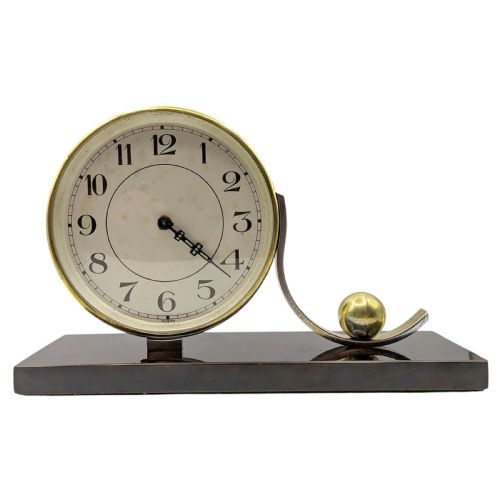
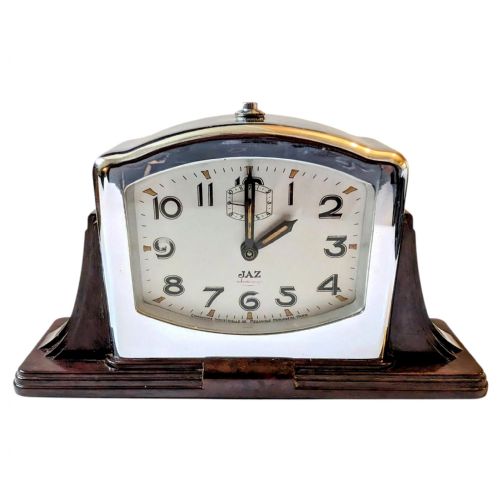
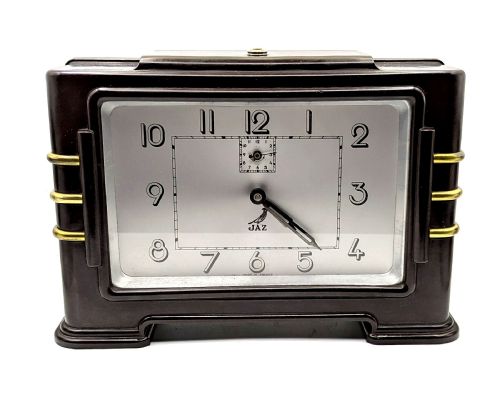
A 1930s bakelite clock spans practical domestic timepieces such as desk clocks, mantel clocks, wall clocks, and alarm clocks. These items typically emerge from the Art Deco and Industrial Art Deco movements, displaying characteristic streamlined forms.
The objects originate from English, French, and Hungarian workshops and makers. Desk and mantel versions frequently sit on moulded bakelite bases, sometimes accompanied by chrome or brass details.
Materials and construction
Bakelite forms the primary body of these timepieces, shaped through early synthetic moulding techniques into smooth, durable cases. Manufacturers combined this synthetic material with contrasting elements of chrome, brass, steel, and glass dials.
Movements range from electric mechanisms to thirty-hour and eight-day manual setups. Certain designs incorporate ebonised wood or integrate calendar functions alongside the clock face.
Listings incorporate electric movements alongside manual thirty-hour and eight-day mechanical systems.
Distinctions in quality
Quality rests in the crispness of the moulded bakelite casing and the preservation of original metal trim such as chrome bezels and brass feet. Well-executed pieces maintain sharp geometric lines without distortion or heavy surface wear.
The presence of named maker signatures on the dial or movement elevates an example. Service history and mechanical completeness also define the standard of surviving interwar timepieces.
Jaz·Blangy Clockmakers·Smiths
The 1930s Bakelite Clock Glossary
- Bakelite
- An early form of thermosetting plastic created from phenol and formaldehyde. It allowed manufacturers to mould complex, durable clock cases in dark tones and bright colours alike.
- Mantel clock
- A clock designed to stand upon the shelf or mantel above a fireplace. These domestic timepieces often exhibit substantial architectural mass.
- Thirty-hour clock
- A mechanical timekeeper that requires winding once a day or slightly more than once a day. This movement type is common in smaller desk and alarm clocks.
1930s Bakelite Clock: Frequently Asked Questions
Where should I place a desk clock?
A desk clock sits well on a flat surface in a study or living space where its interwar geometry is clearly visible. Ensure it rests away from damp environments that might affect the internal metal components.
Keep the timepiece out of direct sunlight to protect the synthetic casing from potential discolouration over time.
How do I wind an eight day clock?
An eight-day clock requires winding approximately once a week using the designated key for the spring barrels. Turn the key gently until you feel resistance, avoiding over-winding the mechanism.
Consult the specific mechanical requirements of the model to ensure the springs remain in proper working order.
How do wall clocks attach safely?
Wall clocks hang securely from appropriate fixings driven firmly into solid masonry or wall studs. The mounting point must support the combined weight of the bakelite case and glass face.
Check that the clock hangs level to ensure the internal movement ticks evenly and keeps accurate time.
Can these clocks run on electricity?
Certain models operate via electric movements designed for mains power as recorded in period specifications. These electric versions plug directly into domestic sockets of the correct voltage.
Have any historic electrical wiring checked by a competent professional before connecting the timepiece to a live circuit.