




1920s Vanity Scent Bottle
These 1920s vanity scent bottle pieces are small vessels designed for dressing tables, combining glass and silver to hold perfume.
1920s Vanity Scent Bottle
A 1920s vanity scent bottle sits on a dressing table or travels in a leather case, holding perfume for daily use. The examples on this page span the 1920 and 1930 periods, taking the form of scent flasks, perfume bottles, atomisers, and components of vanity sets.
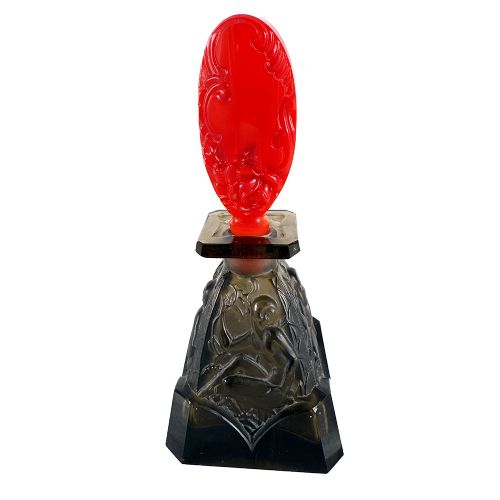
Most pieces encountered here display an Art Deco or George V style, often merging glass bodies with silver mounts. Forms range from moulded and cut glass containers to ceramic and enamelled designs originating from Britain and continental workshops.
Materials and construction
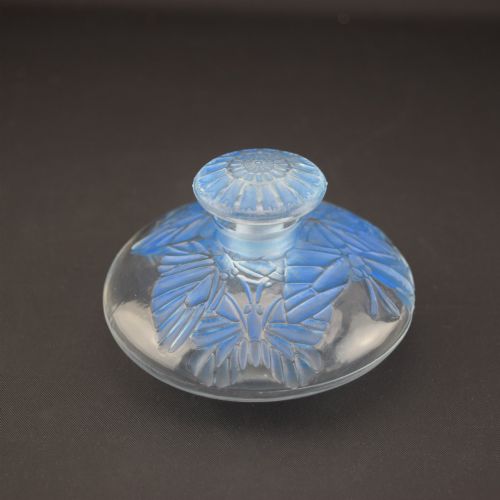
Makers shaped glass through cutting, moulding, and frosting, producing clear, blue, or patterned bodies designed to catch the light. These glass reservoirs are paired with sterling silver or continental silver collars, hinged caps, and stoppers.
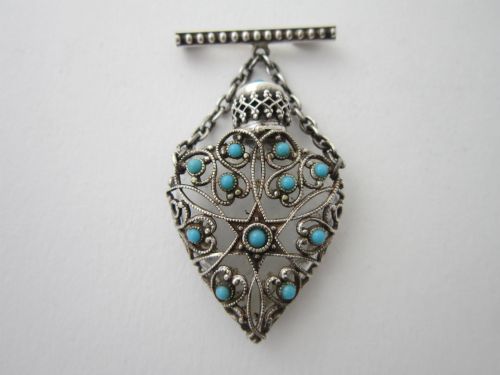
Detailing often incorporates enamel, turquoise, or tortoiseshell set into the metal mounts, while some iterations utilise leather outer cases for protection during travel.
The listings show materials spanning glass, sterling silver, cut glass, moulded glass, enamel, frosted glass, continental silver, and turquoise.
Judging quality in these bottles
Quality rests on the crispness of the glass moulding or cutting and the weight of the silver mounts. Finer pieces demonstrate precise execution in relief decoration and securely fitting silver lids or atomiser mechanisms.
The presence of named makers and distinct material combinations, such as enamel work or tortoiseshell panels, elevates a piece above standard production items.
Rene Lalique·Henry Perkins·Barnsley and Co·Adie Brothers Ltd
The 1920s Vanity Scent Bottle Glossary
- Atomiser
- A perfume bottle fitted with a spray mechanism rather than a standard stopper. This device disperses fragrance in a fine mist.
- Sterling silver
- A silver alloy containing 92.5 percentage of pure silver by mass. British pieces often display hallmarks confirming this standard.
- Moulded glass
- Glass shaped by being pressed into a metal or wooden mould while hot. This technique allowed makers to produce consistent relief patterns.
- Continental silver
- Silver items manufactured outside Britain, carrying different purity standards and assay marks. These often accompany imported glass bodies.
1920s Vanity Scent Bottle: Frequently Asked Questions
How were these bottles used?
Owners kept them on dressing tables to dispense liquid fragrance for personal grooming. The stoppers or atomiser mechanisms helped preserve the scent.
Some portable versions travelled inside fitted leather cases alongside other toilet articles for gents or ladies.
What materials did makers use?
Makers relied heavily on clear, coloured, frosted, or cut glass for the main vessel. This glass was almost universally paired with sterling silver or continental silver mounts.
Additional decorative elements included enamel, turquoise, and tortoiseshell set directly into the metal caps or collars.
How do I identify the period?
British pieces frequently feature silver hallmarks that include date letters corresponding to specific years in the 1920s or 1930s. Design characteristics also point to this era.
Stylistic cues draw heavily from Art Deco geometry and George V manufacturing traditions, alongside distinct moulded glass patterns from the period.