

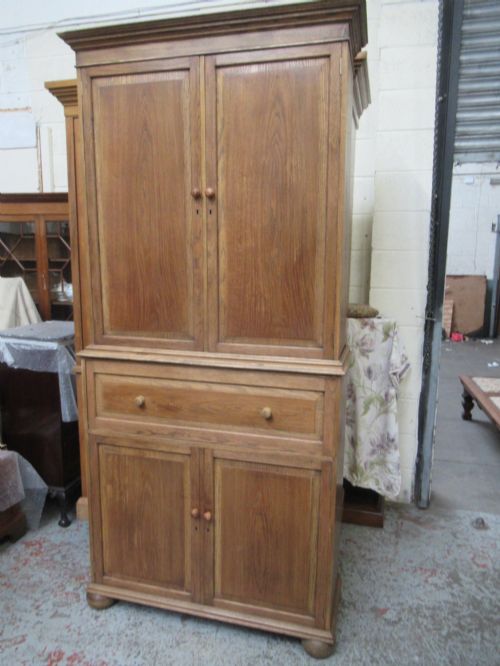
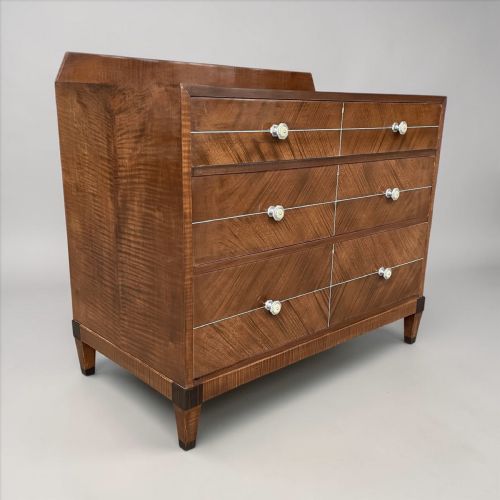
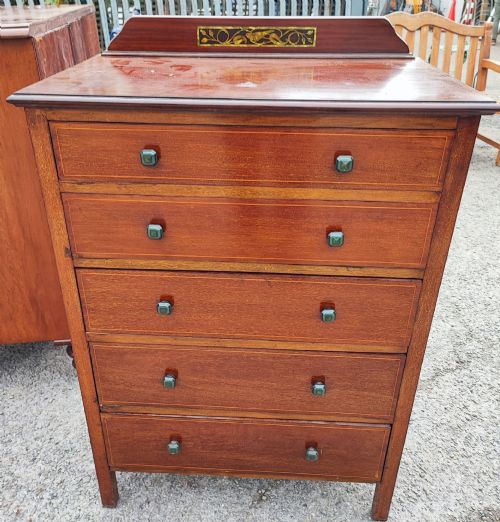
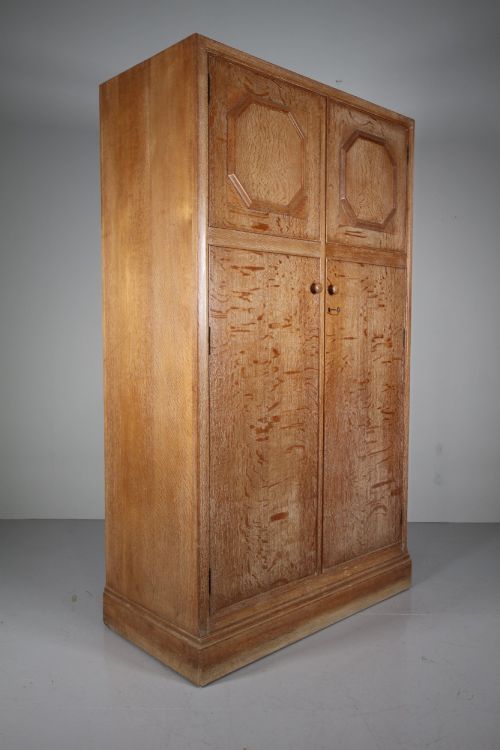


1920s Tallboy Cabinet
These pieces combine vertical storage with period presence, offering a practical solution for compact rooms.
1920s Tallboy Cabinet
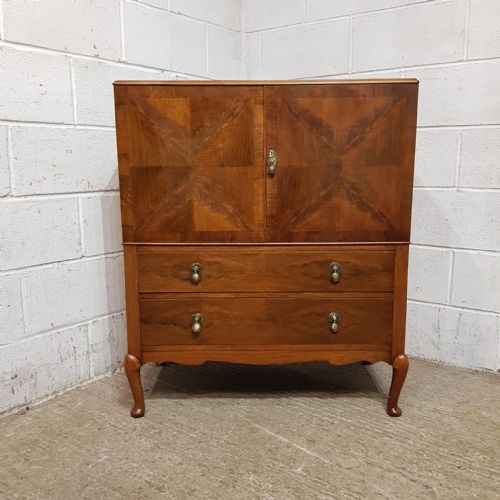
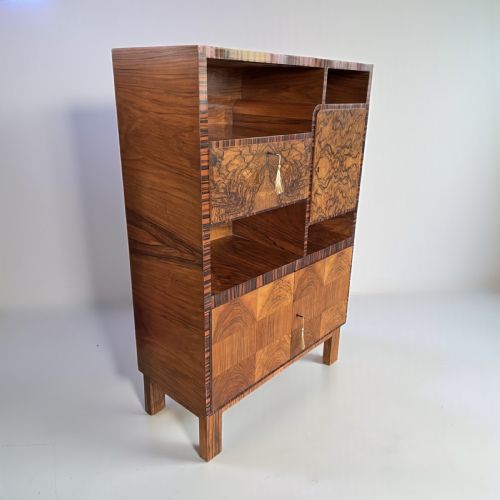
A 1920s tallboy cabinet stands as a tall vertical storage unit combining the capacity of a chest of drawers with enclosed cupboard space. You will find these pieces spanning the 1920 and 1930 periods, incorporating Art Deco designs alongside Queen Anne, Georgian, Louis XV, and Chippendale revivals.
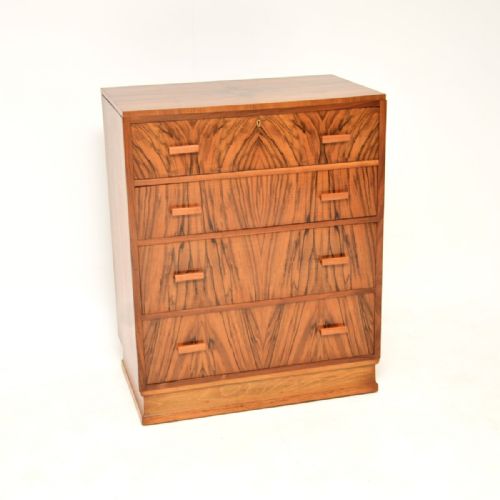
The selections range from burr walnut and figured walnut veneers to solid mahogany, rosewood, and decorated japanned surfaces. Alongside standard tallboys, the listings include five-height chests of drawers, bedside cabinets, and industrial iron workshop units.
How they were made
Cabinet makers applied decorative wood veneers such as burr walnut, walnut, and rosewood onto sturdy timber carcases to create rich surface patterns. Brass hardware provides functional pulls and key escutcheons across both traditional revival forms and modern Art Deco pieces.
Specialist techniques include pale cream japanned decoration on English surfaces and preserved original paint remnants on French industrial iron cabinets. Mahogany structures frequently incorporate shaped serpentine fronts and detailed carving reflecting historical revival styles.
1920s Tallboy Cabinet Retail Price Guide 2026
Typical asking prices for 1920s tallboy cabinet among the pieces listed under this phrase on Sellingantiques today, from the lower quarter to the upper quarter. They describe what is for sale here now, not the wider market.
Listings span the 1920 and 1930 periods, incorporating materials such as brass, burr walnut, walnut, rosewood, mahogany, and specialised wood veneers.
What varies in quality
The selection of wood veneer sets the visual standard, with highly figured burr walnut and book-matched grain patterns marking out superior examples. Cabinetmaking pedigree also elevates a piece, particularly when executed by notable firms like Heal's or Waring & Gillow.
Surface finish preservation dictates desirability, distinguishing cabinets retaining original japanned decoration or untouched industrial paint remnants from altered items. Structural integrity in the drawer construction and matching brass fittings further separate standard production from finer workshop output.
Waring S Gillows·Heal's
The 1920s Tallboy Cabinet Glossary
- Burr Walnut
- A timber veneer taken from the knotted growths of walnut trees, yielding intricate, swirling grain patterns. It was heavily favoured by cabinet makers during the Art Deco era.
- Japanned
- A European imitation of East Asian lacquerwork, producing a hard, glossy decorative surface. Cream and coloured grounds appeared on decorative English pieces from this period.
- Serpentine Front
- A furniture front characterised by a wavy contour, curving convexly in the centre and concavely at the sides. This shape requires advanced woodworking skill to execute properly.
- Tallboy
- A traditional term for a tall chest of drawers, often combining a set of drawers with a small upper cupboard section. They maximise vertical storage floor space.
- Veneer
- A thin layer of superior wood adhered to a secondary timber carcase for decorative effect. Figured walnut and standard walnut veneers feature prominently across these designs.
1920s Tallboy Cabinet: Frequently Asked Questions
Where should I place a tallboy?
These tall units suit bedrooms, dressing rooms, or hallways where floor space is restricted but vertical storage is required. Their narrow footprint allows them to fit snugly into alcoves or between windows.
Ensure you measure ceiling heights before positioning, as these cabinets reach higher than standard chests of drawers while providing substantial enclosed volume.
How do I clean walnut veneer?
Dust surfaces regularly with a soft, dry cloth to prevent grit accumulation on the delicate wood grain. Avoid using modern silicone sprays or harsh chemical polishes that can degrade historical finishes.
Apply a traditional beeswax sparingly if the wood appears dry, buffing it gently with a clean cloth to maintain a natural, soft lustre.
Are Art Deco tallboys different?
Art Deco tallboys typically feature clean geometric lines, streamlined silhouettes, and symmetrical book-matched burr walnut or figured walnut veneers. They lack the ornate carving and curved cabriole legs found on earlier revival styles.
These pieces reflect modernist design shifts of the interwar years, prioritising unadorned vertical geometry over historical ornamentation.
Can I use an industrial cabinet at home?
French industrial iron cabinets bring a contrasting utilitarian aesthetic to domestic interiors, working well in modern kitchens, studies, or living spaces. Their robust metal construction offers sturdy, secure storage.
Look for examples that retain their original paint remnants, which add authentic texture and character to contemporary rooms.