



1920s Sapphire Platinum Ring
A 1920s sapphire platinum ring is the quintessential jewel of the jazz age, prized for its sharp geometry, brilliant diamonds and deep blue stones.
1920s Sapphire Platinum Ring
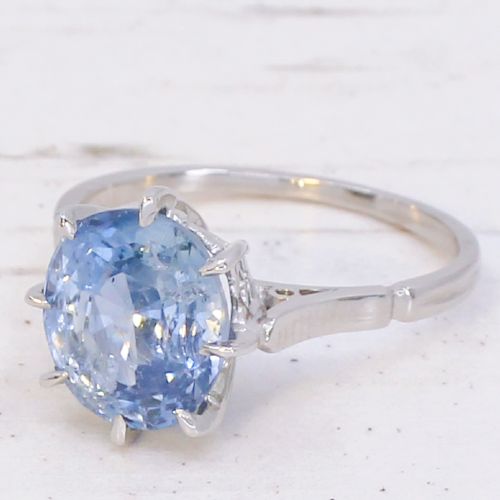
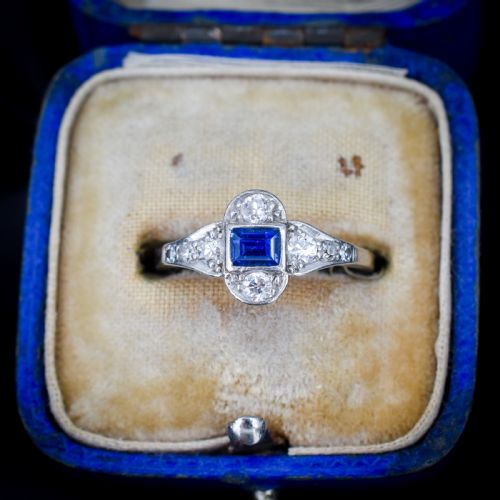
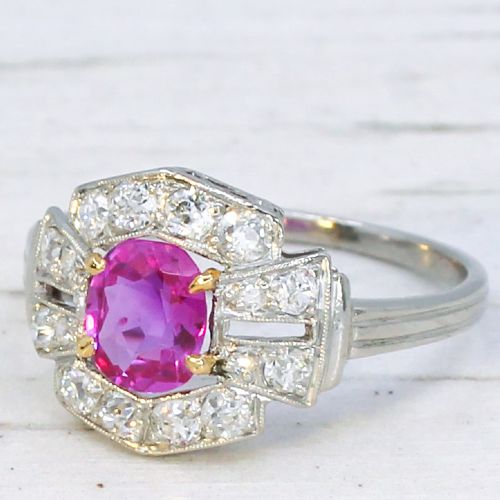
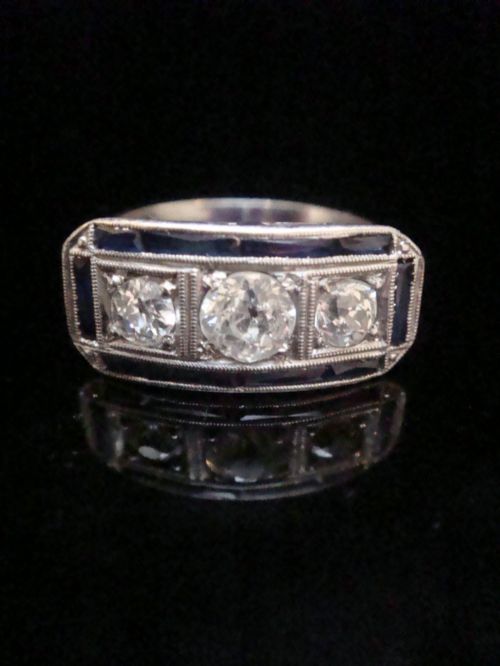
The selections span navette, cluster, solitaire and trilogy configurations, often featuring calibré cut or baguette cut stones alongside brilliant or old cut diamonds. Alongside traditional blue sapphires, variations include striking pink, yellow and unheated Ceylon or Burmese stones.
Originating predominantly from the 1920s and 1930s, with occasional Edwardian or 1940s examples, these dress and cocktail rings showcase the enduring appeal of the era's lapidary artistry.
How they were made
Makers utilised durable platinum alongside 18ct white, yellow and rose gold to construct secure, delicate settings that maximise light entry into the gemstones. Platinum allowed for fine, intricate millgraining and pierced gallery work without compromising structural integrity.
Diamonds and sapphires were shaped into old cut, transitional cut, baguette and calibré formats to fit flush within geometric motifs like target clusters and navette panels.
Listings feature periods spanning the Edwardian era, the 1920s, 1930s and 1940s.
What varies in quality
The distinction between tiers rests upon the origin, carat weight and thermal treatment of the central sapphire, alongside the cut and clarity of the surrounding diamonds. Natural, unheated stones from sources such as Ceylon or Burma command higher regard than treated alternatives.
Execution of the metalwork also defines standard, where precision in hand-pierced platinum galleries, even calibré stone alignment and intact millgraining indicate superior craftsmanship.
The 1920s Sapphire Platinum Ring Glossary
- Calibré cut
- Small gemstones specifically cut and fitted to form geometric patterns within a setting.
- Navette
- A boat-shaped ring design that tapers to sharp points at either end.
- Trilogy
- A ring featuring three principal stones, often symbolising past, present and future.
- Millgrain
- A decorative border of tiny raised metal beads along the edge of a setting.
- Transition cut
- A diamond cut utilised during the evolution from old European cuts to modern brilliants.
1920s Sapphire Platinum Ring: Frequently Asked Questions
How do I care for a platinum ring?
Platinum is exceptionally durable and resists daily wear well, though it develops a soft patina over time that many collectors prefer.
Clean the setting gently with warm soapy water and a soft brush to maintain the sparkle of the sapphire and diamonds.
Are these rings suitable for everyday wear?
These antique jewels withstand normal daily use when treated with appropriate care, given the robust nature of platinum and corundum.
Remove the ring during heavy manual tasks or sports to protect delicate prongs and smaller accent stones.
What defines the Art Deco style?
Art Deco design emerged after the First World War, favouring symmetry, straight lines and stark contrasts over flowing floral motifs.
Jewellery from this era relies heavily on geometric shapes, step cuts and the stark contrast between white platinum and dark blue sapphires.
How can I tell if a sapphire is natural?
Natural sapphires display distinct internal growth lines and mineral inclusions under magnification rather than uniform bubbles found in synthetic glass.
Laboratory certificates often accompany significant stones to confirm geographic origin and whether the sapphire has undergone thermal enhancement.