


1920s Ruby Ring
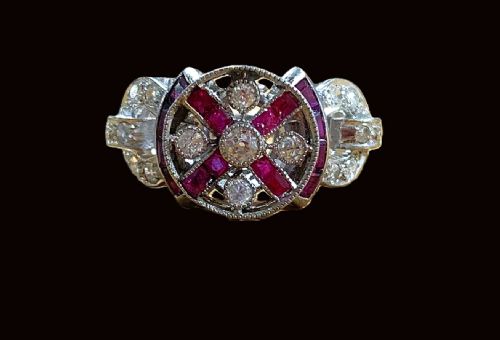
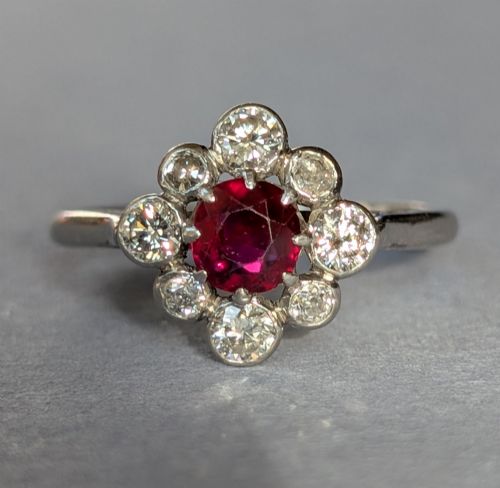
These 1920s ruby ring examples deliver striking Art Deco geometry and rich colour, making them a brilliant choice for an engagement or cocktail ring.
1920s Ruby Ring
A 1920s ruby ring combines the geometric rigour of the Art Deco period with vibrant red corundum and brilliant diamonds. Most pieces on this page emerge from the 1920s and the adjacent 1930s and 1940s eras, often taking the form of clusters, full eternity bands, or elongated cocktail designs.
The aesthetic vocabulary relies on clean lines and symmetrical arrangements that frame the central stones effectively. Platinum and 18ct gold settings provide the structural support for these intricate gemstone layouts.
Origin details in the archive point toward French workshops as well as British makers, spanning styles from daisy clusters to bold tank rings. Buyers seeking a genuine period piece will find these configurations repeatedly represented across the inventory.
How they were made
Goldsmiths utilised platinum and 18ct gold to fabricate secure, fine settings that could hold numerous small diamonds alongside central rubies without bulk. Old cut diamonds and calibrated rubies are meticulously set into these metal frameworks.
Techniques of the era involved hand-piercing the platinum to create delicate gallery work and millegrain edges that diffuse the light around each stone. This combination of durable platinum and warm gold permitted complex multi-stone architectures like elongated clusters and fan motifs.
1920s Ruby Ring Retail Price Guide 2026
Typical asking prices for 1920s ruby ring among the pieces listed under this phrase on Sellingantiques today, from the lower quarter to the upper quarter. They describe what is for sale here now, not the wider market.
Listings feature pieces spanning the 1920s, 1930s, and 1940s, executed in platinum, 18ct gold, ruby, and diamond within the Art Deco style.
What varies in quality
The distinction between standard pieces and the finest examples rests on the provenance and optical liveliness of the stones, particularly natural Burmese origin for the rubies. Heavier carat weights in both diamonds and rubies elevate the stature of the ring significantly.
Execution of the metalwork also defines the tier, where crisp hand-pierced platinum galleries and uniform old cut diamond pavé outshine simpler production. The overall architectural balance of the cluster or elongated shape dictates the visual impact on the hand.
The 1920s Ruby Ring Glossary
- Art Deco
- A design style spanning the 1920s and 1930s characterised by geometric symmetry, stylised motifs, and streamlined elegance. It remains the defining aesthetic for this jewellery.
- Platinum
- A dense, white precious metal chosen in the period for its strength, which allowed jewellers to create delicate settings securely. It provides a crisp contrast to warm rubies and sparkling diamonds.
- Old cut diamond
- A precursor to the modern brilliant cut featuring a smaller table, higher crown, and open culet, designed to catch candlelight. These stones display a softer, chunkier sparkle.
- Cluster ring
- A ring design featuring a prominent central gemstone surrounded by a border of smaller stones. This format maximises visual presence on the hand.
- Eternity ring
- A band set continuously with gemstones symbolising infinity. Versions from this era combine rubies and diamonds in an unbroken circle.
1920s Ruby Ring: Frequently Asked Questions
How do I style a 1920s ruby ring?
These rings pair easily with modern minimalist bands or stand alone as a cocktail centrepiece.
The geometric lines of Art Deco platinum and gold complement both casual daytime wear and formal evening attire.
Are these rings suitable for daily wear?
Platinum and 18ct gold provide robust durability for everyday use when mounted with hard corundum rubies.
Regular professional checks help ensure the old cut diamonds and rubies remain secure in their original settings.
What metals are used in these rings?
Makers predominantly employed platinum alongside 18ct gold for structural integrity and colour contrast.
Platinum was favoured for its ability to hold intricate millegrain work without adding excessive weight.
How can I tell the period?
Look for characteristic Art Deco geometry, hand-pierced platinum galleries, and old cut diamond faceting.
Design motifs such as elongated clusters and fan shapes point directly to the aesthetics of the 1920s and 1930s.